Showing posts with label death. Show all posts

Monday, 23 March 2026

Requiem for a Bishop


Purcell; Duruflé; Fauré; and Rutter's 'The Lord Bless You and Keep You', which I find a bit soppy but says what you want it to; the Cathedral choir acquitted themselves superbly at Bishop Andrew's Requiem Mass today. Not that the order of service referred to the liturgy in those terms, but it was all very traditional. Even the piece of music that nodded most in the direction of +Andrew's usual Evangelical constituency, Stuart Townend's 'In Christ Alone' (complete with the words about God's wrath that some of us can't sing), is about as close to an old-fashioned hymn form as you get from modern Church songwriters. Serried ranks of bishops in proper black chimeres rather than the red they usually wear nowadays whether or not they are Doctors of Divinity, the Diocesan Chancellor in a full-bottomed legal wig, ++Sarah preceded by the primatial cross of Canterbury, and some Orthodox fellow in a black hood - it was all very fine indeed. The only disappointment was that the Lord Lieutenant came in a suit rather than full uniform. He even came to talk to the Swanvale Halt Men's Breakfast once in that, I must point out. Though he was on his way somewhere else, admittedly.

Resting on the coffin were 'the diocesan crozier', which I didn't know existed, a chalice and paten representing +Andrew's priestly ministry, and a mitre standing for his episcopal role. The mitre was rather nicer than the one he usually wore, and I wonder why Anglican bishops can't have nice mitres all the time. Even +Paul and ++Sarah's mitrae simplices were rather handsome in their plainness. In the picture above you can see the Dean carrying the formal crozier up to the high altar where it was laid, the bishop's pastoral ministry being symbolically relinquished. At least he didn't have to snap it in two like the Lord Great Chamberlain at the Queen's funeral, or we'd still be there.

I've already said that the manner of his dying might well have been +Andrew's greatest ministry and, while nobody wanted to say that out loud today, the same sense did hang in the air. It was a great act of faithfulness and I remember most strongly his expression of relief in his second, and last, pastoral letter to the diocese that his faith had not given way in the face of his diagnosis. He talked in a way so personal that you felt it was a kind of liberation: a pastor shouldn't be personal in a way that throws attention on themselves rather than on Christ, but this end-of-life candour was completely appropriate.

A couple of my Evangelical colleagues insisted on raising their hands in the air during the hymns as though they felt they had to, but the communion worked its spiritual wonders and I found any irritation that flashed into my heart was swiftly and rightly drowned by the amazement that after 2000 years Jesus still gives himself up for all these flawed, ridiculous human beings, of whom I am one. The Passion of the Christ draws sombrely closer.

I had an hour to wait for the next train and rather than even attempt to find any lunch at the Cathedral café I went in the other direction and down the hill where there was a 'Pan-Asian' eatery that served me tea and a spicy Indian potato fritter in a bun drizzled with chutneys. 'There were some really fresh green chillis in that' the proprietor grinned proudly. Indeed there were. 

Friday, 12 September 2025

Rainbow Bridge

My journey towards thinking about animals differently didn’t start with Professor Cotillion’s cavaliers, as it really began years ago with my dealings with Christine and her boxers, but since dropping in on online groups such as the charity Bliss Cavalier Rescue’s LiberFaciorum page I’ve become aware of a phrase, an idea, that Christine never used, that of the Rainbow Bridge. ‘Run free at Rainbow Bridge’, grieving pet owners and their comforters will say of their lost animal.

The idea – a beautiful one – is that dead pets go to a meadow landscape where they are restored to health and wholeness, where there is always water and food, and where they play. They wait for their owners to arrive and, when they glimpse them on the edge of the meadow, leave the other animals and run to meet them. Human and pet then cross the Rainbow Bridge together into eternity. Sentimental, maybe, but as I age I'm more reluctant to dismiss sentiment.

The motif of Rainbow Bridge comes, improbably, from a scrap of paper written in 1959 by a 19-year-old Scottish girl who’d just lost her Labrador. It, and she, were chased down by Paul Koudounaris whose book about the spectacular ‘catacomb saints’ distributed across Catholic Mitteleuropa in the 17th & 18th centuries, Heavenly Bodies, I have. She was Edna Clyne (later Clyne-Rekhy), and when Mr Koudounaris found her in 2023 she had literally no earthly inkling that her words, originally handed to a few friends in typescript, had, via a 1990s US magazine advice column, found their way around the world - handed to grieving pet owners in vets’ surgeries, shared between friends, carved into stone and placed in pet cemeteries.

Edna disclaimed any direct spiritual influence on her imaginary picture, but the imagery of the rainbow as a sign of hope and its link with animals seems subconsciously to link to the story of the Ark. The rainbow now carries additional meanings, of inclusion and togetherness. But can the motif be accommodated within orthodox Christian thinking in any way?

Even within its own terms, Rainbow Bridge begs questions. What happens to animals humans have wronged, and whose relationship with us is marred beyond repair? The picture clearly imagines dogs as the beloved pets, not surprisingly, though it can easily be extended to cats; where do other animals fit in? And dogs and cats are carnivorous. As far as Christianity is concerned, the idea of Rainbow Bridge is clearly based on popular misconceptions of Christian views of postmortem experience, one of spiritual survival (‘we die and go to heaven’) rather than the resurrection to a new, physical life. Traditionally Christians have shut down discussion about what happens to animals when they die by saying that they have no souls – no soul, no survival – but that seems to fall into the same error. More to the point, the question of what happens to animals is linked to what happens to humans. We participate in the resurrected life not because some immortal part of us survives, but because we acknowledge our sins and turn to Christ; animals have no sin, and so are not redeemed.

But Edna Clyne was only inventing an image, not devising a theology, and if that’s true of her, very substantially the Bible is little different. You’d struggle to define a clear idea of what the soul means – other than being ‘not the body’ – from Scripture, and nothing about the process of what happens to us after death is very clear either.  The greatest clarity we are given, the vision of the Heavenly City, comes in the form of an image, not details about how we get there or what we will do when we arrive. And we know that animals are part of it, because it was part of what Isaiah glimpsed seven centuries before Christ, a renewed world where the wolf would lie down with the lamb and the child place its hand in the adder’s den and not be harmed. None of the ambiguities are insoluble.

You can’t offer a requiem for an animal which has no sin, but you can say as much as that, and maybe that’s all you need to say. We humans have black vestments and unbleached candles to commend us to divine mercy, the tremor of knowing what we are: the beasts, bold and unaware, have the rainbow.

Monday, 9 June 2025

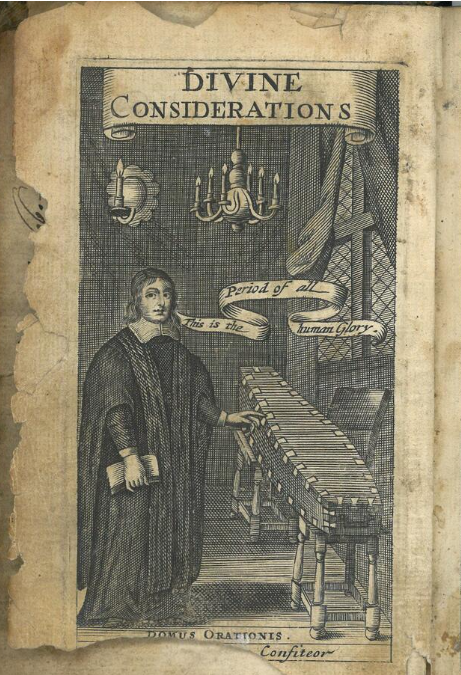
The Period of All Human Glory

The sacristan at Goremead church, which I looked after for a few months 17 years ago now, was Agnes. In her very young days she’d been on the secretarial staff of Archbishop Cosmo Lang. At the end of any discussion about her unsatisfactory health or general state she would usually conclude, ‘Still, we're getting there’, the first person I can remember using a phrase I now hear almost universally. It’s another way of saying ‘Can’t complain’, which is itself a way of glossing over the fact that there is no point complaining; of putting to one side the uncomfortable truth both parties to the conversation are only too aware of, that the situation concerned probably isn’t going to get any better. The actual words do not mean what they are intended to convey, the consciousness that we are all on a single trajectory with a single conclusion. One day I was bold enough to ask Agnes where it was we were getting to: she narrowed her eyes and replied ‘You know perfectly well’.

We will leave aside the more cosmic consideration that we don’t know quite where we’re getting to – the supernal or infernal postmortem realms – and think about what it means for this life alone. Knowing in theory that your time in this earthly realm is limited, as we all do, feels very different from being told it is, even if no actual span is put on it. This has recently happened to someone I know, and if that’s happened to you personally, it’s also happened, to a lesser degree, to the people close to you. No doctor is brutal enough to say ‘What you have wrong with you can only be cured by interventions we will not try because of all the other things that are wrong with you, so all we can do is manage it, and it will eventually kill you within the foreseeable future if one of your other problems doesn’t get to you first’, but that’s what they want you to understand.

Traditional Christian spirituality uses the transitoriness of life to point us away from this world towards eternal considerations, but that’s not the problem here, which is to invest the remainder of our human lives with meaning and joy. The confidence we might have in Christ’s saving grace may blunt the edge of death: we may tell ourselves that all that is good about us is held in divine remembrance and will be brought into the heavenly Jerusalem, part of the ‘treasures of the nations’ the Book of Revelation talks about. If we can successfully pit that spiritual knowledge against our every natural human instinct to be afraid, all well and good. But it seems to me that carrying on living fully is a separate spiritual issue. Call some of us weak and foolish, but we need some motivation not just to turn our faces to the wall and collapse into depression. What is the point of the strife? Even if we engage in battle to make it easier for others to do so, that just pushes the question one step away from us, rather than answering it.

Once when I was dealing with someone with suicidal temptations I stressed that death was the enemy, an interloper in God’s world (this only stands any chance of working with a Christian). But if that’s the case we know that we will eventually lose: and that loss may even come as a mercy depending on our circumstances. Perhaps we can see each day lived well as a victory against a different Angel of Death that comes to us, rather than a struggle daily renewed against the same foe.

And yet why should we? Death doesn’t have to be approaching that quickly to make that a valid question. The humanist concern to gather experiences against the day of death seems a hollow endeavour as it leads nowhere. Why should we try daily when we are weary and dispirited? Rather, the thought that occurs to me that nobody else will ever have our experiences, our precise mixture of impressions, reflections and memories. Those are the treasures of the nations to be brought into the heavenly city. What God will do with them exactly we do not know, but every moment is not just one of blessing to us but to the whole of creation, connected as we are through him who is the Head. That might be enough to keep me thankful each morning, no matter how long or short a time that might remain to me.

Friday, 25 April 2025

Keeping a Kind of Vigil

It wasn't the first time I found myself negotiating my way through another sort of spiritual space. On St George's Day this week - the customary St George's Day, though in the Church calendar the Great-Martyr George has been bumped backward to next Monday because you can't celebrate a feast day in the Octave of Easter - I attended the monthly Vigil at Crossbones Graveyard in Southwark. Without recounting the contested history of the site, which you can look up for yourself, in later years the graveyard has become 'a shrine for the outcast dead' as that history has been recovered, publicised, and acknowledged, and therefore part of the consciousness of those living who also feel themselves marginalised and outcast and who read their own experiences in those souls who are memorialised at Crossbones. Although the acknowledgment of the site has included recognition by the cathedral community mere yards away, this place belongs to those the Church has traditionally pushed away, which makes it all the more affecting that it can make sincere use of Christian imagery and words from time to time.

This week's Vigil was especially poignant as it took place after an apparent attack on the shrine, burning some of the memorials and decorations. It was stressed that the rituals weren't religious, and indeed there is nothing specifically religious about burning incense, ringing bells, silence, tying ribbons in remembrance, and reciting poems. It was only the final bit I felt I had to stand back from - a collective act of re-hallowing the memorial by the assembled community touching the gates, while a prayer was recited and repeated with the aim of 'concentrating energy', a mode of operating that goes all the way back to the New Thought of the 1880s. It was described as an act of 'magic', so I touched nothing and said nothing. But then, it seems to me, Crossbones is a place of integrity, for me as for anyone.


Saturday, 30 November 2024

Live and Let Die

Typical, you might well think, one of the most momentous changes, potentially, in the way the State relates to the life of the individual, and all Fr Weepingcross can think to post about is some woman’s rattled-off opinions on Goth. That doesn’t mean I wasn’t thinking about the Assisted Dying Bill: I just wasn’t in any way surprised by the outcome.

Christians can’t all be found on one side of this question: it was Pope John Paul II who originated, or at least popularised, the ringing phrase ‘the Culture of Death’ to net together euthanasia (as we used to call ‘assisted dying’), abortion, execution, and war; but not all of us go along with it. What we seem to have, in this particular matter, is a culture of autonomy before all else – assuming as an obvious fact that the sandcastle of individual choice can stand against the tide of social expectation. And I am not sure that Christians themselves know what it is they support, or oppose, in this as in many other respects. For centuries the law has defended us against our own ignorance and incuriosity, bolstered our assumption that we are right, and allowed us to continue without examining the basis for what we think we think. That protection has long, long been rolling back, and this is just another step.

But I find myself drawn, the more I think, more in the direction of mad things I would hesitate to say out loud. That the Enemy wants us dead. That he wants us out of the ring as soon as possible, where we can do no more good. That when we begin believing that one life is worth less than another, we make his work easier. That when we take our own life, or someone else’s, it’s like prising open the door of a plane: the air and the other passengers begin to be sucked out along with us. That there are, essentially, no individual choices.

Except I can’t go all that way. I revolt against making someone else fall in line with what I think in this most radical way. Maybe one day our long, bitter process of discernment will resolve that, as well.

Until then, in my imagination, I look to the potential time thirty years hence when medical professionals and others will start subtly hinting to me that the money spent on keeping me going could be better used elsewhere, on more worthy subjects, on children for heaven’s sake, and steeling myself to say, No. I might sacrifice myself for a child, but not for abstract children the State conjures in front of me to persuade me I am worth less. I demand my right to be a burden. I will not disappear for your convenience, I will not weigh my worth against others, not because I’m anything important, but because all human beings are, and accidentally I am one.

Saturday, 14 September 2024

Named in Stone (and glass/brass)

It's the 175th anniversary of the church this year and, for Heritage Open Weekend, I did a short tour of the church and churchyard looking at the memorials and monuments and thinking about some of the people represented. I haven't had time to research in-depth biographies of many of them, but there were enough details to fill a good 45 minutes exploring the nature of history and memory in our small community. We discovered -

- the former slaveowning incumbent of the church and his complex family ramifications

- the beloved parish worker whose life was glowingly written up in the parish magazine and who nobody now recalls

- the Victorian army officer who brought his horse back from the Crimea and buried it at his house when it died

- the lyrically-named lady married to a Quaker papermill master

- the anonymous 16-year-old commemorated in a window, whose face was almost certainly used for St Agnes and was therefore presumably called that

- the militant suffragette remembered in the statue of the Virgin & Child from a London convent

... and we also talked about headstones and footstones, the 19th-century stonemasonry trade, and what happens when monuments are moved around. Ours is a small and pretty unremarkable parish church, and yet look at what it contains. Most of all, what struck me - having not known it until I looked up our burial records - is that during the mere 30 years our churchyard was open more than 420 souls were laid to rest in it. And it's tiny. Half of them were aged 15 or under; 39%, nearly 2 in every 5, were aged 3 or under. That was the kind of place Swanvale Halt was in the mid-1800s: like, presumably, most other such places. 

Friday, 24 May 2024

In Memoriam

Yesterday I went back to Holy Trinity Hawley to rifle through the vestment drawers, discovering in the process a pink fiddleback (the only Roman-style kit the church has apart from the incumbent's own). 'I came through the cemetery', I told him, 'You have a remarkable line in floral tributes here'. 'Yes', he responded dubiously, 'I'm not sure everything there is entirely legal'. 

On my return journey to the car I looked more carefully at the monuments. I remember S.D. telling me once that to demand most people to think coherently and philosophically was expecting too much, and that the great majority of souls gather together a collection of images and ideas that work for them. This is what you find in Hawley Cemetery. 

The arch of flowers around the heavenly gates - with the cross atop for good measure, does announce some kind of belief in a postmortem existence:


There's a little devotional card in the above picture (as well as some souvenirs of Cyprus), and at the monument below there's not just one but two large Jesuses draped with rosaries. But you also get some extremely eclectic bits and pieces. That's a small black elephant decorated with pieces of mirror in front of Jesus, a little old chap sitting in a chair, various toy vehicles, and cut off on the left side, a squirrel with a candle holder. In addition this tomb has china birds, metal ladybirds, and a photo of a dog among other objects.


I would very much like to know what's going on in some of the assemblages. A laminated picture of Last of the Summer Wine laid on astroturf (there's a lot of astroturf in the cemetery, perhaps a symbol of eternity) made me gape at first, but I suppose it must have been a show especially beloved by the deceased. Presumably the cigarette lighters and beer can in the second photo below are an insight into the enthusiasms of that grave's occupant, too.


But I'm not sure that applies to everything. Are some of the toys and ornaments reflecting not the commitments of the dead, but the feelings of the living, perhaps children?


If you had to summarise the ideas you can see expressed in these groups of artefacts, they would be something like 'This is what we want to remember about Grandad, we trust he's safe, and we think his safety has something to do with Jesus and angels'. Functionally it's a cheap, demotic version of the grandiose stuff aristocrats used to fill churches with, though I fear it won't last as long.

Sunday, 28 January 2024

What Prayers Mean

We prayed for Sheila - of course we did for such a loved member of the church, hoping that somehow the fast-developing cancer had been caught in time, that the doctors had got the right treatment. She died, nevertheless, early one morning, a gentle, generous and positive soul of the kind the world could do with more of, not fewer. 

What are we doing when we pray for someone with an apparently mortal illness? We all know that most of the time these illnesses take their normal course, but also that it doesn't always end that way, and that just occasionally there is a recovery that defies all expectation. Is that what we're praying for, for Sheila or anyone else? The old texts I use when I administer the Last Rites are a masterly blend of fortitude and hope:

We know, O Lord, that there is no word impossible with you; and that, if you will, you can even yet raise her up, and grant her a longer continuance amongst us: Yet, forasmuch as in all appearance the time of her dissolution draws near, so fit and prepare her, we pray you, against the hour of death, that after her departure hence in peace, and in your favour, her soul may be received into your everlasting kingdom ...

Yet our attitude can't be simply one of balancing probabilities, hoping for remission but facing up to the likelihood of dissolution. We know, more radically than this, that something will, sooner or later, carry us out of this world. That event could be disease or accident, fast or slow, sudden or long-anticipated. It would be anything: but, notwithstanding the people I sometimes encounter who seem astonished and bewildered that Death has come seeking them - it will eventually arrive.

Is what we want full and perfect health until we finally peg out silently, in our sleep, at the age of 112? Even granted the inevitability of death, why can God not concede us that? Is it too much to ask? Perhaps praying for that is a bit like praying for someone in a different, less medical situation, like Carly. We know that nobody is suddenly going to intervene in such a way that everything is made all right for her, and that it probably wouldn't work if anyone tried. But the way society is arranged offers the possibility that her difficulties might be made a little better, as might those of many other people in the same boat. Are we intended to advance not as isolated individuals, but generally, together, in the direction God has show that he wants?

In many ways, we are generalities, statistics: the kinds of things that befall Sheila, or Carly, or you and me, are the same sorts of afflictions which happen to millions, a common human lot that nobody escapes. If only the Lord had not been the very one who taught us we were more than that in his Father's eyes, such a truth might be easier to assmiliate. 

Wednesday, 24 May 2023

Blessings Done and Missed

In the far distant past now, Peter the former manager of Widelake House care home not far away used to like me (or the Roman Catholic parish priest) to come and bless the house before he went on holiday. He used to claim that it made the place calmer and had a completely unsubstantiated suspicion that the place was built on an Anglo-Saxon burial ground which I think may have arisen from the tall tales told by a local author with a penchant for turning his surroundings into an alternate reality. But I have never been asked to do the same at Southmere, the other care home where people I know from Swanvale Halt mostly tend to go. However the manager of Southmere did ask me to call by and perform this ceremony a couple of weeks ago, and it was my great privilege to oblige. Unlike Peter, Lizzie at Southmere didn't require me to enter every bedroom except where there was a danger the occupant might actually throw something at us in wrath. Instead, from the full-scale rite of house blessing, I used only the prayers at the entrance, for a living room in the main lounge, and the kitchen, plus some general topping-and-tailing. I thought I probably rushed it a little out of a sense of self-consciousness, but they were all very appreciative. 

Members of the congregation do frequently finish their days in Southmere and Widelake, and for yesterday's ritual we were accompanied by Susan and Sheila. Sheila is a relatively recent arrival, as is her husband who came here and was almost at once taken to hospital, before returning in a very shaky state. I'd been in to see Sheila last Monday but Dermot had been asleep, and, as his son told me in the evening, at almost the same time as I was marking Southmere's door lintel with oil and spraying holy water around, Dermot had been slipping out of this earthly realm. It would have been better had I gone to say a prayer for him, but (not for the first time) I am left hoping that they work in retrospect.

Monday, 24 October 2022

The Manner of Our Departure


It was a beautiful, elegaic moment as Jodie Whittaker’s 13th Doctor regenerated yesterday evening into – well, if you don’t mind spoilers, an earlier version of herself. And every Dorset native will have been squee-ing to see where she chose to watch ‘one last sunrise’ – the unmistakable outline of Durdle Door on the Purbeck coast. My first thought was how lovely it was, and my second how aghast the Dorset emergency services would be at the prospect of viewers thinking it might be fun to try and recreate the moment. Sure enough, the Lulworth Estate which owns Durdle Door has denounced the BBC’s ‘duplicity’ (now that’s a strong word) in not telling it what the request to film at the limestone arch would actually produce. There’s no safe way along the top of the headland and people have been badly injured diving off it. Unless you actually have access to a TARDIS, it’s best admired from a distance.

‘It’s such a shame you can’t pick the date, time, place and manner of departure, isn’t it? Well, you can in some sense, but that’s obviously more likely to be a messy route, and I don’t like mess’, mused Ms Kittywitch to us the other day. Ms K, who has battled a bewildering variety of medical dangers since before her heart-and-lung transplant at the age of 13, now faces a new diagnosis I can barely remember, and a new drug which might buy her another X years or finish her off with an allergic reaction. She is right, though I would choose not a sunrise on Durdle Door (or indeed chucking myself off it), but a rainy late afternoon on Chesil Beach, the ‘melancholy, long withdrawing roar’ of the Lyme Bay seas on the shingle. I can’t see how that could be managed, though, and might have to settle for Dorothy Parker’s more realistic option: ‘O let it be a night of lyric rain/And singing breezes when my bell is tolled’.

Most of us will be ushered from this earthly existence as part of a medical drama. On Thursday night I was called to the hospital to see Edgar: Jackie, his wife, apologised for calling me on my day off once she realised that’s what it was, but I’ve learned that you mustn’t delay these things if you can help it, and had we left it to Friday morning Edgar would have been unresponsive. It was hard to understand him, beyond the single word 'Amen'. His operation months ago to correct an essential tremor was successful but his enjoyment of it never materialised as his recuperation was interrupted by a fall and broken ankle, pneumonia and finally a fatal infection. That’s how it goes. Not for most of us the singing breezes or the crashing waves, but the quiet of a ward side room and the hiss of an oxygen mask, and as much faith as, with God’s grace, we can muster.

Wednesday, 6 April 2022

Somewhere Towards the End

It must be well over a year since I last saw Jill. That was at her previous care home, an unsatisfactory encounter in a stuffy and hot visiting room, unsure what she was taking in: she’s quite hard of hearing. A stay in hospital has meant a move to a more nursing-focused home and she is now ‘holding on’, as they say. But, half-expecting as I was to find her completely unconscious, in fact she was able to take communion – a sip of watered-down wine with a fragment of the Host in it – and ask me for some water. She said something about ‘church’, but I couldn’t catch what it was. She was probably apologising for not being able to come.

Jill has been a member of the congregation for many years so our meeting – surely our last – was able to follow a set form, the set form for the Last Rites, of confession, absolution, anointing and communion. Later in the day I went to a different care home (the one Jill used to live in, in fact) to see Celia, and Celia not being a believer meant there was nothing to shape the encounter. Celia has no family and has outlived all her friends apart from Andrea, a member of the church who along with a solicitor has been looking after Celia’s interests in recent years - and according to Andrea the solicitor doesn’t actually do much. Andrea came to my door in some agitation to tell me Celia was almost certainly dying and desperately wanted someone to talk to who wasn’t just the carers, who don’t really want to talk much about death in any case. Happily I had some time in the evening so after Evening Prayer I was able to go over, show my covid test strip from the morning, don a mask and gloves and visit Celia in her room. We ended up talking for about an hour. This stage in her life is turning out to be a struggle – ‘I never thought this would happen to me’ – but the things I would normally say to a Christian in the same circumstances would have been no help, so we spoke about the mysteries of life and death in a more general way, about her life and feelings. Celia’s bookshelf included Shelley, Keats, and Shakespeare, and, perhaps more unusually, Alice in wonderland and wG Hoskins’s The Making of the English Landscape, that pioneering work of local history, so we could discuss those things too. She told me how beautiful growing up by the sea in Lancashire had been. I don’t know whether Celia’s path out of this life was made any smoother or more bearable by our talk, but I think I would have welcomed it had I been her. I hope I did it right.

This felt like proper vicar-ing compared to a lot of the things I do, so I was grateful for the encounters, quite apart from what my parishioners may have felt. If we are able to in the circumstances in which we find ourselves, a final gathering-together of our lives before we let them go is a wonderful thing, and just as wonderful to take part in it.

Saturday, 25 September 2021

The Mechanics of Grief

'I don't think I've ever grieved anyone', Cylene told me. She discovered a few days ago that her friend Harry has been dead a month and she knew nothing about it. Harry was 31, a young man buffeted by the world and conflicted against his family. Cylene doesn't know whether it was suicide, a drug overdose, an accident of another kind, or whatever. Notwithstanding her own problems, which have seen her hospitalised twice in the last few months, Cylene 'dreamed I could do good things with him, show him something good in life. You know how it is with abused people, sometimes they can never accept anything good for themselves, they attract more abuse'. She could be talking about herself. Now she has only her self-devised magical rituals to try and hold on to Harry's memory, to offer him to - what?

We talked through how a Christian might view the loss of Harry. If you are a conservative evangelical, there is nothing much to say: Harry didn't give himself to Jesus in life, and so must face the penalty of his sins. You might come up with the bogus line I have heard from Christians of that stamp, that in the last moments of life an unbeliever might have accepted the Lord and thus be welcomed into his everlasting mansions. It's hardly likely, is it. Poor Harry never gave the Lord a second thought through his short and unhappy life so what on earth would propel him in that direction as it drew to a close? Was he ever in a place where that would have been likely? Where is the justice in substitutionary atonement for him?

At funeral services I tell people that what is good about us is not lost: how can it be, when God has made it? But how does that relate to our individual identity, salted with purgatorial fire and cleansed of everything unholy, if that process leaves little enough of us behind? I'm not confident what the answer is. Souls like Harry test all our doctrines. 

So I am reading again. The Matthean Beatitudes are as far as I've got; they help a little. I'd never been struck before how little they have to do with faith. Until the last clause, where Jesus tells the crowd that they are blessed if they are reviled for the sake of his name, the statements all proclaim that those who suffer in this earthly life will be rewarded: and that's it. There's no sense in the text that they have to have any kind of faith before that happens: rather that poverty, mourning, and hungering and thirsting after righteousness predisposes a soul in God's direction, that they generate faith. This is God's 'option for the poor': even for those as poor in spirit as Harry, maybe. 

Wednesday, 16 June 2021

Memento Mori

Ms Kittywitch has been in hospital with what, eventually, turned out to be a perforated bowel and an infection on top of it. This is no joke for anyone, let alone a longstanding heart-and-lung transplant survivor whose immune system barely functions. Lots of prayers were offered from various religious traditions and I found myself arguing to the Lord that I was sure her earthly work wasn’t done yet, and although there was a day or two early on when the doctors really thought it was unlikely she would make it, she’s now conscious, communicating, and posting on LiberFaciorum again.

Paradoxically my miserable nature prompts me always to reflect that my earthly work may well be coming to an end – although it does one good to remember that one’s time is indeed limited, this is a silly thought otherwise. Yet this dour consideration doesn’t have the effect it used to: once I would have said I was quite frightened by the prospect of dying, and now I don’t think I am. I find myself reflecting more and more frequently what a good and gentle life I have had which has furnished me with much to enjoy and be thankful for, and if I had to leave it tomorrow I wouldn’t feel hard done by in any way. Even the prospect of what might happen afterwards doesn’t impinge on that feeling of contentment too much as it has to be left to the God who is merciful and just and will do with me just what I, were I in my right mind and possession of all the facts, would choose to do with myself.

Yet it occurs to me that contentment is privileged. Oppressed people down the centuries have looked to the postmortem state to bring reward, restitution, and justice – or, at the very least, rest – and so the story in Luke 16 becomes naggingly appropriate: ‘remember, son, in life you received your good things, and Lazarus his evil things’.

I was in a far darker place some while ago when my daily Bible reading placed a line from Psalm 118 in front of me: ‘I will live, and declare the works of the Lord’. This is probably all I need to remember, and maybe I should carry it with me!

Saturday, 27 February 2021

Canine Rites

The car park at the Pet Crematorium at Hartley Wintney contains, very very roughly, something in excess of half a million pebbles. I estimated that an area about 8 inches square included about a hundred of them, and that the car park was about fifty feet square; (50 x 12)2 /64 x100 = 562,500. Professor Abacus thinks the margin of error in this figure is too wide for it to be useful, and who am I to argue. But working it out helped to occupy the time, for someone not very adept at mental arithmetic, while I waited for Christine to finish saying a very emotional goodbye to her dog.This is the third of Christine's dogs I have offered to the Lord, in the faith that he does something we may not clearly know with the mute creation. She has stopped bothering overly about the helpful souls who, frustrated at their inability to share her passionate relationship with them, have told her 'it's only a dog' or asked whether she'll get another one. Her entire existence has been organised around them. To her credit she has never treated them as anything other than dogs: she recognises that they have canine thoughts and relations that are fundamentally a closed world to her. People say silly things because such extreme emotions are embarrassing enough to express about a human and they will say silly things in those circumstances too, trying to ward off the power of the feeling, to put it right, to restore calm. But this is what love looks like, even if I don't share it. I suppose the test of the love's quality will be what Christine does with it next.I read from Isaiah 11 - 'the wolf shall lie down with the lamb, and the leopard shall lie down with the kid ... for the earth shall be full of the knowledge of the Lord as the waters cover the sea'. There are not many dogs in the Scriptures, and those that do appear don't play a very positive role. In 1Kings they lick up Naboth's blood and gnaw the flesh of Jezebel; they snarl around the author of Psalm 22; they eat the crumbs under their masters' tables, points out the Canaanite woman who confronts Jesus in Mark and Matthew, and in Luke they lick the sores of Lazarus. The friendliest Biblical dog is the one who accompanies Tobias in the Apocryphal book of Tobit, but nothing is said about him. So I settled on Isaiah's vision of the renewed earth in which the animals very clearly have a role to play, and later accompanied the dog on his last journey, a few yards along a covered walkway to the kiln.The cremation oven at Hartley Wintney is in a huge early-19th-century brick kiln. Its slightly disorganised brickwork and the fact that it's been clearly repaired and restored makes its sombre bulk rather gentle and welcoming. It has seen life. It's the kind of place a human might choose to be cremated, quite apart from an animal.

Sunday, 21 February 2021

As If You Need Reminding

Three items of pastoral news came my way yesterday. Christine, who I shorthand 'the dog lady', lost her latest and, she has always maintained, final boxer dog. Her life has been organised around him and without him she is bereft. She isn't in a condition to talk about it. I am not a lover of animals but interacting with her over a dozen years has shown me how intense people's relationship with them can be. To others made uncomfortable by grief, Christine's intensity can seem exaggerated and unnecessary. But to love something is ennobling.

Before setting out to take Trevor some groceries, I thought I ought to make a call and selected Sarah from the congregation, who I haven't spoken to for a while. It turns out she had been diagnosed with depression and had a bad reaction to the prescribed medication. She still sounded jumpy and uncomfortable. 'I don't suppose you anticipated the conversation going that way', she suggested, accurately.

I had a message from a mother of three small girls two of whom are former Infants School Church Clubbers. She was treated for cancer a year ago and thought all was well; it isn't, it's inoperable. What can they have told the children. 

Regularly I commit myself to greater seriousness and dedication, but it's easy to let this drift. I suppose what I ought to do is faff about less, stop re-reading my own words, set myself realistic daily tasks and not tell myself that I won't do something because I haven't got the energy. Energy can always be dredged up, and it's not doing things that I regret. Time seems to pass with ever greater urgency and my great fear is that I won't have made the best use of it. 'Live lightly and intensely', a colleague said to me, which seems a helpful formula.

Monday, 4 January 2021

New Year Navigation

Posting about COVID restrictions is thoroughly uncongenial today so here are some pictures from my alleged week off between the First and Second Sundays of Christmastide! They were taken on two separate occasions but the conditions were pretty similar both days - cold, dull, and damp underfoot.

Widelake Park has become a site of memorialisation. I can't remember seeing the collections before, but this one was clearly there for at least the second anniversary of the death of a child.


I liked the textures of this ruinous roof.


The dual bridge - one over a disused railway, the lower spanning an old canal bed - fascinated me. I could hear rough voices beneath the canal bridge, presumably from trolls. In the arch of the rail bridge you can glimpse the cheerful visage of what might be taken as a troll, but I think is in fact a tidied-up graffito phallus. Phalluses are perhaps not cheerful enough.


Chinthurst Tower - a folly I've visited before but on this occasion the focal point of my otherwise unfocused journey, and of many other people's as it happened.


This incredible and frankly baleful lopped tree is in fact two trees: as far as I could see, a birch growing inside the living carcass of a willow. 

Friday, 11 December 2020

Death of a DJ

As I've recalled on another occasion, I've only ever ventured in through the doors of the UK's and arguably the world's longest-standing and grandest Goth club, Slimelight, on two occasions. My contact with its organiser, Mak Ma Yuan, was confined to asking and receiving permission to lift images from the 1987 home movie of the club to use in that blog post a couple of years ago. But discovering that the reason why so many of my friends were quartering their LiberFaciorum profile images with the Slimelight logo was because he had died gave even me a jolt. Yuan had opened the doors of the club in its various homes for 33 years, and under the current restrictions had kept it going virtually. He'd been instrumental in securing Slimelight's venue, Electrowerkz, a £78K grant from the Cultural Recovery Fund via the Arts Council to help the recuperation from COVID, when that becomes possible, a fact which shows as nothing else could how culturally indispensable and uncontroversial the Goth world now is. As I say, my contact with him was fleeting and remote, and that seems to be the case with the far greater number of the people I've seen commenting about his death. But he is one of ours, and one whose work allowed many others to express an important part of who they are: a benefactor, then, whose passing deserves notice and regret.

The other day I found myself encountering a funeral procession in the village - not one I was taking, obviously. Peter from the undertakers, top-hatted and frock-coated, led the hearse over the crossroads not far below my house, and what were obviously members of the family made their way variously across the road, a black car following behind and other vehicles waiting to move with differing degrees of impatience. I took my hat off and waited for them to pass, wondering not for the first time how virtually everyone else on the street ignored what was happening, pretending that the death of an individual they do not know is nothing to do with them, an event which they don't know how to react to and have no obligation to acknowledge. No man's death diminisheth them, it seems.

Tuesday, 30 June 2020

The Grinding of the Land

The SCP Zoom mass yesterday was challenging in ways these things always are - sudden changes in volume between one voice and another, a row of faces confronting you in a way they never would in life (I turned my video off, nobody wants to look at my face), clunks and knocks and audio wobbles and tinniness coming and going. I get absolutely nothing out of these experiences and still don't understand everyone else's enthusiasm for them. In fact they leave me agitated and unsettled, the exact opposite of being in touch with the divine. I think.

It was interesting, though, to hear about other clergy's plans for reopening their churches. The Cathedral will be aiming for a couple of weeks' time, Fr Donald at Elmham is going for this Sunday (as we are), and others are scattered in between. 

Who knows who will come. Everyone I speak to says they are anxious to get back into the church to worship, but I'm not convinced. 'Will we ever get back to normal?' people ask. I think we will, because the likelihood is that like every other disease of its kind COVID will become one of the things we deal with every year, eventually becoming milder until the next infection comes along. The permanent changes won't be those, they won't be the social-distancing and communion in one kind. Those will, eventually, be forgotten. Instead the changes will be - I suspect - the breaking of faith as people find they can get on well enough without church, without God, or that God has let them down; or find they can't walk to church as they did a few months ago and there is no one in a weakening and shrinking church community to give them a lift, even if precautions allowed them to.

The closest COVID has got to the congregation was a former member of the church who'd moved elsewhere, and the son of a pair of faithful worshippers. Yesterday the latter's mother told me that while he was in intensive care she 'held a little service' at home and randomly opening the Bible for a reading found John 11, the Raising of Lazarus. She took it as a message that Nigel would recover; and he didn't. She struggles to incorporate his death within a faith that's always rested on the idea that 'God has a plan': it's been the key that has unlocked unbelief, and Pat becomes another in the list I now have of Christians who have been propelled towards faithlessness by losing someone they love. I don't know whether this will be permanent in her case, or something that passes. How complex we human beings are: we all know that death comes to everyone, yet somehow we manage to think it will avoid us, and create ways of believing so. We succeed in looking across a world that orbits around arbitrary suffering, and imagining that we're not part of it. 'We have made a covenant with death,' Isaiah reminded me this morning, 'When the overwhelming scourge passes, it will not touch us'.

Perhaps some people will discover faith as a result of the last few months, but I expect more to lose it: the virus has swept over us like a glacier, and like a glacier will grind the land beneath it. And I don't think the coming time will be easy.

Wednesday, 24 June 2020

A Prophecy

The chapter of the Bible I read in the morning was Isaiah 22. As so often, I found something my eye must have skated across innumerable times without really registering. 'Look away from me,' says the prophet, not apparently to God but to others:

Look away from me - 
Let me weep - 
Do not comfort me
For the destruction of my beloved people

My first thought was how well that related to our times: how I dislike the attempt to pretend that everything is all right, that nobody has suffered over the last months of restriction, that death is not a threat, that faith means loss is not genuine. If you think that, you aren't paying attention. You must weep. Only then can you advance to hope, once the pain has been accepted.

Then later I sat with a bag of bits and pieces Cora's husband passed to me. Cora, one-time Pastoral Assistant at Swanvale Halt church and Chair of the diocesan Mother's Union, has been dead nearly two years now: the bag in question contained packets of photographs of the Spring Fair and a flower festival at the church, letters, news sheets, and flyers. I sat and looked at the faces of so many people who have died over my ten years at the church, from long before I knew them. The beloved people of the priests before me, and myself, because they are Christ's first.

The phone rang. Brenda had 'some devastating news', and so it was - her granddaughter Sasha had taken her own life by walking in front of a train. I don't know her that well. But the savagery and waste is something I know very well indeed. We human beings need sensitivity and imagination, but the price is that sensitivity and imagination will kill some of us early. In my mind's ear I hear Job's comforters and I throw the words of Isaiah at them, with some anger.

I send a card to Sasha's parents and include what Isaiah said twenty-seven centuries ago. His feelings are not theirs, but they are cousins to theirs. They are part of the great and terrible inheritance of being human. 

Tuesday, 19 May 2020

Cumulative Effect

It’s been a long while since, as happened on Friday, I took two funerals in a day. The crematorium has been working at a distinctly elevated rate and our village undertakers were responsible for no fewer than nine of the day’s ceremonies. Oddly, it’s hard to ascribe the apparent upsurge to COVID. Since the emergency began I’ve carried out one funeral of someone who clearly died because of it, and another of a member of the congregation who died with it, but given his record of being dragged back from the brink repeatedly over the last couple of years there was every likelihood that he wouldn’t have left hospital after being admitted with yet another seizure. All the other deaths seem unrelated.

So last week we lost Miriam, one of the longest-standing church members, a former churchwarden and treasurer who knew absolutely everything there was to know about the church’s life, past and present: she’d fallen over at home, broken an ankle and hip and never recovered from the resultant operation. No Wuhan Distemper involvement there. But then there’s Daphne, former congregant (she and her husband moved away 18 months ago), who had a stroke, and Richard, who died yesterday of a heart attack. Neither has any apparent link to the virus, and yet the rate of death within a relatively limited network of souls does appear to me to be elevated from normal. Is low-level stress and uncertainty hitting people who would normally not be dying? I start to wonder about vague things like the sudden increase in my tinnitus over the last couple of months, and the sense of ‘cerebral congestion’ I seem to feel. Heaven knows what people who are actually under real strain feel.

It is Rogationtide, when the Church prays especially for the fruitfulness of the earth, prosperity for communities, and divine protection for localities. There will be no Beating of the Bounds in Anglican parishes this year. But yesterday I went into the churchyard and prayed a Litany in time of plague, invoking the prayers of a variety of relevant saints (patrons of nurses and hospitals and so on) culled from a Roman Catholic website and adding petitions for the sick, the dying, the dead, and against this sign of wrath under which we labour. The sun shone and the birds sang as though there was nothing wrong at all.

Marion the curate said her phone had auto-corrected ‘Rogation’ to ‘Rotation Sunday’, a liturgical observance which I think has a great deal of mileage in it.