Showing posts with label nature. Show all posts

Thursday, 19 June 2025

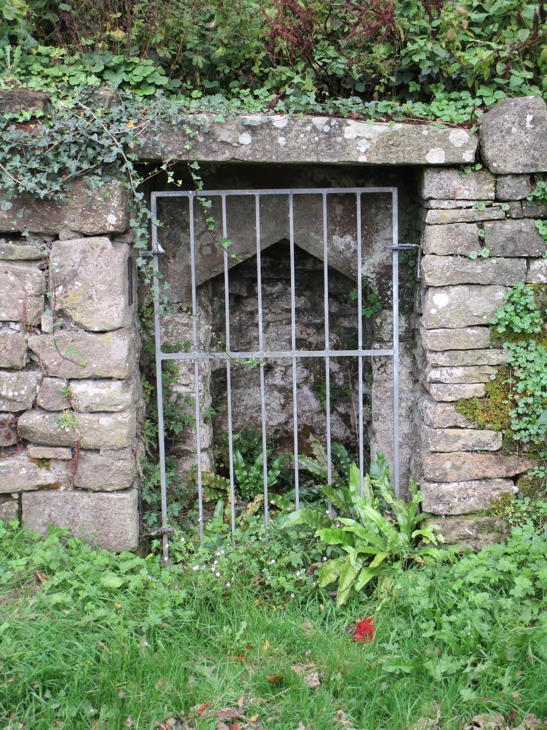
Through the Garden Gate June 2025

Although I'm no longer posting updates for the sake of it (posts about boilers and dog-friendly churches may follow), the heat will keep me indoors on this day off until I venture down to the steeple house for Corpus Christi and then to Malham church where the new incumbent is being installed; so thought a few garden snaps cheer up everyone, including myself. 

I thought this might be a new arrival, but in fact it seems just to be the Biting Stonecrop flower. It's just that the plant has never bothered flowering before!


Meanwhile, just above it, the bonsai-ed rowan is starting to look convincing and in very healthy leaf (provided I remember to water it). 


The same could be said of the slightly spindly rowan and the lovely red acer along the bank, which have to be watched in this hot weather. The acer was almost burned to death two years ago.


Meanwhile I can't work out how the old damson tree, with its split bark and powdery wood, survives from one year to the next. What's still alive? But yet again what's left of it is fruiting very well. Lady Arlen suggests I should save some stones and try to plant them, which I will. Meanwhile the roof of the Temple is rotten and needs replacing but finding somewhere that will supply the board seems less straightforward than one might hope! I can't fit a big sheet in my car, nobody will cut one in two, and delivery charges are steep.


The wildlife pond inserted into the midst of the big bramble bank is a great success, especially now I've managed to rig up a little pump fed by a solar panel on top of the damson, which circulates the water a bit. I often disturb a bird taking the water when I go to check on the pond. 


I am very glad to have seen off another incursion of the box-moth caterpillars - at least I haven't detected any for a couple of weeks - but the beautiful cinnabar moth caterpillars happily chomping the ragwort are far more welcome guests. 


Finally here is some hedge woundwort - stinky if you break the leaves, but fun to have.

Sunday, 26 January 2025

The Hidden Paths

When I moved into Swanvale Halt, I realised on exploring my surroundings that the footpath that ran up the hill between the fields and woods at the back of the Rectory and a 1990s estate was originally a road. Even today it has traces of the white lines down the middle. That has fascinated me ever since, even more so since realising that there are paths between the blocks of new houses, connecting the old road with the new; it's like a hidden landscape secreted inside the obvious, external one. Before the new streets were built, there were big houses here, some of them accommodation for the public school that used to own the area, and even tennis courts. I thought it might be a fun location for a Forest Church excursion, following the paths and reflecting on the way communities change, including the various people we used to know who lived in these cul-de-sacs and roads. Doing my recces I found a lone sequoia tree, and a curious double-trunked oak amid the yews and beeches. If God is to be found in the contemplation of landscape, the way landscapes, habits and memories alter affects our interaction with him as well. 

Today the wind blew and the rain fell, and only three of us braved the venture. I think I'll use this walk for a Forest Church later in the year, but I find myself reflecting that I often put material together that ends up not being used, and have to trust that in some way - divine providence, perhaps - it doesn't go to waste. It also struck me that that desire that the great lumber-box of things we have done and had to relinquish, whether creative efforts, loves and relationships, joys and sorrows, shouldn't go to waste either, has been perhaps more of a driving force in impelling me to investigate faith than I've realised. 

I joke that the great thing about the movies of The Lord of the Rings is that nobody has to read the books again, but I do like the walking rhyme Frodo sings near the end. I thought of it again as we traversed the secret paths on the hilltop.

Still round the corner there may wait
a new road or a secret gate
and though I oft have passed them by
the time will come at last when I 
shall take the hidden paths that run
west of the Moon, east of the Sun.

Sunday, 8 October 2023

Marcher Land Adventures 3

Back to the road for Wednesday's expedition, and it was another day of castles. My first stop, in fact, was just up the road from the cottage at Pembridge Castle, low, small, and still a private residence. My first thought was that it was a 19th-century folly, but no, though the building was extended and remodelled then a lot of it is genuinely medieval. 

I intended to call in at Goodrich Castle, but I thought that I could squeeze in a short trip north to Ross-on-Wye, as it turned out a busy small town clambering around a rocky outcrop. The big parish church has a fantastic range of memorials including one from 1530 - about as late for these things as you can get - that incorporates a parade of stone saints including St Catherine herself. The castellations around the 'town walls' only date to a road-reconstruction scheme in the 1800s, but there is a genuine ruin, Wilton Castle, on the outskirts of the town - privately owned, but you can just glimpse it from the riverbank.


Goodrich Castle is a massive structure of red Herefordshire sandstone, except the keep, built before the rest in grey stone from Gloucestershire. It was rendered uninhabitable during the Civil War: in the courtyard you can marvel at Roaring Meg, the massive mortar devised by the Parliamentary forces to destroy one of the towers and bring the siege of the castle to an end. 


Zooming through the Forest of Dean, I tried and failed to find Loquiers Well near Mitcheldean, marked on the map right by the main road but with nothing surviving visible at the site. So I went on to the very well-known St Anthony's Well in the woods above Mitcheldean. My friends Madame Morbidfrog and Mr Romeburns had been in the area a couple of weeks ahead of me, and - as wild-swimming enthusiasts - had been bold enough to go in it. I was definitely not, but although the photo below isn't all that impressive St Anthony's Well is in fact a very impressive place, the sound of gushing water mingling with the wind among the trees in the loneliness of the woods. Actually it's not that lonely at all, but it feels it.


I followed in my friends' footsteps again at my next stop, Puzzlewood in Coleford; in fact had they not posted photos from their visit on LiberFaciorum I would never have known about it. This strange woodland landscape is a former ironworking site: after the mines closed in the later 1800s its owner refashioned Puzzlewood as a kind of fantasy garden to amuse his children, and some decades later it was opened to the public. Now you traverse the damp woods along walkways and little bridges between rocks green with thick moss, looking at the weird shapes which look like the kind of towering monoliths you associate with parts of China on a miniature scale. I'm reminded a bit of the Cleft at Hawkstone Park, but Puzzlewood is a fairy landscape rather than a Gothic one. How Madame Morbidfrog managed to negotiate her way even a few yards in with her massive skirts and pixy boots I can't imagine.

St Briavels came next - a closed castle and St Bride's Well -


- and the next stop was Chepstow. Monday is the day the Museum is closed at Newport; Chepstow's has Wednesday off, so that was another I missed. I didn't have the energy to tackle the Castle, and was quite content to take a couple of photos from the outside. Chepstow Priory is grand and full of interesting features.


My last calling-point was Staunton, a village back over the Gloucestershire border. My aim there was seeing two more wells. St John the Baptist's Well is the better-known, though it still isn't one of the more celebrated sacred sites in this part of the country. The church is dedicated to All Saints, and the Baptist being the Well's patron suggests it might have been used for baptismal water, though no legend says so explicitly. Instead a little plaque by the well, very quietly sitting at the bottom of a track, informs us that it appears in a 14th-century document and was one of the village's main water-sources until 1931 when a piped supply arrived. 'Restored', says the sign, and looking at the overlooked and overgrown little Well now I doubt any of it is all that old. However, St John's Well looks positively cheerful compared to the other old village well, Brindsey's Well. This is buried in the bank along a lane on the other side of the main road. I had to pull away all the nettles and plants before I could see enough to take a photo, and it's the driest dry well I think I've ever seen. 


Marcher Land Adventures 2

It's my custom, if possible, to spend a day on holiday without using the car, but to go for a long-ish walk instead. The weather was set fairest last Tuesday, so that was walk-day. I was glad I took my stick as the very first stretch required a detour off what seemed to be the path and then beating aside brambles and ferns to find the steep stone steps leading down to the A466 opposite Boundary Cottage. Apart from the rather nice little barn, the first 'sight' was St Swithun's Church, Ganarew. There's not much to Ganarew, but the service register handily left lying on a cupboard in the church showed that there were 39 souls at the last offering of the Holy Eucharist, which is not at all bad and must have made the building pretty crowded. 


From here the way took me to the northern outskirts of the Forest of Dean, a maze of footpaths and roads that presumably once were footpaths, linking cottages that cling to the side of Doward Hill, their associated cars usually kept elsewhere in whatever layby scratched from the hill their owners can find. I scrambled through several hedges and a bit of undergrowth to find the White Well at Symonds Yat; at least, I hope this was it, so nobody else ever has to bother to look. The owner of one garden I passed was getting into the folly spirit with a decorative stone wall.


The farthest point of the journey was Yat Rock, where the River Wye bends back on itself such that it almost meets, and one day, millennia hence, will. There are two hostelries on either side of the river, the Old Ferry Inn on the west bank and the Saracen's Head on the east, and there are very few crossing points: Huntsham Bridge to the north of both, and the Biblins Footbridge to their south; equidistant between the two, a hand-ferry rows you across to the Saracen's Head and back. I arrived at the ferry-quay along with an older couple, and we stood for a couple of minutes gazing across the river at patrons of the pub enjoying drinks and food, and eventually concluded that nobody was coming to row us across, so it was down to the footbridge and then back, adding about three miles to my journey at any rate. It was then my turn to sit by the river and watch people staring from the west bank wondering where the ferry was (it had been cancelled due to high water, it turned out). 


Yat Rock is a steep climb up the hill but the thirty-mile views are worth while. Everyone has said so since the Wye Valley tour got going in the 1750s. The cafĂ© there is equally pleasing, and it would have been much cheaper to eat than the Saracen's Head at the bottom. 


From there I retraced my steps to the footbridge, past the towering Seven Sisters Rocks and sadly ignoring the Dropping Wells which lay in impenetrable undergrowth to the north, and then cut up an exhausting trail to King Arthur's Cave. Stone Age humans definitely spent time here, though it's unfortunate that the 'giant' skeleton found in 1700 was eventually lost at sea; the Cave is just along from a Bronze Age hillfort which was landscaped in the 1800s by Lord Blakemore to include a Hermitage, Grotto and Iron Tower, all of which are long since gone. I did find what the OS describes as a Well, but which English Heritage insists was just a mine shaft. There's a lonely Trig. pillar, sitting on the edge of the trees. 


By now I was pretty footsore, and the last few miles back past Ganarew were merely a preparation for the relief I felt to catch sight of Rose Cottage once again.

Saturday, 23 September 2023

Rainbow Over Swanvale Halt

Or even a double rainbow, as has been pointed out to me. Rainbows are always a tremendous delight to me. They stand for renewal and optimism, quite apart from any resonances with the story of the Flood. I think it might be because of their gratuitous, and mostly entirely unexpected loveliness. 

If I worry in any existential way, it's about the amount of time I've wasted, and the chance that I could reach the end of my life and conclude that I might have taken the wrong turn at some point, and there was another place where I could have been more use. This is not to do with any problem of faith - that's a separate business - but it might be to do with my fitness to be a parish priest, as sometimes it feels that I'm no good at it at all. When we went on our ordination retreat from Staggers at Alton Abbey, the retreat conductor Bishop Timothy Bavin told us, among other gems such as the advice that there was no shame in going to sleep under the table if a meeting got particularly pointless and boring, that we might well conclude at some point that the Church had made a dreadful mistake in ordaining us, and if so we should (as a first resort, anyway), try to recall that despite appearances the Holy Spirit knows better than we do and that God would honour the call and equip us with what we needed even if something had gone awry with the process. I try to hold on to that. I suppose we all have shadow selves, paths we might have trodden and routes we could have taken had things been different, and we can't pursue them all. 

Tomorrow's Gospel is the Parable of the Workers in the Vineyard from Matthew, the labourers who get paid the same by the landowner regardless of how late in the day they turn up. Perhaps I regret not getting going in my Christian life earlier, but then again maybe that brings me some insights I wouldn't otherwise have had. All in the end is harvest, and the Lord can work with the least we bring him, no matter how late we arrive.

Thursday, 10 August 2023

A Piece of Time

My sweep around the centre of Ely a couple of weeks ago finished (as the rain began to fall) with a very rapid visit to an antiques centre by the Great Ouse, curtailed by it closing, I thought a bit too sharply. On one of the upstairs stalls was a nice ammonite. I've wanted an ammonite for ages, and there are very few things I want. But then I realised that what I wanted wasn't just any old ammonite, but a Dorset ammonite, so I came away not with a fossil but a 19th-century print of the Ruins of Hierapolis. I'll have to find a place for that somewhere. 

I'm not quite sure when South Dorset became 'The Jurassic Coast': it wasn't 185 million years ago, because it wasn't that when I was a child and actually lived a few miles away. Perhaps it was 2001, the year when the area became a UNESCO World Heritage Site for its geology, features, and natural beauty; since then the tag has become crucial in the marketing of Dorset to tourists, and even the bus which runs along the sea road is known as the Jurassic Coaster. And the central and most charismatic icon of that whole identity is the coil of the ammonite.

The ammonite appears everywhere in south Dorset, decorating shops, hotels, brochures and bus stops. It's set into the ground outside Lyme Regis Museum, and on the town's lampposts. It even lends its name to a movie, as a symbol of the woman who has become herself a symbol, Mary Anning - again, in my childhood she was just a curiosity, but now, recast as a brilliant, misunderstood gay scientist in a peak bonnet with a basket full of fossils, she strangely binds in her own person past and present, and makes a landscape of cliffs and crashing seas hold contemporary imaginings. In her new statue at Lyme, only unveiled last year, she both holds an ammonite, and they decorate the hem of her skirts.

So I conceded that an ammonite would cost about £10 per inch of Jurassic stone, and went about the not-very-difficult task of sourcing one on Ebay. Here it is: it came not from the coast, but from Bradford Abbas, a long way inland but at the bottom of the same sea as (say) Burton Bradstock would have been 170 million years ago when the rock that held it was laid down. That doesn't matter. Its coil moves inward and pastward to the lost ages that have made the holy land of Dorset, and all of us. I disentangled it from its packaging, held it, and felt unexpectedly tearful.

Friday, 23 June 2023

Come Holy Ghost, Do

On the second day of the Triennial Clergy Conference this week, I went for what was a short walk down the hill and back again, and got dreadfully lost, eventually making my way back to the conference centre hot, exhausted and half an hour after the beginning of the afternoon’s first lecture, but I got a nice photograph of some cows from a footpath I shouldn’t even have been on.

There were a lot of words. Revd Isabelle Hamley gave us a series of Bible studies examining examples of spiritual change (when the Bishop asked us to share with our neighbour what one insight we might take away from the conference, Fr Benjamin beside me claimed that it would be Revd Isabelle’s revelation that her native French has no separate words for tortoise and turtle – ‘I tell my husband, it’s just the same animal in a different place’); Bishop Ruth Bushyager of Horsham encouraged us to subject everything we did to the test of whether it took people forward in discipleship; Dr Sam Wells of St-Martin-in-the-Fields urged us to start doing ‘interesting things’ (the Church had abandoned all these to the Welfare State in 1948, he maintained) beginning with more interaction with our communities; and Bishop Tim Wambunya, who told us a tale of discrimination which has led to him going back into parish ministry in Slough. There was other stuff, but they were the headliners.

Over the years I have become less prone to plunge into a depressive spiral at the Triennial, questioning the worth of my ministry and even of my own existence. Partly this is because I’ve learned to see my clergy colleagues as just as frail and ridiculous as me, and their self-confidence, where it exists, as a bit of a show. It’s just as well, because the Diocese of Guildford’s descent into monocultural Evangelicalism has now reached the point where it feels hard for any other kind of crop to flourish. Accounts from my colleagues indicate without any shadow of a doubt that if Bishop Andrew can wrest a church from any kind of high-side-of-centre orientation, he will, without any regard to what it may have been in the past, or the health and viability of its current congregation. To stand in the main hall at The Hayes as we did this past week for Morning or Evening Prayer, and find oneself surrounded by people holding their hands in the air ‘like they’re trying to grab God’s bollocks’, as my old vicar Fr Barkley so picturesquely put it, does make one feel less than fully at home. I tend to keep my mouth shut because I know hardly anyone will understand anything I feel inclined to say.

I was glad I stayed for the final eucharist, though. The outgoing cathedral dean presided, a woman, I have been told by two people independently, ‘who doesn’t give a shit anymore’, not that that was particularly in evidence. The Bishop presided and, notwithstanding what he does, his words usually come across rather well. This time he decided to finish his sermon by reminding us of the truth of our ordination by singing the Veni Creator. For someone it was the most natural thing in the world to follow him intoning ‘Come Holy Ghost our souls inspire’ with ‘And lighten with celestial fire …’ – only sotto voce – and within a moment or two that whisper went round the whole hall so those of us who knew it were all joined in with that ancient hymn linking us, not just to Anglicanism past, but to the whole of the Western Church. A glorious moment, if a lonely one.

Sunday, 30 April 2023

A Sunday of Contrasts

Our baptisms are moderately conservative affairs. I keep the old language about 'sin, the world, and the devil' and I even do the little gesture called the Ephphatha, making the sign of the Cross over the child's ears and lips, symbolising the newly-baptised soul's ears being opened to hear the Word and their mouth to speak it, which comes from the old Roman rite and which I so liked I adopted it. I've even been asked, occasionally, as I was today, to baptise a child who's wearing a traditional christening gown, but that's quite rare as most families now find their beloved baby doesn't fit the gown by the time they get around to organising the ceremony. But I've never been asked additionally to wrap the child in a white shawl before. The christening gown itself derives from the white robe in which a baptismal candidate was wrapped in the ancient rite after the baptism itself, signifying their clothing with Christ, and after the custom of baptising children naked fell into disapproval in the Western Church they would arrive at the ceremony already wearing it. I see that the old Roman Rite includes clothing with a shawl or somesuch, but also allows this to be commuted, as it were, to a white cloth placed on the child's head. The sense of this arrangement was revealed today when none of us could work out easily how to hold little Isabella so the shawl could be applied. 

Later in the afternoon it was our Spring Forest Church. I didn't know quite where we were going, so Julie the Sacristan led the small procession (including two dogs) to a local SSSI where we were surrounded by meadows and birdsong yet with the 21st century very audible in the form of the main road not far away. This is of course much less formal liturgy, but as yet hasn't attracted a single soul who is not already a member of some church community! Will more publicity make a difference?

Thursday, 20 April 2023

Dorset, and Chelmsford 2023

In our family Badbury Rings is the go-to place for a picnic, and Wednesday found me, my mum and sister there, reliving long-ago times and wandering the windy ramparts. I think the mysterious features we could see on the skyline that looked like a row of gigantic solar panels and a tower of some kind are associated with a sand quarry on the hillside over toward Corfe Mullen. Later on I made it to Blue Pool on the Isle of Purbeck, somewhere I haven't seen for forty years; the colour of the clay-infused water varies greatly, but it had its customary hue of turquoise on Wednesday. There were a few other visitors, but I had the woods almost to myself.


But today's excursion was very different and took me to Chelmsford, mainly to see the Cathedral as it's one I've never done. There isn't much to Chelmsford, nor to its Cathedral, a big parish church bumped up to cathedral status in 1914 and never altered much to look like it unlike some other parish-church cathedrals such as Leicester or Newcastle. It has also been architecturally cleansed a couple of times over the years and so very little of any antiquity remains. It is quite the most un-cathedral-like cathedral I've seen. The font, altar and bishop's throne look disconcertingly as though they are made of recycled plastic, but are in fact of Westmorland stone.


Chelmsford City Museum, though, is a delight: clear, arranged with quite a bit of visual flair, and done with a genuine passion for the history of the area. The story of the building housing the museum is covered, and even the military bit about the Essex Regiment is good. There's also a completely uncontextualised reference in the Roman display to a certain locally-relevant 1980s TV sitcom, and I do appreciate curatorial jokes. And it's still run by the local council, and free to go in!


Thanks to the Museum, I know that Moulsham Street marks the course of the old Roman road to the waystation halfway between Londinium and Camulodonum that was the original settlement here, and it was on Moulsham Street that I found the Little Café, a small eatery which - like Tyfu Café in Caerphilly - I added to the list of nice places I've had sandwiches in. Let's not call them 'greasy-spoons', but good basic cafés. Always look for a place where old people go to eat, and where the staff know the patrons' names! 'Other cafés are available', but why would you bother?