Monday, 30 January 2017

Tinsel Maniples and Sparkling Coffee

Image result for tinsel manipleAt the meeting of the local chapter of the SCP last week the conversation, reprehensibly, turned to vestments and the impracticality of the maniple, the embroidered strip of cloth a priest of a traditionalist bent might wear over their left arm (in origin it was a napkin to wipe things up). The consensus was that people don't use them for fear of knocking over everything on the altar. 'Oh, you get used to it', I said ostentatiously. 'I wore a maniple at Christmas', put in one of my brethren. 'It was made of tinsel'. I decided not to pursue the matter. A bit later I saw another of my colleagues blithely topping up his coffee with sparkling water from a bottle. I don't think it'll catch on. 

As we stood in the chancel of the church which was hosting us for Mass, my imagination was suddenly taken back a millennium or more to some sparsely-decorated chapel of Anglo-Saxon England where a group of monks or clerics would have been gathered around an altar in exactly the same way doing pretty much the same sort of thing. All those figures would, in their time, have been linked into the eternal worship of Heaven just as we, a group of miscellanously-shaped and -gendered Anglican priests, were in ours. They took part in it, died, and handed their role on to others who took their place - and so on, until there we all were centuries later. The liturgy abides: we who celebrate it come and go. We are part of its story, not it of ours. It's more real than we are. And there's something profoundly comforting about that.

Saturday, 28 January 2017

An Interlude of Uplift

In the midst of a crazy world, blogs can default to a catalogue of complaints and gripes, and I don't want to give you the impression I am anything other than happy here in the fair parish of Swanvale Halt. I am remarkably blessed in every way you can imagine, thanks to no virtue of my own, and every day begins and ends with gratitude. It's been a long while since any very black moods have swept across me, and I turn my eyes to the hills that lie around the village, and remember from where my help comes. Sometimes happiness, I find, can even edge towards joy.

My New Zealand reader Fr Wellington offers prayers for me with great kindness and grace:

May the church bureaucrats be kind to you.
May the parishioners not desert you
Let the tithes and offerings not tempt to build bigger barns
May the media reports be gracious
May meetings be not too disputatious
Let the SD be perspicacious in his advice to you
And may the Bishop grant you her approbation in all things and leave you in peace.
Amen.

Not much chance of bigger barns being constructed, I must say, but it gives us something to aim at. God bless you, one and all.

(This won't last, of course).  

Thursday, 26 January 2017

Morning Thoughts

Blogs are places for thinking through things. 


The advocates of torture always seem to have in their minds movie and TV scenarios where the hero has captured a wrongdoer with limited time to go before some disaster befalls the innocent, the key to avoiding which the wrongdoer knows. But, quite apart from the question of whether these imagined events are ever realistic, they take place within a context of crime, gang violence and the like, in which the hero is always implicated and ambiguous. They are episodes of passion and moral conflict, in which the hero might or might not take the decision he (it’s always he) does. This is what makes them dramatic. The fictional scenarios never show what really happens in torture: the calculated and deliberate infliction of pain by officials of the State, in accordance with a predetermined policy. In those, more real, circumstances, when states and their agents use torture they take a step of degradation. The State should by rights act to restrain violence and promote law and negotiation: by using violence to extract information (setting aside the question of the reliability of the information so extracted), states instead normalise such acts, and lower the resistance of others to doing the same as them. Greater violence, if you like, circulates in the system. Whereas the fictional act of torture takes place in a context which is already lawless and violent, the real one injects more violence into a context in which the State’s role should be to reduce it and to bring about adherence to law. This is why the use of torture by states degrades those involved in it, the states themselves, and the world community, and why, in that fictional scenario, it might actually be – chillingly – better for innocents to suffer to avoid worse events in the future.

Suits You, Father


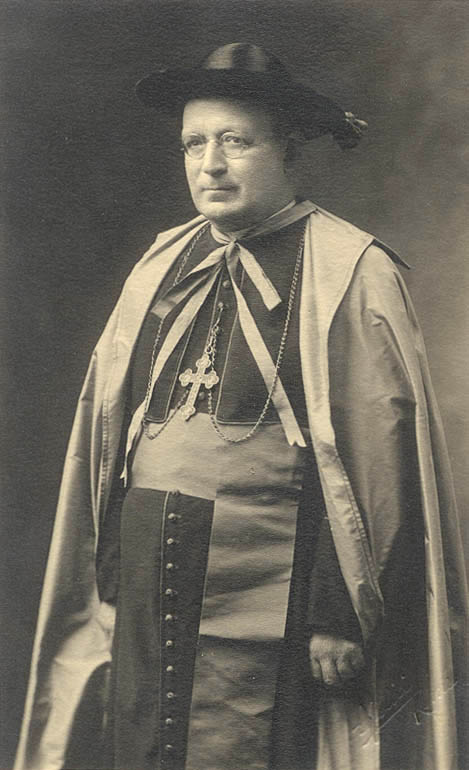
Image result for saturno hatThe other Pope caused some discussion among people I know recently by preaching about clerical attire. This puts one in mind of the vicar who angrily denied Bishop Mervyn Stockwood’s accusation that he’d preached a series of sermons in Lent about Georgian architecture with the words ‘It was Advent’, but Papa Francesco was focusing more on the moral implications of what priests choose to wear. As we know, he has a rather different sartorial style from his predecessor who favoured things like fanons and fiddlebacks and anything that might hark back to the days before Vatican 2, and he probably checks the tag on his chasuble to make sure it is genuine polyester.


Speaking at mass in his private chapel in December, Pope Francis described how an elderly priest colleague had been in Euroclero, the big clerical outfitters, and spotted a young chap trying on a saturno hat and an unnecessarily fancy cape and checking himself out in a mirror. The old monsignor had, said the Pope, ‘conquered his pain with humour’ and said to his preening colleague ‘and they say that the Church does not allow women priests!’

If that rather disagreeably misogynist remark, and the fact that the Pope sees nothing amiss with it, doesn’t make you feel too sick to continue reading, you might take on board the rest of his argument, that once a priest ceases to see themselves as a mediator of God to his people (that is, someone who in loving and sacrificial words and deeds does for them what God does), and instead becomes merely a functional intermediary (someone who occupies a position of bargaining between God and human beings), they will give in to rigidity and worldliness. They will, bizarrely, look ‘sad and serious’ and have ‘dark, dark eyes’ – and, presumably, shop about for elaborate churchy gear to emphasise their status.
One of my friend’s online interlocutors groused ‘Has the Holy Father nothing better to do than gossip about young priests in tat shops?’ ‘In my experience, it's the traditionalist priests with conservative sartorial taste who are often ministering in the places others shun. A bit like the Incarnation really - beauty among the dirt and grit’, commented another. ‘Some of the best priests I have known wore yards of lace and brocade in church and jeans and tee shirt in the pub in the evening’. Another friend of mine said ‘Perhaps the Msgr in the article would have much preferred it if he'd gone into Euroclero and spotted a nun playing a guitar badly. Because that (very 1960s) kind of Catholicism really got people flocking back to church didn't it. Perhaps we should be grateful to the Msgr for inspiring the Holy Father to teach us that dressing up is not consistent with humility and genuine mission. If only I'd known that when I was a parish priest in inner city Bristol working amidst the homeless and drug addicts - and when I increased my congregation from 30 elderly people to double that with lots of young families.’

You can see ideas eliding into one another here. Church is about the sacraments of Christ’s Kingdom and so churchy things should definitely declare the beauty of God, even if what we might consider to be beautiful will vary from setting to setting and arguably, though if we’re honest not wildly, from person to person. Francis isn’t explicitly taking a pop at that: saturnos and velvet capes do seem rather more about adorning a human individual rather than the God they serve. You know where he’s coming from, about that as well as the strained mediator-intermediary dichotomy, even if this isn’t a particularly edifying way of talking about it. However, you might be forgiven for suspecting that lurking behind his irritation at fancy clerical street-dress is also a scorn of fanons and fiddlebacks, his rolling-back his predecessor’s rolling-back the 1960s; so perhaps the clergy comments above aren’t that far of the mark. If that is what he thinks, it’s drawing an analogy too far.  I for one hadn’t considered that having dark eyes might be a sign of spiritual disorder: if so, I got it from my Mum along with that particular dominant gene. Well: not all my weekday-mass homilies have been impeccably thought-out theological masterpieces, either.

My church gear is a sort of battledress, it seems to me. The fallen world militates against beauty and hope, denies the reality of heaven and the true nature of human beings: the Church insists on the presence of the Kingdom, and even my biretta, which is both smart and ludicrous at the same time, is a little pom-pommed declaration that I’m not going to compromise about this stuff. Of course if that’s where your religion stops, it’s a bit catastrophic, but it very rarely is.

Outside church, priests should not be scruffy unless they are seriously unworldly (and very few of us are), and never dirty. Off duty entirely, I quite like the fun of conservative male dress, the selection of ties and shirts and hats and shoes according to occasion and circumstance: but I never think that it’s anything other than a game, an amusement which I trust causes no harm and may even bring a little delight to the world. I hope I’m right, anyway.

Tuesday, 24 January 2017

Swanvale Halt Film Club: Suffragette (2015)


Image result for suffragetteApart from Meryl Streep doing her panto turn as Mrs Pankhurst (of which there isn’t very much in the movie), we very much enjoyed the worthy Suffragette. I kept thinking I’d seen Carey Mulligan in something else, but checking her biography I haven’t – it must have been another actress with similar mannerisms, not that it matters much.
What struck me most forcibly – why it had never really done so before I can’t imagine – was the disruptive force of Suffragism and the sense that anyone who got involved with it was pitching themselves against the whole way a society functioned, its assumptions and relationships. Ms Mulligan’s character Maud loses her home and her family as her poor husband, even more trapped within the patriarchal system than she is, sees his wife turn into a terrorist and is jeered at, emasculated, by his workmates for allowing it. He isn’t a bad man: he just can’t see outside that particular box, and is it any wonder? The way Maud’s understanding of reality is loosened and her eyes opened to the oppression of the laundry she works in, and the society that facilitates such petty tyranny, is portrayed with great restraint and all the more effective for it. No wonder the ‘straight’ world thinks the Suffragettes are crazy: they can see something everyone else can’t, and when your reality is so very disturbing to the mainstream’s, mad is very much what you are. Making this clear, resisting the temptation to present Suffragism as an obvious idea whose triumph was inevitable, but as something profoundly dangerous, is one of the film’s main achievements, quite apart from its technical proficiency and the work of the players.  Trying to think of a contemporary parallel, I settled on veganism: but I’m not a vegan, and will leave talking about that for another time.

Sunday, 22 January 2017

More About How Things Are Done Or Not Done


Image result for cycle arrowsIt was a wet Monday morning, and I went with Debbie our ordinand for a meeting with the Powers That Be at the diocese to express some of her dissatisfactions with the way the process of settling her curacy was handled, as you may recall. The Powers manifested themselves on this occasion in the form of the Director of Ordinands and the Director of Training, clad in the kind of comfortable, approachable clothing – pastel pullovers and long-loved jackets - which clergy now all seem to wear unless they’re a bishop. It doesn’t fool me, I can tell you.


A lot of the discussion centred on whether or not Debbie had had a particular form which is supposed to constitute part of her Final Report and on which ordinands indicate something about their aims for their title parish - Catholic or Evangelical, rural or urban, within 5 miles of a Waitrose, that sort of thing – and who was supposed to ensure that she got it. ‘The national understanding is that the initiative in placing ordinands rests on the training institution’, said the Director of Ordinands, and said it repeatedly through the meeting. I thought this was less important than the fact that Debbie’s future, in or outside this diocese, had been settled without a word being said to her about it, and asked how the picture of the initiative resting with the colleges fitted with the parallel one of the training department here settling placements for local ordinands. 'I do try and speak to the ordinands', said the Director of Ordinands, 'but sometimes they're in Bristol and sometimes they're in Durham. The training institutions are supposed to be best-placed to make a judgement on what's best for them.' The person in question, of course, was barely a 15-minute drive away, but I let that rest.

If anything was clear from the discussion, it was that things weren’t clear. It is perhaps not possible to offer a set of accessible criteria for settling curates in parishes because parishes, and their incumbents, are complex and quirky and there are important factors which feed into the decision-making process which can’t really openly be talked about, such as when this or that incumbent might be about to move on or (despite what they say in public) can’t work with someone of the opposite sex. But the boundaries between the responsibilities of the colleges and the diocesan authorities could do with some clarification: and ordinands themselves could at least be talked to. That was all I expected to get, and that’s what was said.

Debbie is now safely provided with a title post in another diocese, so none of this matters to her, apart from the relief of saying her piece. But who knows, I may one day be a training incumbent to another ordinand, and the piece said could easily matter then.

Friday, 20 January 2017

Washing of Hands


Image result for nhs mental health servicesI share this because of my interest in mental health - I have lots of crazy friends, and may well be crazy myself at some point, who knows. 
Poor Cylene has been going through a hard patch recently, and her anxieties have brought her a variety of dramatic and baroque hallucinations. Artist though she may be, these are not at all easy to deal with and she would sooner not have them.


She tried to call her GP and after 90 minutes trying and failing to get through called her mental health team instead. The MHT recently discharged her, not because she was well, but because she’d been through their offered programme of therapy and that was it. It is in their interest to discharge patients because they are no longer a drain on time and resources, regardless of how far they are towards a cure and what sense ‘cure’ may make in their particular case. The MHT refused to speak to her. ‘We discharged you, you’re not our responsibility, talk to your GP’.

So Cylene again attempted to call her GP and finally got through. ‘I’ll try to contact your prescribing psychiatrist and call you back’, the GP said. When Cylene got that call, two hours later, it began with the doctor ranting for fifteen minutes about the behaviour of the MHT. ‘They refused to speak to me,’ she said. ‘I said, I’m not a random member of the public, I’m a health professional enquiring about one of my patients who you have also treated and who is presenting with psychotic symptoms. It would really help me to speak to her psychiatrist. They simply just kept saying that you’d been discharged and weren’t their responsibility any more. In the absence of consulting your psychiatrist, all we can advise is that you take another 25mg of your current antipsychotic.’

‘So I said thank you, as I knew that’s all she could do’, sighed Cylene. ‘But I’m already taking 300mg, I don’t see what another 25 will do. If I could get more than 2 hours’ sleep a night it would help.’