Thursday, 26 June 2014

Oh the Drama Oh the Angst

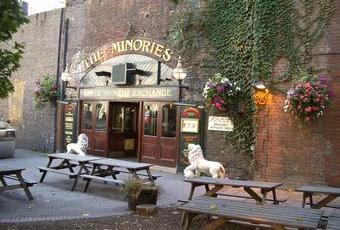
Last Saturday was supposed to have been Reptile, the Goth club that operated out of the Minories on the edge of the City and where we’ve been many times over the last six years since it set up there. I’ve mentioned before what a lovely venue it is, wedged into an old railway arch just up from Tower Hill Station, and with a pleasant outdoor seating area for when conversation is more important than music which, given the state of most Goth music, is much of the time.

Apparently it was a quarter of an hour before the Reptile organisers, Vade and Arcadia, were due to arrive and start setting up on Saturday, when they got a call from the pub manager telling them the night was cancelled. They were not unnaturally incredulous. They carried on to the Minories, but the manager was unresponsive to any argument that it was too late to be cancelling an event to which people would be coming from some considerable distance, and they were left outside trying to post a message to Facebook and as many people as they had numbers for. The justification was that a silly joke had been posted on the Reptile Facebook page, with the legend, ‘Remember kids, if somebody offers you drugs, say thankyou – drugs are expensive’; the Stonegate chain which owns the Minories has, so the manager stated, a ‘zero tolerance drugs policy’ and that was that. It was no use arguing that Reptile doesn’t allow or endorse drug-taking either.

There was then unleashed such a cataract of invective and rage from the Goth community directed towards any online location which bore on the matter that the manager, if he had any human feelings at all, must have been thoroughly chastened. Nobody believed the given explanation, and it does smack of an excuse. So other explanations were offered.

That Saturday was of course the night of the match between England and Italy in what I understand is known as the FIFA World Cup, and the Minories was much busier than usual. Vade and Arcadia had already discussed with the manager how this was to be handled, in terms of access to the toilets and so on. Reptile had already lost to the football-fan crowd the outdoor seating and its use of the indoor screens which usually display a variety of alternative films. Could it be that the manager had completely underestimated the difficulties of combining the two events and had decided to get shot of Reptile to get himself out of a hole? Not very likely: to cancel, permanently, a longstanding event for the sake of a one-off would be so stupid a decision it’s hard to credit.

A more probable rationale comes from the recent presence at the Minories, every other Saturday night of the month, of a very well-established and profitable transgender club. After the traumatic cancellation of Reptile, Vade and Arcadia got rid of some of their frustrations by listing the run-ins they’d had with the Minories management across the years over this or that inadequate facility or lack of communication; there was clearly very little love lost on either side. The cancellation of Reptile looks much like the manager grasping the chance to get shot of a troublesome customer in favour of another event which promised more profit as well as being simpler to deal with.

Naturally enough the Goth community was vocally supportive of its friends. ‘You run the best club night in the UK, the manager must be an idiot to lose it’, and ‘Obviously loyalty means nothing to them’, were among the more publishable comments. If ‘loyalty’ is about good business practice and protecting your reputation for fairness and straight dealing, then such a statement makes sense; less so if you think it demands that a business lose money for the sake of supporting your favourite event. I suspect the hard truth is that had Reptile been as good a prospect commercially as people seem to think, the pub wouldn’t have let it go on such a flimsy pretext.

Reptile has now found a new home at the Archway Tavern, N19, which makes it even less likely that I and Ms Formerly Aldgate will be able to find our way back there: much too far away. Good fortune to them. However I note they’ll be occupying the Tiki Bar space in the Tavern. I kept saying Goth Tiki would be the next thing, but nobody listened …

Monday, 23 June 2014

No Man An Island

The owner of a local business which failed a couple of months ago takes his own life. The local authority had refused to come to any arrangement about rates while the business was having a hard time.

But the council is pressured by the Government to reduce its spending and to do more with less.

But the Government is frightened by voters who don't trust them to spend their money and the City who will fight any attempt to get it from other sources.

But the voters are pressured by increasing costs of living and the bosses in the City financial industry by their shareholders.

But the shareholders are pressured by the market.

But the market consists of - who?

Friday, 20 June 2014

An Offer


This sickening little graphic is exactly why I've never thought of myself as a 'leader' and don't trust those who do. I regularly get bumf through the post from various Christian organisations which want to tell me how to be a leader, grow leaders, learn about leadership, and so on. Anyone who thinks of themselves as a leader should on no account actually be allowed to lead anyone else, in a properly ordered world. 
So it was with ambiguous feelings that I had an email the other day from the diocesan training department 'offering me the chance' to attend a leadership course next year, run by Keith Lambdin, the principal of Salisbury Theological College, and a couple of local clergy. 'The bishop is fully in support of this initiative', said the note, 'and of your participation in particular'. Which makes me wonder whether this is the kind of 'invitation' one can refuse, or not. The course will be lengthy - about a fortnight spread over the year, including two residential sessions of a couple of days each; expensive (costing about £1000 in all, of which the diocese will stump up half, with the residue coming from my annual training allowance and, in theory, the parish); and of as-yet unclear content. My long experience is that professional training courses both within the Church and outside it never deliver what they promise, and the lessons you learn are almost never those which the course intends to teach you. What they invariably do deliver is traumatic episodes of role-playing and opportunities for public humiliation. I have to have a lot of persuading that this will do me or anyone else any good.
I am not averse to the idea of training. A former parish priest who now works as a management consultant and treats Lamford as his parish church has written a book on the management of change within the Church which everyone regards very highly: were the diocese to invite him to run a course which actually looked at what change might really mean or how the Church might be better organised to facilitate it, now, that would be interesting. Unfortunately, as I've said before, while the Church pays lip-service to the concept of 'change', it appears to have no idea what such change might actually look like. 
However this gentleman says good things about Fr Keith Lambdin, and our curate has lent me his book which isn't bad, rather firmly and clearly written and with a minimum of nonsense (at least a couple of chapters in). He suggests most clergy - almost willy-nilly - fall into the leadership styles he calls the Monarch or the Warrior, which are in fact the least helpful in the context of the modern Church, and posits a set of different ways of thinking about what you do as a minister (I like putting it that way, rather than 'leadership styles') which are a bit more healthy. I can't see 'the Coward' or 'the Evader' as an option, unfortunately, but I'm hoping reading the book will justify me in not doing the course.

Monday, 16 June 2014

Discovery

You'd have thought that, after nearly five years in Swanvale Halt, there was nothing left to find lurking around. But this morning I found these maniples all of which belong to sets of vestments we have in active use - stuffed at the back of a drawer, like a guilty secret.

Friday, 13 June 2014

'Agia Aikaterini

I was delighted to be able to add to my St Catherine memorabilia a few days ago with this Greek icon, allegedly from the 1950s, discovered on eBay. It is teeny-tiny, only about three inches in height, and in fact tinny - the cheapest imaginable form of devotional item, printed on rough paper and mounted on a chunk of pine, held in a desperately thin tin frame. The image of Catherine follows the traditional iconography but facially she does look rather like a long-forgotten B-list actress of the time. I'm not at all sure what the tower in the background signifies. On the back is a pencil scribble which seems to read 'Mazbe', though I have no idea what that might mean or even if it's right!

Wednesday, 11 June 2014

Fairy Story

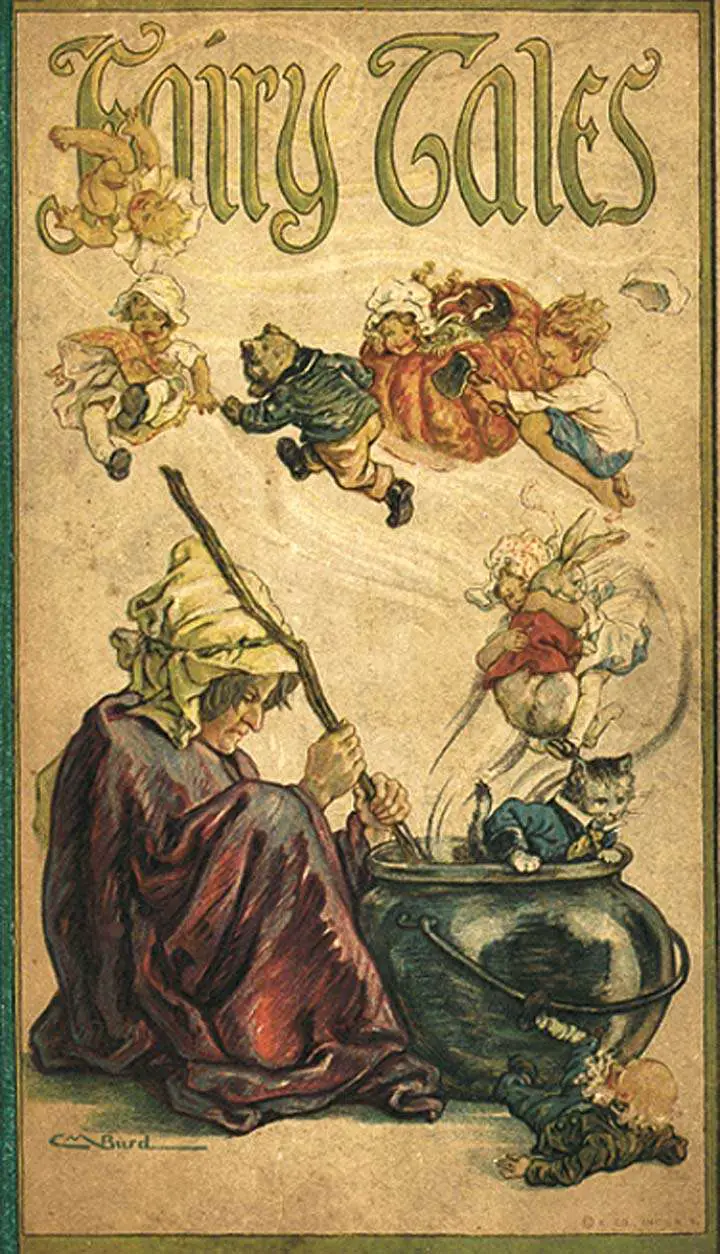
When I first heard the story about a week ago that Richard Dawkins had denounced fairy tales during a talk at the Cheltenham Science Festival my first reaction, in an impeccably Dawkinsian way, was incredulity. Could anyone descend so far into self-parody, I wondered. As the professor has a habit of doing, once the media kicked up a fuss about the statement he claimed he never said it, even Tweeting that the BBC had phoned him up to apologise about repeating 'Daily Mail lies'. However it wasn't the Mail who first reported his words, but the Gloucestershire Echo which I imagine must have had a reporter there. Their report is still online, unapologised for and unaltered. It includes the contended words 'pernicious' and 'supernaturalism', and Richard Dawkins hasn't claimed that anyone from the Echo has phoned him up. Again, it's part of a pattern.

However, Christians ought not to feel entirely comfortable at being ranged against Dr Dawkins on this occasion, as orthodoxy and atheism both share a common approach to truth. Christianity is a religion rooted in a certain set of historical events: it contests with atheism the nature of those events, not the nature of fact or the use of historical evidence. It assumes there is such a thing as Truth, and endeavours to discover it. In fairy tale, you suspend normal judgement and enter into another realm where the rules are different, for the sake of the benefits of entertainment that come from the narrative: as Angela Carter defined it, 'a fairy tale is a story in which a king can knock on the door of another king to borrow a cup of sugar'. That's all very well, but Christians may well shift uncomfortably at the suggestion that truth doesn't matter so long as you enjoy the story: that's perilously close to reasons some agnostics give for going to church on Christmas Eve. Every now and again a different, but allied, news story hits the media, that of a priest who gets into trouble for telling children that Father Christmas doesn't exist: that is, for defending Truth against the forces of custom.

I worried about Father Christmas for some time. His nature as a being of superhuman power and omniscience who dispenses gifts to the well-behaved is too close to aspects of Jesus to be entirely welcome. However I made my peace with him at the Swanvale Halt Old People's Day Centre Christmas Lunch a couple of years ago. Father Christmas always attends these events and distributes small gifts with a certain quantity of ribald humour. We all know who is being Father Christmas, and all of us are, with the usual variations of personality, sensible grown-ups who are well aware that he doesn't live at the North Pole and arrive accompanied by magic reindeer. Nevertheless, we all accept and welcome his presence as part of the festivities. We enter into the narrative, as it were, for the sake of being entertained; and also for the sake of recognising the importance of generosity, open-heartedness and good cheer for human social relationships. Father Christmas embodies those things, and it's perfectly possible and acceptable for anyone to 'play' him, temporarily to occupy that symbol on behalf of everyone else. There are resemblances between this sort of play-acting and the play-acting of the Christian community engaged in the liturgy, with the exception that the latter has its rationale based in those historical events which generated the whole narrative. I don't see any problem with having both.

Just as, really, there shouldn't be any necessary contradition between enjoying a fairy story and believing in evolution.

Monday, 9 June 2014

Disturbance

I've posted before (here  and here) about Rick the homeless visitor to Swanvale Halt, and in other places about the various irritating little disruptions which can be ascribed to the youngsters who hang around as well. Recently Rick and Joe the chain-smoker, whose second home is the bus stop although he has a perfectly serviceable flat in sheltered housing a hundred yards away, got their benefits sorted out so any financial assistance I had given no longer had any justification (Joe even gave me some of my subs back). But Rick and the two young women who are rivals for his affections, and the troublesome teenagers who seem to know them, and even more troublesome individuals who seem to know them, began to form a sort of vortex of disturbance, substance abuse, and occasionally violence around the church. There were people who felt unable to come in to pray or to visit their loved ones' remains in the churchyard. The police asked to meet with me, and made it clear that they'd really rather I kept the church, this unsupervised space at the centre of the village, permanently locked and the churchyard garden fenced and gated. I wasn't going to do any of these things, and felt vindicated later in the day when I had locked the building and was called by a couple who were desperate to pray for the man's mother who was on her deathbed; but I did agree to ban all the people concerned from hanging around the church, apart from coming to services, including the youngsters who occupy the church porch, and make it very clear that drinking alcohol in the grounds was unacceptable. Things have been quieter since, although the shenanigans concerning Rick and his awfully tangled relations with others have gone on unabated in other places.

This has all been very instructive, as it's the second such cycle of disturbance which I've undergone here. You may recall (I certainly do) my dealings with Micky last summer, which ended in a similar though more limited crackdown. The truth is - the sad truth, which to some degree belies our romantic feelings about the church being there for the vulnerable - is that what the church is really there for is to communicate the presence of God, to stand as a sacramental sign of his love, grace, and redemptive power. And it can only do that a) if it is at least open to people and b) if it resembles him in beauty, peace and holiness. If people can't use it, and if it ceases to be a centre of beauty, peace and holiness, but instead of danger, violence and chaos, its purpose is vitiated.

It's no sin to find yourself homeless and broke; it's an understandable one to be a drunk. But: behind those facts, usually if not always, lie whole lifetimes of disruption and disorder, of broken relationships and disastrous decisions, which the Church, and even more the actual church you might come across accidentally, is ill-equipped to respond to except with very, very limited practical help, with pointing them towards the professionals who actually can do something, and the Mass. Even a listening ear may not mean much because my experience is that the people I'm dealing with don't know what they're saying half the time, or at least not an hour or two after they've said it. The second, even more brutal truth is, that the life you lead (if this is you) means that your disturbance and disruption will suck more after you. Even if you're trying your best, you will be a magnet for evil. And most churches lack the infrastructure to cope with it. They have to recognise that, and so must you. 'Your enemy the devil goeth about as a roaring lion, seeking whom he may devour'.