Showing posts with label animals. Show all posts

Friday, 12 September 2025

Rainbow Bridge

My journey towards thinking about animals differently didn’t start with Professor Cotillion’s cavaliers, as it really began years ago with my dealings with Christine and her boxers, but since dropping in on online groups such as the charity Bliss Cavalier Rescue’s LiberFaciorum page I’ve become aware of a phrase, an idea, that Christine never used, that of the Rainbow Bridge. ‘Run free at Rainbow Bridge’, grieving pet owners and their comforters will say of their lost animal.

The idea – a beautiful one – is that dead pets go to a meadow landscape where they are restored to health and wholeness, where there is always water and food, and where they play. They wait for their owners to arrive and, when they glimpse them on the edge of the meadow, leave the other animals and run to meet them. Human and pet then cross the Rainbow Bridge together into eternity. Sentimental, maybe, but as I age I'm more reluctant to dismiss sentiment.

The motif of Rainbow Bridge comes, improbably, from a scrap of paper written in 1959 by a 19-year-old Scottish girl who’d just lost her Labrador. It, and she, were chased down by Paul Koudounaris whose book about the spectacular ‘catacomb saints’ distributed across Catholic Mitteleuropa in the 17th & 18th centuries, Heavenly Bodies, I have. She was Edna Clyne (later Clyne-Rekhy), and when Mr Koudounaris found her in 2023 she had literally no earthly inkling that her words, originally handed to a few friends in typescript, had, via a 1990s US magazine advice column, found their way around the world - handed to grieving pet owners in vets’ surgeries, shared between friends, carved into stone and placed in pet cemeteries.

Edna disclaimed any direct spiritual influence on her imaginary picture, but the imagery of the rainbow as a sign of hope and its link with animals seems subconsciously to link to the story of the Ark. The rainbow now carries additional meanings, of inclusion and togetherness. But can the motif be accommodated within orthodox Christian thinking in any way?

Even within its own terms, Rainbow Bridge begs questions. What happens to animals humans have wronged, and whose relationship with us is marred beyond repair? The picture clearly imagines dogs as the beloved pets, not surprisingly, though it can easily be extended to cats; where do other animals fit in? And dogs and cats are carnivorous. As far as Christianity is concerned, the idea of Rainbow Bridge is clearly based on popular misconceptions of Christian views of postmortem experience, one of spiritual survival (‘we die and go to heaven’) rather than the resurrection to a new, physical life. Traditionally Christians have shut down discussion about what happens to animals when they die by saying that they have no souls – no soul, no survival – but that seems to fall into the same error. More to the point, the question of what happens to animals is linked to what happens to humans. We participate in the resurrected life not because some immortal part of us survives, but because we acknowledge our sins and turn to Christ; animals have no sin, and so are not redeemed.

But Edna Clyne was only inventing an image, not devising a theology, and if that’s true of her, very substantially the Bible is little different. You’d struggle to define a clear idea of what the soul means – other than being ‘not the body’ – from Scripture, and nothing about the process of what happens to us after death is very clear either.  The greatest clarity we are given, the vision of the Heavenly City, comes in the form of an image, not details about how we get there or what we will do when we arrive. And we know that animals are part of it, because it was part of what Isaiah glimpsed seven centuries before Christ, a renewed world where the wolf would lie down with the lamb and the child place its hand in the adder’s den and not be harmed. None of the ambiguities are insoluble.

You can’t offer a requiem for an animal which has no sin, but you can say as much as that, and maybe that’s all you need to say. We humans have black vestments and unbleached candles to commend us to divine mercy, the tremor of knowing what we are: the beasts, bold and unaware, have the rainbow.

Monday, 23 June 2025

The Most Beautiful Dogs in the World No Matter What Anyone Says

Since Professor Cotillion's amazing Cavalier King Charles Spaniels, Bartle and Brindle, captured my heart I have discovered more about these impossibly cute dogs than someone who doesn't own one needs to know. I now find them everywhere. As the conclusion of my Oxford Holy Wells project appears in the distance I wondered what to write about next and the Holy Wells of the New Forest occurred to me. I looked up the Abbot’s Well at Frogham which I haven’t seen in 35 years and what should come up but this picture of a beautiful tricolour Cavalier. His name is Merlin and his owner Nicky took him on a walk around the Abbot’s Well. She founded the Dog Friendly Dorset website so I considered all those links providential. Nicky has a rare cancer so hopefully with enough fundraising for her treatment she’ll be around to look after Merlin as long as he needs. Then my local community board highlighted an ex-breeding stock Cavalier called Betty who needs adoption, and I found that it’s because of a rescued Cavalier called Lucy that third-party pet sales were banned in England as a step towards eradicating puppy-farming. Poor Betty wasn't house-trained (unsurprisingly as she had never lived in a house), and had never been walked on a lead: these are dogs that are bred to interact with humans, and they find their greatest joy and contentment in human company, so there's a particular cruelty to keeping one in a cage away from human beings. 

No wonder people fall in love with them. Dr Cotillion's Brindle is a bit of an exception being an only pup who is extremely protective of his owner and barks at anyone else who approaches, but almost every other Cavie treats any human they come across as a friend (they are not good guard dogs). They will let their humans do anything to them, dress them up in everything from crowns to sunglasses and take it completely in their stride. They are almost completely hopeless at anything other than looking cute. A nice Youtube video from Canada entitled 'Why our Cavaliers would not survive in nature' includes as reasons 'they need weekly manicures', 'they wear snoods to eat', and 'we are their emotional support rather than the other way round'. If you are their human, they will love you to distraction.

And this is partly the cause of their major problem. Cavaliers descend from the toy spaniels that have been known for centuries before modern breeds became recognised and established. Over the years these dogs were cross-bred with flat-nosed animals such as pugs and became what we now know as King Charles Spaniels, with domed skulls and short faces. Then in the 1910s breeders began to reflect that these dogs didn't look like the ones they could see in old paintings, and it might be nice to breed them back in that direction again. This was all going well until World War Two intervened. My very battered copy of The Observer's Book of Dogs from 1945 which I was obsessed with as a child describes the breed as 'the latest of these attractive spaniels to have come before the public eye' which was an optimistic account as at that point the entire breeding stock had been reduced to six animals. Maintaining a lap dog which was effectively useless at anything but being cute wasn't a high priority for a nation fighting for its life, and the breed almost disappeared. Every Cavie in the world now descends from those six dogs, meaning that whatever health problems they had, are now found through the whole breed. Among a host of common conditions, the most serious are the heart murmurs that virtually every Cavalier suffers from by middle-age, and syringomyelia, the formation of pockets of fluid around the spine caused by a skull malformation which Cavaliers inherit from the brachycephalic dogs they were bred from, and which can cause extreme pain. I told you I know too much.

Cavalier owners' groups often campaign for better breeding standards so that only healthy dogs are bred from, and if you're buying a puppy you're advised to get proof of good health from its ancestors for at least a couple of generations, but evidence from places such as Denmark which have had very strict quality control for some years suggests that the breed's genetic stock is so restricted it doesn't really make much difference how careful breeders are. Some vets argue that the whole Cavalier breed needs to be 'rebooted' by being cross-bred with (say) Cocker spaniels for a couple of generations, and then bred back towards the Cavie. That could help; but nobody wants to lose these dogs. They're too beautiful, and too loving. They reflect the best of us - until they have a toy-destroying party, or (as Bartle and Brindle did recently) have a competition as who could wee over the other the most, necessitating two baths in one day. 

I can't have one, at least now. They fixate on their humans so much that they require training to be left alone for a few hours, and I couldn't give one the time and attention it would need. Instead I have a china one I picked up via Ebay which sits on my windowsill, and it demands hardly any attention at all. That may be the closest I ever get.

Sunday, 29 December 2024

Christmas 2024 ...

... it would be easier to say, was the same as nearly every year, except there are always variations on a theme. Every event was better attended than in 2023, in fact better than for several years. The Crib Service has never been quite the same since the tragic loss of our friendly donkeys (don't worry - it was only tragic for us, nothing malign befell them), but this time we were standing-room only which was very gratifying. The slightly quieter and more intimate model of Midnight Mass suited the fifty-plus attenders, and on Christmas Day itself - which I had been concerned was dying off - we numbered 14 at the Missa Ad Gallicantu and over 80 later on. This would have been fairly unremarkable about twenty years ago, but it's quite pleasing to experience now in these dark days. 

This is especially so because I'd been feeling a little ground down earlier on. Not for the first time, the usefulness of the Office struck me: its quiet concentration on texts contrasts with all the whizz and bang around it, and allows clergy especially, I think, to focus on what the season means. There is a deep wisdom in arranging that the transition from Advent to Christmas should happen with this undemonstrative liturgy - undemonstrative even if you belong to a religious community such as a cathedral celebrating it as Evensong, and all the more so a parish priest on their own like me. You're not really going to be nourished anywhere else.

Outside the church after the Crib Service I noticed Robert and a group of other fellows whose children have passed through the church (and I fear out of it, but such is life) together. The grown-ups still come to this service even if the children are elsewhere. And the chaps, at least, have for years marked the occasion by downing a shot of Croft Original supplied by a hip flask Robert is charged with carrying. I've never noticed this quaint custom before. Then at the midnight I greeted one young man on his way out - it was Iain, who ten years or so ago belonged to one iteration of the fluctuating group of youngsters who used to cause havoc in and around the church. I think he may have had a young woman with him. But I don't mind what brings them in!

Picture from Smallham Chapel as we sing to the sheep. 

Thursday, 28 December 2023

Drop Down O Heavens

According to my entries - which are the only entries - in the service register at Smallham Chapel, numbers at the annual Christmas service were about 30 for the last couple of post-pandemic years, but I thought there were about 50 people this time, including a variety of children. I recognised some faces, including that of Clarice who used to organise the event and who moved to a care home last year, brought along in her wheelchair, but as always there are new souls. For the first time ever, there was a deluge just as we left the church to head down to sing to the sheep, and so we were allowed into the barn to shelter (very Biblical). In this photo it looks as though we are advancing menacingly on the unfortunate beasts, but that's just the distorted perspective of the camera. Honest. The pompom on my biretta will never be quite the same.

Thursday, 15 June 2023

Released Into the Wild

Every day at the moment I gather up from the indoor tanks a number of tadpoles that have turned into froglets, acquiring their front legs and gradually losing their tails, and transfer them to the pond outside. The greatest risk for froglets developing indoors is that they drown, unable to find their way to a rock or bit of weed poking above the surface of the water: this happened to at least one in the tank, whereupon its siblings ate it, an especially unpleasant thing to witness even though I only caught its later stages. So I'm keen gradually to get them to where they should be. 

However I do wonder whether I'm simply delivering nice packets of frog-shaped protein to the fish. I think the froglets are by the time they develop a bit big for the fish to tackle but who knows. I was going to close the tanks down and transfer all the remaining tadpoles out today, because apparently not all of them will ever metamorphose, and will remain as tadpoles; but now I think I may just leave them a little while yet. There are far fewer of them now so the remaining ones shouldn't be too stressed.

Saturday, 3 June 2023

Wild Encounters

Why was my driveway scattered with dead or at least very unhappy bumblebees when I got back from church this morning? It turned out their nest, in a bank where the wall along the drive stops, had been dug out, almost certainly by a badger. I had no idea the nest was there, nor that badgers apparently do this to get at the grubs, especially in dry weather when it's hard to get worms. It's pretty impressive on the badgers' part as there can't be a badger sett anywhere closer than 300 yards from the nest.

Meanwhile I was alerted by a scratching noise to the presence of a pigeon stuck in the chimney. It's happened before and is a right pain for both me and the pigeon. The birds sit on a ledge about 18 inches up and getting them out requires clearing out the grate, getting gloves, old clothes and a face mask. Here is the poor bird, after I extracted it and it knocked itself dramatically on the lounge ceiling, leaving a bloody mark: I didn't have tight enough a hold. It may not survive, but if it dies at least it will die outside where it's supposed to be, and not up a chimney. That's what I would want, were I a pigeon.

I hoped this would be the last wildlife adventure today, but at least the other only involved shifting a couple of froglets from the tank upstairs out to the pond!


Sunday, 28 May 2023

Abundance and Lack

Forget-me-not is clustered all round the bonsai-ed rowan tree, so much that you can't see its pot. There is a lot of forget-me-not in the garden this year; clouds throughout the beds, in the grass, under the trees. It looks stringy and insubstantial, but brave. Vetch is a wildflower I'm particularly fond of, and that's exploded this season, its lustrous purple flowers held aloft on spiralling tendrils above the grass. 

On Thursday I cleared out the pond, discovering sadly that there were only four remaining fish: one of the adult females had gone. That explains why they have been hiding despite the warm weather, though it still leaves me bewildered as to how a heron or some other predator can get at the fish despite the two layers of mesh, one string and one aluminium, over the surface of the pond. The blighters are, I know, persistent, but they would have to be preternaturally lucky as well to be around when a fish strays into the tiny unprotected portion of the pool. The water was full of clinging algae, but very little other life indeed apart from two frogs and a couple of pondskaters: not a single snail to be seen. I wonder how it has got so barren.

Tuesday, 21 March 2023

Quiet Day

Clarissa, who looks after Gristham church not far away and has kindly heard my confession a couple of times after the Cathedral ceased to be interested in such things, lives with her husband Simon in a former mill building in Bortley. They have a music room in a refurbished outbuilding and offered it to me should I ever want a place to run off to. I have been too disorganised to arrange a proper retreat this year, either to Malling Abbey or anywhere else, so yesterday I availed myself of their generosity and spent the entire day (at least from 9am to 5.30pm) in that space. Maintaining my faltering connection with holy Malling and its holy Sisters, I took the community's office book and read Lauds, Sext and Vespers for Lent, similar enough to the normal Anglican Office to feel I was indeed doing what I am enjoined to by Canon Law but different enough from it to be refreshing. I had with me my Bible (funnily enough), Fr Somerset Ward, and Michael Yelton's An Anglo-Catholic Miscellany, from which I learned about another religious order which passed through Surrey, the very weird Servants of Christ the King who once ran a home for boys with learning difficulties at Frensham, and which was governed by the odd Brother Joseph: he became convinced that God wanted him to utilise the talents of his young charges in a circus, at which he would appear as ringmaster in a monastic habit and a black top hat. But he had crossed the Tiber by then so this is one eccentricity the Church of England can't be blamed for.

My time at Bortley was, I think, rather fruitful if for nothing else than the picture that when the Holy Spirit deals with our sins it's a bit like unravelling a tangled skein of wool which has to be done one knot at a time before the stuff can be made into anything very useful; and tabulating all the instructions Jesus gives the people he speaks to, and demonstrating my suspicion that he mentions the sins of individuals only a handful of times. 

I did leave the premises once, and walked the short distance up the muddy lane to the millpond where I saw three swans attempting to dismember a frog so they could eat it. If only two of them had gripped it and pulled it would have been easy, but they could only get as far as gobbling at it and throwing it about. There's a spiritual message in there somewhere. This is real old Surrey, all hollow lanes, tangled trees, tile-hung cottages, Bargate stone, and frost-nibbled antique red brick. 


Sunday, 5 March 2023

Spring, Believe It Or Not

It is cold and dry in the garden, and nothing seems very Spring-like. There are some bold primroses about and the daffodils are struggling to get going, but there has only been one camellia bloom and I wonder whether the buds will get beyond that.

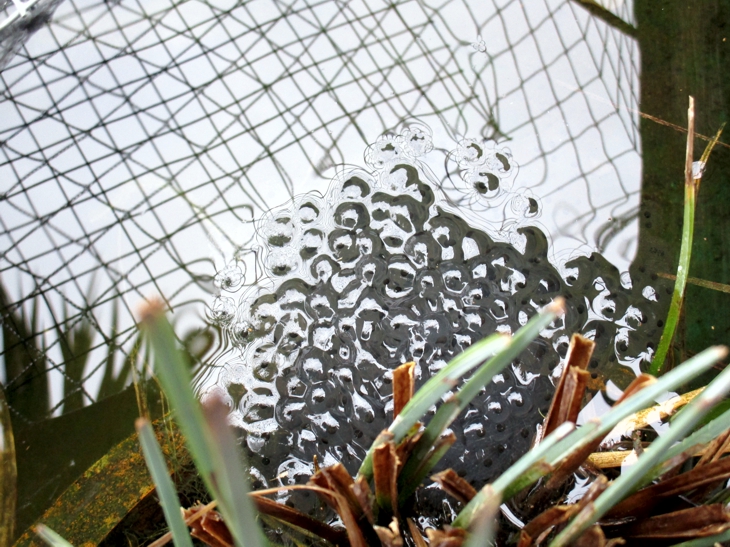
In the pond, the fish continue to skulk around the bottom as it is too chilly for them to be very active, and this coming week is hardly likely to encourage them. There is frogspawn, and I'm considering whether I should take out a handful and rear the tadpoles indoors, not only because the cold could easily get to them, but because I don't fancy their chances once the fish do get active. 

Sunday, 9 October 2022

Cumbria 1: Landscapes and Townscapes

The name of Byre Cottage – at Dodbury, at Garrigill, near Alston in northeast Cumbria – suggests it used to be essentially a cowshed, but the owners have turned it into a holiday cottage and it’s where I’ve just spent a week. Unlike some of the more basic places I’ve stayed, it’s modern and bright, and gazes over the valley of the South Tyne. A footpath runs right through the little garden, but I never saw evidence of anyone using it. These photos were all taken the morning I left, when the best weather of the week arrived!


There’s a lot of water about in this part of the world, some of it cascading in rocky falls. Beldy Fall was just yards from Byre Cottage; and Ashgill Force is a dizzying experience. The fall is at the top of a gorge: the bridge you can see in the photo carries a road across the top. You can, if you want to take the risk, stand behind the water and look outward as it crashes from fifty feet above. It’s not that likely that the whole thing is going to collapse, is it? There are gentler manifestations of water, too, at wide Kielder and rainy Ullswater.


You see the odd field of cows, but farming here means mainly sheep. It can’t ever have made for an easy living, but derelict farms like this one at Low Craig somehow express how hard it really could be. Imagine the last years of Low Craig.


That’s a different sort of economic scarring from the kind evident in the towns. Alston, a little market town a couple of miles from Garrigill, clambers over a steep hill with its market square halfway down. It’s clearly kept going by catering to tourists, walkers and bikers, but those are fewer than they once were. One of the cafĂ©s is closed, and what you might describe as a knickknack shop is heading that way too. I had a look round on Monday when everything was shut anyway, apart from the Cumberland Inn where I had lunch. So did everyone else: Monday’s always a busy day at the Cumberland, apparently, because there's nowhere else to go.

Picturesque Durham is a student city as much as anything else (I saw a queue of at least twenty outside Greggs at lunchtime) but the presence of lots of young people can’t disguise the closed shops there either. As for Newcastle, the streets around the city centre witness to the pride of a provincial capital, confident in its identity and prosperity: and thus in contrast to the hard times it now finds itself in. In handsome, red-sandstone Carlisle, even the Covered Market is half-empty, which is a bad sign when market stalls require so little investment, comparatively, to set up.


Towns like Penrith and Hexham, small but on the next step up from Alston, seem to be doing a bit better: they have their blank frontages and rubbish-strewn corners, but also their mobile coffee stands and side streets of little shops.


I’ll finish this section with a couple of bits of Art Deco, a bijou former cinema in Hexham and a building in Carlisle which uses the red sandstone in a proper 1930s idiom. 


Thursday, 11 August 2022

Animal Behaviour

Yesterday morning I was pretty sure the goldfish were in spawning mode. The remaining adult male fish was chasing one of the females around persistently and aggressively. He's a bit of a bully anyway, but that normally comes out at mealtimes when he will attempt to drive the other adult fish away from whatever food I may have put in the pond; similar behaviour early on Spring or Summer days is likely to be related to spawning, and sure enough the female fish looked fat and full of eggs. 

We've already noted what bad parents goldfish are: they view both eggs and fry as extra protein and will gaily eat them if they notice them around, which is why my two juvenile fish have done pretty well to survive to the point that they are too big for their parents to gobble up. I gather the reason why some goldfish go black until they are big enough not to be treated as a foodstuff by the adults is that it makes them harder to spot. But goldfish romance leaves much to be desired, too. If females have eggs to lay, the males will chase them around the pond or tank to 'encourage' them to do so, and this encouragement is quite rough. The females will be bumped and butted, knocked against surfaces, nipped, and chased to exhaustion before they finally lay their eggs ready for the males to fertilise. Presumably the reason why the female doesn't just save herself a lot of trouble by laying as soon as any male fish show an interest, is that a male capable of chasing her around for hours is likely to make a genetically sounder mate. I don't think the males get much out of the process either, as they always seem pretty worn out after it's all over too.

Just before heading down to the church, I went back outside to see if I could take a photo of the fish, but they were all calm by then so I imagined the eggs must have been laid, not that I can see them anywhere. In the process I managed to sit straight in a pool of pigeon guano on the surround of the pond, even though I'd noticed it earlier on. The natural world had its revenge.

Sunday, 31 July 2022

Holiday

What a lot I managed to do during my week off. Resisting my natural instinct just to lie in a darkened room for five days, I amassed a pleasing list of folk seen: Ms Brightshades and Fr Fretboard in London, Lady Arlen (visiting Dorset for a festival) and my family in Dorset, Cara and her husband at Emwood, and Dr & Mrs Abacus in Surbiton. Their daughter was so small the last time I saw her that she took some convincing it had ever happened. 

And as well as taking in Art Deco buildings in Dorset, I saw plenty of other nice things too. Adverts on LiberFaciorum kept arguing that I should visit Tower Bridge, so eventually I did. Some of the views of the staircases are positively Piranesian. I was relieved that the walkways between the towers weren't open to the air, but they do have glass sections which children seemed happy to walk over but I found completely terrifying. I sometimes get vertiginous standing on a chair.


Lady Arlen and I had a few minutes to kill before seeing my Mum, so we took a little stroll on Turbary Common. The Speckled Wood butterfly was a pleasure though perhaps not an unexpected one, but we weren't anticipating meeting cows. Later in the day I paid my respects to the Shelleys in St Peter's Churchyard - it always tickles me that Mary, Bysshe, William Godwin and Mary Wollstonecraft have ended up in Bournemouth of all places - and had an ice cream on the beach.


I may share some images of St John's Church in Wotton another day: for now, here's the churchyard and its view into the Surrey hills on Wednesday. The churchwarden let me into the building.

Finally Friday found me at historic sites just into Kent. Bayham Abbey is a ruin in - at the moment - a baking field of dry grass with a little Gothick house adjoining. It was dissolved ahead of England's other religious houses in 1525 as Cardinal Wolsey raised funds to build Cardinal College in Oxford. Apparently the local people rioted in protest, though it's so out-of-the-way it's hard to see where they can have come from. A small riot, perhaps. 


Not far away is Scotney Castle. I hadn't realised that this was the family seat of Christopher Hussey, the architectural historian who did so much to bring to public record both the history of the English country house and of the Picturesque (and so I know his stuff quite well). By his time the family lived in the New Castle built on the top of the hill by Anthony Salvin, while the Old Castle formed a colossal garden feature on its island below a quarry. It's a beautiful site, which I saw in gorgeous sunshine. I bought books in the National Trust secondhand bookshop (including one about the Palazzo Ducale in Venice, in Italian but the pictures are great), and tried the pea-and-mint soup, a decision which didn't go too badly. Betty Hussey's very, very pink bathroom was a bit of a challenge, but interestingly the NT says Scotney has come with a bigger collection of objects than any of their other properties, attics stuffed full of them which they are still cataloguing after 15 years. One of these is this amazing child's fairy fancy-dress costume, laid out in one of the bedrooms. 


And no sooner had I entered the New Castle that I encountered my patron saint. 'Madonna and Child', the caption describes this painting by Luca Longhi, but that's St Catherine: she's brought her wheel along, otherwise she might not be recognised and let into the party. 

Sunday, 17 July 2022

Wood and Water

Back in the days when you didn't risk being burned to a crisp when you stepped outdoors, I went for a walk around Frensham Ponds; I combined it with a visit to a church which I'll share on another occasion, but here, as something gentle and undemanding, are some pictures from the walk. The bird, so Mrs Abacus told me, is a stonechat, the first I can remember ever seeing which I think is rather fantastic. The obelisk, more imposing in real life than it looks here, is a memorial raised by William Robertson to his brothers, both killed in WWI and in whose memory he gave Frensham Common to the National Trust. The Council is begging people to stay away from Frensham Ponds in the current baking conditions - I wouldn't dream of trying to get there!