I went to see George in hospital, where he'd just had a replacement knee fitted. George is a stout elderly fellow with a bluff manner who has never been in the Army but has a sort of military bearing about him (even more so when his knee works). I found him lying on a bed in a somewhat bleak ward where he'd just been moved.
'I'm afraid all I can offer you is lemon squash', said George. So generous are his instincts that even in a space in which, strictly speaking, hospitality was not his to provide, he still felt constrained to offer it, and also implicitly to apologise that there was no sherry.
Tuesday, 31 March 2015

Saturday, 28 March 2015
Savage Sadness
 In this picture, and other versions of it, Lucas Cranach reminds us that there can be a complex relationship between misery and rage, as Dame Melancholy watches children play and sharpens a stick while her dire imaginings gallop through her mind. To cease to care about your own life might perhaps tempt you to value others' less as well, and if you have within your grasp the means of doing harm to others as well as to yourself - say, a firearm, or a passenger aircraft - the situation is dangerous. That this may be true can't justify hysteria about people with mental illnesses, or implications that they - or maybe we, as until I'm dead I won't be sure I won't develop something of the kind - can't be allowed to do any job more responsible than cleaning.
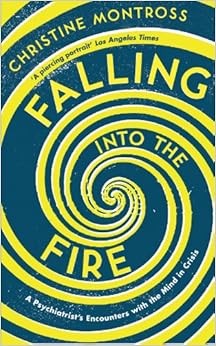
This is a way of linking current news stories with a book I read lately and have been meaning to write about, Christine Montross's Falling Into the Fire (Penguin, 2014). I spotted this at the Science Museum a little while ago, and thought a psychiatrist's account of dealing with mental illness of different kinds would be illuminating in some of the situations in which I find myself. It was: I found myself with new insights into such mental malfunctions as Obsessive Compulsive Disorder (the woman who couldn't rid herself of fears that she was going to harm her children), Body Dysmorphic Disorder (the man who felt there was something indescribable wrong with his skin), self-harm (the woman who regularly swallowed dangerous objects), and people who are absolutely convinced that a part of the their body - a right foot, say - doesn't really belong to them and want it amputated (Body Integrity Identity Disorder, according to the great Diagnostic & Statistical Manual of the American Psychiatric Society). But this book is less a catalogue of ways in which the mind can go wrong than an exploration of what happens to physicians when they come into contact with such delusions and the people who suffer them. Dr Montross admits:
Before I became a doctor, I had more faith in medicine. I thougbt that medical school and residency would teach me the body's intricacies, its capacities to heal and to falter, and all of our various methods of intervening. ... as a doctor, I have emerged from my training with a shaken faith. If I hold my trust in medicine up to the light, I see that it is full of cracks and seams. In some places it is luminous. In others it is opaque ... My faith in medical knowledge has shifted into a faith that the effort - the practice - of medicine is worthwhile. I cannot always say with certainty whether the course of treatment I prescribe will heal; I cannot always locate with precision the source of my patients' symptoms and suffering. Still I believe that trying - to heal my patients and to dwell amid the many questions that their illnesses generate - is a worthwhile pursuit.
This book arose from psychiatry's mysteries and my own misgivings, from patients whose struggles I could not make sense of ... How do we respond when a patient's suffering breeds unbearable discomfort and unease within our own selves? What do we do when our patients' symptoms do not relent? When their experiences cannot be accounted for - or helped by - what we know about medicine, or the brain? What then?
Dr Montross explores the helpless, resigned anger the department feels when a self-harming patient they've seen countless times before is admitted yet again for surgery; her first response to Montross is to insult her mercilessly. She examines the fine line between a patient who seems to be simply unco-operative and pretending to be in a stupor from one who genuinely is, and the difference between psychogenic seizure and physical seizure, both of which the patient may experience as completely real.
 Most strangely she describes the uncanny ability psychiatric patients often have to perceive the vulnerabilities in those caring for them, and relates the case of a colleague entering the room of his first patient of the day to be met with a barrage of atrocious insults about his mother, who happened to have died the day before. It may be that very disturbed people can have a heightened sort of sensitivity to the sorrows of others, or that they are more willing to say things that others don't and occasionally hit the mark; but I am put curiously in mind of the advice given to Christian exorcists that the demons know your sins and a possessed person will sometimes throw things at a priest they cannot possibly find out by normal means.
I found the book hugely helpful. What is for many of us a terrifying region of human experience is rendered a little more navigable with compassion, if no less mysterious.
Friday, 27 March 2015
A King For Our Time
 They were debating on Radio 4 the other evening why on earth anyone was so bothered about the re-interment of the bones of a late-medieval king with a dubious and contested reputation, and it's a question I might ask myself. I've commented before about the strange hold Richard Plantagenet seems to have on a number of members of the Goth fraternity, and although I had a few other things to do and consequently couldn't get near Leicester for the festivities, Young Lord and Lady McHenry did manage to go up for the funeral procession on Sunday, while others were cheering/weeping from the sidelines. Even though when the news was first announced of Richard's body being identified a couple of years ago, I found my eyes misting up a bit, looking at all this pageantry I feel slightly uncomfortable at prelates of the Established Church and others being quite so thoroughly roped in as elements of Leicester's tourism strategy.
I suspect, in so far as there is anything more to it than that, the rehabilitation of Richard has to do with our growing suspicion of established narratives and accounts of history. Britain at large seems substantially to have bought into the Richard III Society's insistence that their hero has been traduced, that he wasn't responsible for the deaths of the Princes in the Tower and did some things as king suggesting that, had he lived, he would have proved a reformer and somewhat champion of the rights of the people. When the first episode of Black Adder was broadcast in 1983 (in which Richard's hump turns out to be a bag of presents for his nephews) this view was a joke; now it seems mainstream (except among historians). Although I rather go along with this, I can't bring myself to care about it quite as much as the Ricardians. I wonder what will happen to the Richard III Society now they've won; campaign for Henry VII to be dug up from Westminster Abbey and moved to a civic amenity site in Pembroke, perhaps?
So the events of the last few days have the sense about them of a wrong being righted, a wrong in which everyone seems to want very much to believe, even if it does coincide very neatly with the economic interests of a Midlands city not very well endowed with 'heritage' (I lived there for a year in the early '90s). However I do think criticism of the funeral as a 'pantomime' by the Ricardians who wanted the bones to go to York are a bit misplaced. York, I think, can do panto just as well.
Monday, 23 March 2015
A Step Further

Although the crosses, icons, and statue of the Virgin have been veiled at Swanvale Halt since I arrived, I felt that the great paintings and mosaic on the walls ought to be covered too, so this year I bought some more cloth and did so. It means that the veiling is now so visually apparent that it can't be evaded - you can see in the aisle in this photograph that there are yards of purple cloth hanging on the walls. It really makes the point utterly unavoidably - that those elements of the church's decoration that act as windows into Heaven are veiling their faces against the sorrow to come.
Thursday, 19 March 2015
Dislike
When I ventured back online I found that Facebook were insisting that my changed Profile was in fact a Page, representing a business or organisation. I couldn't change the name back without creating a new personal Profile to act as Administrator for the Page, and as I only have one email address I had to 'reclaim' that from the Page, meaning that I couldn't now access the Page as the email and the password associated with it were gone. I now have a new Profile with none of the data of the old and a phantom Page I can't get rid of. Facebook never responded to any requests for help, beyond automated messages sympathising with the fact that 'You appear to be having trouble logging on to your account'.
The point of all this was that I was shocked at how sad I felt at losing all the data associated with my old Profile - the photographs I'd posted, telling myself I was sharing experiences with friends who might be interested in seeing them, the things people had said to me and I had said to them, the items they'd sent me in return. This online identity had clearly become a more important part of my real identity than I realised; the exchanges I'd had with people, and perhaps even more the evidence of those exchanges, obviously affected the way I thought about myself. I know in theory how fragile identity can be, but this is a startling way of demonstrating it.
I'm now back on Facebook, but being much more reticent there. I'm using it as a means of keeping in touch with people who are important to me, rather than projecting any version of myself, which seems to carry grave dangers.
Tuesday, 17 March 2015
Secrets, Pt.2

As reports about the late MP Cyril Smith are back in the media today I am struggling to remember the conversation I know I had about him at some point in the dim and distant past. I think it was probably when I was in the Oxford University Liberal Democrats and more specifically soon after the merger of the Liberals and the SDP, therefore probably about 1988 or early 1989. At that time Smith’s public image was that of a very popular, hardworking constituency MP – which indeed he was, and had he not been he would not have held onto the unlikely Liberal seat of Rochdale for as long as he did. I think the substance of the conversation was about the party’s MPs and the kind of qualities the party needed in its leadership; in response to my praise of the sort of community politics Cyril Smith represented I was met with a ‘dubious’ look and a sotto voce account of him ‘going into hostels and caning small boys’. It made it sound as though he was a sort of external consultant in corporal punishment in a way that shouldn’t have happened. Allegations of this sort had apparently been circulating in Rochdale for ten years by that time, and more widely via a report in Private Eye, but as my interlocutor would only have been a couple of years older than me at the most it’s more likely that they would have picked the stories up from others in the wider Liberal world. If a student in a university political society knew the allegations, they were, therefore, pretty common knowledge.
Was this just gossip, speculative rumour, or an ‘allegation’ one should have done something about? Nowadays one’s first thought on hearing something like this would be to ask, if only mentally, whether any action had been taken about it. My struggles to remember exactly what was said and who said it also raise questions about the reliability of memory. I know, in so far as I know anything at the distance of 25 years or so, that this conversation happened, but can’t actually recall who I was talking to: I can imagine the words coming from any of two or three different people. In terms of my own reactions, too, I can’t remember what sort of ideological context I put the incident in: I know I felt very uncomfortable, but I probably didn’t take it seriously enough even to file in a mental box labelled ‘Horrible and Wrong Things’. I very deliberately shoved Cyril Smith to the back of my mind, and I expect that’s what many people tried to do.
Wednesday, 11 March 2015
None Will Remain
 This is the title of a two-volume publication by the
Anglo-Catholic History Society which I much enjoyed reading a couple of weeks
ago. Richard McEwan, a retired head teacher and school inspector, comes from
the milieu of Anglo-Catholicism in the Diocese of Manchester and writes about
five pioneer churches of the Catholic Movement in that part of the world,
adding to the growing corpus of historical writing on Northern Anglo-Catholicism,
which ten years ago was barely mentioned anywhere.
This is the title of a two-volume publication by the
Anglo-Catholic History Society which I much enjoyed reading a couple of weeks
ago. Richard McEwan, a retired head teacher and school inspector, comes from
the milieu of Anglo-Catholicism in the Diocese of Manchester and writes about
five pioneer churches of the Catholic Movement in that part of the world,
adding to the growing corpus of historical writing on Northern Anglo-Catholicism,
which ten years ago was barely mentioned anywhere.
Manchester was even more resolutely Protestant a diocese
than most, supervised by bishops who vigorously defended that tradition against
the inroads of Tractarian clergy and laypeople, meaning that some of these
churches faced the most remarkable bigotry – as it looks to us now. Most
generously interpreted, it’s astonishing what some Christians felt they had to
do to defend that strange nexus of values that was English Protestantism (both
words are equally important), an ideology now all but dead.
None Will Remain
describes at some length the sad and well-known case of the Revd Sidney
Faithorn Green of St John’s Miles Platting, imprisoned under the 1874 Public
Worship Regulation Act and, thanks to the intransigence of his opponents (and
Bishop Fraser of Manchester), in gaol for well over a year while his family was
made homeless. Even the president of the tribunal under the Act, Lord Penzance,
described the case as ‘a public misfortune’. But there are other, slightly less
dark if no more edifying instances.
At St Alban’s Cheetwood the church remained unconsecrated
for some years until finally Bishop Fraser was persuaded to carry out the
ceremony in 1874, though only after making a series of demands for alterations
to its structure (insisting that the steps up into the chancel were changed,
for instance) and decoration. At the service, all went well until the
communion, when, upon taking the chalice into his hands, the Bishop noticed its
inscription inviting prayers for its (unnamed) donor. The Bishop halted
proceedings and asked Fr Harris, the vicar, whether the donor was alive. The
person in question was the saintly former incumbent of St Alban's, Fr Sedgwick,
who despite having substantial private means lived in a small unheated room in
the church tower, and who was indeed still alive and living in Bournemouth.
Bishop Fraser retorted that Fr Sedgwick would be dead one day, at which point
the chalice would become illegal, and refused to carry on with the service
until another one was found.
In 1913 one of the curates at St Gabriel’s, Hulme, Fr
Charles Raw Thomas, was persuaded to apply for and was appointed to the church
of St Mary, Rochdale, an outcome which puzzled him and others as it was a very
Low church whose patron was that venerable Evangelical organisation, the Church
Pastoral Aid Society. Fr Thomas returned from the interview remarking that the
patrons seemed less interested in his churchmanship than in the fact that he’d
been a rowing blue at Oxford. The CPAS were soon made aware of their mistake
but by then, in the days of the ‘parson’s freehold’, there was nothing they
could do about it. Fr Thomas swiftly introduced the full Catholic system to St
Mary’s and being a flamboyant and charismatic personality had an extremely
successful time there, building up an active, thriving church (lamenting that
the building ‘could only seat 600’) until developing a brain tumour in 1941 –
in fact collapsing and dying while at the altar. Immediately he was gone, the
CPAS swung into action, and ordered the verger and churchwardens to gather up
all the Catholic paraphernalia introduced to the church over the previous 30
years – the candlesticks, thurible, vestments, even the service books – and not
only get rid of them, but bury them in an
unmarked part of the churchyard. They were clearly so dangerous they had to
be ‘put beyond use’!
The saddest story is that of the way the people of St John’s
Miles Platting were treated after their parish was amalgamated with others in
the area in 1972. The building remained in use, serving an area previously
divided between three churches, and the vicar of the new united benefice was
the very Evangelical Canon Stanley Meadows, incumbent of the other two
churches. Within a couple of weeks, Canon Meadows received complaints that,
despite having agreed to wear Eucharistic vestments, he was not doing so, and
answered that by ‘vestments’ he had meant a surplice and stole, and expressed a
‘dislike for those clergymen that minced about in vestments’. He then cancelled
the annual meetings of the Guild of the Servants of the Sanctuary that had
always been held at St John’s, stating that ‘the church was no place for
histrionics and effeminacy’. The following year the diocese received permission
to pull the church down, despite a City Council engineer’s report stating that
the building was sound; the architects of the new church replacing it, St
Cuthbert’s, were the same firm that had condemned the old one. Anglo-Catholic
clergy and organisations in the area asked that they might be allowed to remove
some of the fixtures from St John’s, such as the 18th-century
Italian sanctuary lamp that had been given as a memorial to Fr Green, requests
which Canon Meadows, as Richard McEwan acidly puts it, ‘for reasons best known
to him, firmly refused’. The Diocese brought forward the demolition date to
pre-empt an appeal by a local conservation group. Alerted to this, Fr Graney of
Cheetwood arrived to find the church already a heap of rubble. He and the
contractor picked over the remains and eventually found the antique sanctuary
lamp, crushed flat.
There are, therefore, tales of almost unfathomable vitriol
and hate in these pages as well as stories of heroic (and occasionally somewhat
odd) clergy working tirelessly to bring souls to God in circumstances that were
sometimes hard going indeed. But very strikingly Richard McEwan does not exempt
the Anglo-Catholic movement from blame for its decline – few even of its
sternest critics could write passages as scarifying as this:
[From the 1980s onwards] The leaders of Anglo-Catholicism
spoke in a voice which was shrill, hysterical and often un-Christian, and many
of its priests joined in because they seemed to believe that such defensiveness
and aggression would win the day. In fact, its unpleasant outpourings, irrational
behaviour and prevailing attitudes lost it many friends and it became an
entrenched, unattractive and pessimistic presence in the Church. It spoke
disapprovingly of every development, and the issues of equality, social justice
and the status of minorities, including sexual minorities, were ignored. Many churches
fell into a pattern of misogyny coupled with hostility to outsiders and
enquirers.
The book ends with a note of thankfulness for the positive
legacy of the five churches it examines, and a recognition that (as Christians
might expect) ways of doing things must die so that the new can be born. And it
is, here and there.
Subscribe to:
Posts (Atom)