Showing posts with label industrial archaeology. Show all posts

Saturday, 19 November 2022

Canalside Scenes

My original plan last Thursday was to go walking around Long Valley near Aldershot, but the military ranges were closed, so instead I picked out a set of interesting features to go and look at near Deepcut, around the Basingstoke Canal. In the event a series of locked gates on the land associated with the old Deepcut Barracks meant I couldn’t see those either; some people do, because I’ve seen references to cyclists visiting Porridgepot Hill and the Old Windmill watertower not far away. But I had to be content with a short circuit around the Canal.

The Basingstoke (Dr Bones will confirm) is one of the less-used waterways in the network: it’s not well-supplied with water and traffic is regularly stopped, and it doesn’t take much of that for boat-users to avoid it (in fact I remarked on this a few years ago). The houses lining one bank not far from Deepcut Bridge all seem equipped to take advantage of their location with kayaks or rowboats but apart from one short narrowboat which showed signs of not having moved for a long while I saw nothing bigger. But there were chaps fishing around Frimley Lock, carved owls, folly-like water-gates at Wharfenden Lake, and remarkable graffiti at Deepcut Bridge. They’ve been there for at least twelve years, but nobody seems to know the artist or who they’re depicting.


Sunday, 31 July 2022

Holiday

What a lot I managed to do during my week off. Resisting my natural instinct just to lie in a darkened room for five days, I amassed a pleasing list of folk seen: Ms Brightshades and Fr Fretboard in London, Lady Arlen (visiting Dorset for a festival) and my family in Dorset, Cara and her husband at Emwood, and Dr & Mrs Abacus in Surbiton. Their daughter was so small the last time I saw her that she took some convincing it had ever happened. 

And as well as taking in Art Deco buildings in Dorset, I saw plenty of other nice things too. Adverts on LiberFaciorum kept arguing that I should visit Tower Bridge, so eventually I did. Some of the views of the staircases are positively Piranesian. I was relieved that the walkways between the towers weren't open to the air, but they do have glass sections which children seemed happy to walk over but I found completely terrifying. I sometimes get vertiginous standing on a chair.


Lady Arlen and I had a few minutes to kill before seeing my Mum, so we took a little stroll on Turbary Common. The Speckled Wood butterfly was a pleasure though perhaps not an unexpected one, but we weren't anticipating meeting cows. Later in the day I paid my respects to the Shelleys in St Peter's Churchyard - it always tickles me that Mary, Bysshe, William Godwin and Mary Wollstonecraft have ended up in Bournemouth of all places - and had an ice cream on the beach.


I may share some images of St John's Church in Wotton another day: for now, here's the churchyard and its view into the Surrey hills on Wednesday. The churchwarden let me into the building.

Finally Friday found me at historic sites just into Kent. Bayham Abbey is a ruin in - at the moment - a baking field of dry grass with a little Gothick house adjoining. It was dissolved ahead of England's other religious houses in 1525 as Cardinal Wolsey raised funds to build Cardinal College in Oxford. Apparently the local people rioted in protest, though it's so out-of-the-way it's hard to see where they can have come from. A small riot, perhaps. 


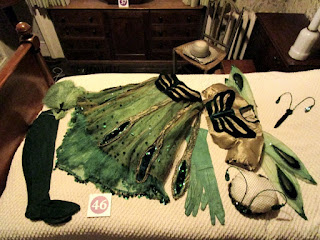
Not far away is Scotney Castle. I hadn't realised that this was the family seat of Christopher Hussey, the architectural historian who did so much to bring to public record both the history of the English country house and of the Picturesque (and so I know his stuff quite well). By his time the family lived in the New Castle built on the top of the hill by Anthony Salvin, while the Old Castle formed a colossal garden feature on its island below a quarry. It's a beautiful site, which I saw in gorgeous sunshine. I bought books in the National Trust secondhand bookshop (including one about the Palazzo Ducale in Venice, in Italian but the pictures are great), and tried the pea-and-mint soup, a decision which didn't go too badly. Betty Hussey's very, very pink bathroom was a bit of a challenge, but interestingly the NT says Scotney has come with a bigger collection of objects than any of their other properties, attics stuffed full of them which they are still cataloguing after 15 years. One of these is this amazing child's fairy fancy-dress costume, laid out in one of the bedrooms. 


And no sooner had I entered the New Castle that I encountered my patron saint. 'Madonna and Child', the caption describes this painting by Luca Longhi, but that's St Catherine: she's brought her wheel along, otherwise she might not be recognised and let into the party. 

Saturday, 27 February 2021

Canine Rites

The car park at the Pet Crematorium at Hartley Wintney contains, very very roughly, something in excess of half a million pebbles. I estimated that an area about 8 inches square included about a hundred of them, and that the car park was about fifty feet square; (50 x 12)2 /64 x100 = 562,500. Professor Abacus thinks the margin of error in this figure is too wide for it to be useful, and who am I to argue. But working it out helped to occupy the time, for someone not very adept at mental arithmetic, while I waited for Christine to finish saying a very emotional goodbye to her dog.This is the third of Christine's dogs I have offered to the Lord, in the faith that he does something we may not clearly know with the mute creation. She has stopped bothering overly about the helpful souls who, frustrated at their inability to share her passionate relationship with them, have told her 'it's only a dog' or asked whether she'll get another one. Her entire existence has been organised around them. To her credit she has never treated them as anything other than dogs: she recognises that they have canine thoughts and relations that are fundamentally a closed world to her. People say silly things because such extreme emotions are embarrassing enough to express about a human and they will say silly things in those circumstances too, trying to ward off the power of the feeling, to put it right, to restore calm. But this is what love looks like, even if I don't share it. I suppose the test of the love's quality will be what Christine does with it next.I read from Isaiah 11 - 'the wolf shall lie down with the lamb, and the leopard shall lie down with the kid ... for the earth shall be full of the knowledge of the Lord as the waters cover the sea'. There are not many dogs in the Scriptures, and those that do appear don't play a very positive role. In 1Kings they lick up Naboth's blood and gnaw the flesh of Jezebel; they snarl around the author of Psalm 22; they eat the crumbs under their masters' tables, points out the Canaanite woman who confronts Jesus in Mark and Matthew, and in Luke they lick the sores of Lazarus. The friendliest Biblical dog is the one who accompanies Tobias in the Apocryphal book of Tobit, but nothing is said about him. So I settled on Isaiah's vision of the renewed earth in which the animals very clearly have a role to play, and later accompanied the dog on his last journey, a few yards along a covered walkway to the kiln.The cremation oven at Hartley Wintney is in a huge early-19th-century brick kiln. Its slightly disorganised brickwork and the fact that it's been clearly repaired and restored makes its sombre bulk rather gentle and welcoming. It has seen life. It's the kind of place a human might choose to be cremated, quite apart from an animal.

Monday, 4 January 2021

New Year Navigation

Posting about COVID restrictions is thoroughly uncongenial today so here are some pictures from my alleged week off between the First and Second Sundays of Christmastide! They were taken on two separate occasions but the conditions were pretty similar both days - cold, dull, and damp underfoot.

Widelake Park has become a site of memorialisation. I can't remember seeing the collections before, but this one was clearly there for at least the second anniversary of the death of a child.


I liked the textures of this ruinous roof.


The dual bridge - one over a disused railway, the lower spanning an old canal bed - fascinated me. I could hear rough voices beneath the canal bridge, presumably from trolls. In the arch of the rail bridge you can glimpse the cheerful visage of what might be taken as a troll, but I think is in fact a tidied-up graffito phallus. Phalluses are perhaps not cheerful enough.


Chinthurst Tower - a folly I've visited before but on this occasion the focal point of my otherwise unfocused journey, and of many other people's as it happened.


This incredible and frankly baleful lopped tree is in fact two trees: as far as I could see, a birch growing inside the living carcass of a willow. 

Sunday, 11 October 2020

The Dorset Landscape, October 2020

When my intended Autumn trip to a folly in South Wales fell through thanks to epidemic restrictions I was extremely lucky to find an alternative in Dorset - a flat in the centre of Swanage, not my usual holiday fare but a strange pleasure to sit in the bay window and watch the good citizens of that seaside town go about their business, and then emerge from my secret doorway into the street. Access to the Isle of Purbeck can either be gained by going through Wareham to the west, or via the old chain ferry between Sandbanks and Shell Bay on the east. I chose the latter, for time's sake.

There are several Purbecks. Heathlands of sand and gravel slope towards Poole Harbour to the north of a narrow band of chalk hill - almost a single one, in fact - and then a small strip of fertile farmland separates that from the limestone plateau on the south which finally collapses into the sea. I spent a bit of time walking all of them!


Shipstal Point at Arne felt a bit like Barbados-in-Dorset.


Before the tourists arrived to paddle at Swanage or goggle at the ruins of Corfe Castle, the economy of the limestone area in south Purbeck rested on stoneworking. The landscape is still pitted with the remains of tiny shallow mines, like this one. Men and boys sweated and sometimes died in them. Loads of stone were piled on carts below ground and then winched to the surface by donkeys walking around great wooden windlasses. Heaven help anyone below if the chain broke.

Of course the economy is different now. There are great cruisers moored in Bournemouth Bay at the moment, surreal and slightly terrifying. They have nowhere to go.


This unexpected trip re-acquainted me with places I hadn't seen for decades: some were the same as ever, and others deeply altered, and I'll post about more of them later. Even the same place, of course, can alter significantly depending on the weather, as Ballard Down did on Thursday; on the way out, windblown and rain-shrouded, and on the return journey, bathed in sun (still windy, though). 


Friday, 2 November 2018

Dereliction of Sundry Kinds

After my episode of  'overwalking' on holiday, I finally did what I've been saying for years I should be doing and bought a pair of proper walking boots, which had their first outing yesterday. My friend Cylene often posts images of derelict or abandoned buildings on LiberFaciorum and one of these, not that far away from me, was the focus of my trip. In Nearer Sussex lies the hamlet of Bedham, and Bedham contains a surprise.


Bedham's surprise is a ruined church, sequestered in a steep-sided dell in the woods, surrounded by houses but invisible from them all. It was built in 1880 as a joint church and schoolroom. For several generations, the children of the charcoal-burners of this undeveloped woodland district came here to learn their ABC, and then on Sundays the Rector of Fittleworth held a service in the building. Education ceased in 1925 but the church, dedicated to St Michael & All Angels, kept going until being declared redundant in 1959. 


Keep Out! warn the signs, but provided you don't go clambering round the walls you will come to no harm. It's a haunting ruin, strangely beached in its hollow like a ship, but it doesn't take much to imagine pinafored Victorian children running down the slope on their way to lessons.


The line of the Wey & Arun Canal runs through this area. I hadn't realised until I set out that my route would take me across its course at a couple of places. This piece of industrial archaeology, as haunting in its way as Bedham Church, is Pallingham Quay Bridge, right at the southern end of the Canal. Not far beyond it, the navigable part of the River Arun began:


I wanted to see the Toat Monument, and so I did, although I discovered you can't approach that closely. Built in the 1820s as a memorial to a man who died falling off his horse, it seems almost a bit insensitive that the reason you can't approach the monument today is that the space is occupied by horse paddocks.


By the time I got back to the car it was so dark I could barely spot the sign indicating the little car-parking area among the trees. 

Monday, 23 April 2018

A Querying Eye

A walk through a Dublin suburb can provoke a variety of questions.

How did a fairly ordinary house in South Richmond Avenue acquire a folly-like summerhouse whose odd pinnacles I thought gave it a Mughal feel, but which reminded Ms Formerly Aldgate of sink plungers?


What's this strange structure in the garden of a house a couple of doors away from the folly, which looks like a holy well but can't be?


What inspired the Catholic parishioners of Rathmines in 1856 to build their new church to try and rival St Peter's in Rome? And where was the young chap I overheard talking to another over a cigarette just round the corner referring to, when he advised his friend not to go there because it was 'all prostitutes, male prostitutes, and transvestites'?


Why is there a little bridge next to the Dodder River which doesn't go anywhere?


How did this castellated mansion end up islanded in the middle of modern flats and houses in Milltown?


What former industrial process left this chimney standing on its own near the river path?


And finally, why is there a fibreglass rhinoceros standing in the river?