Showing posts with label illness. Show all posts

Monday, 9 June 2025

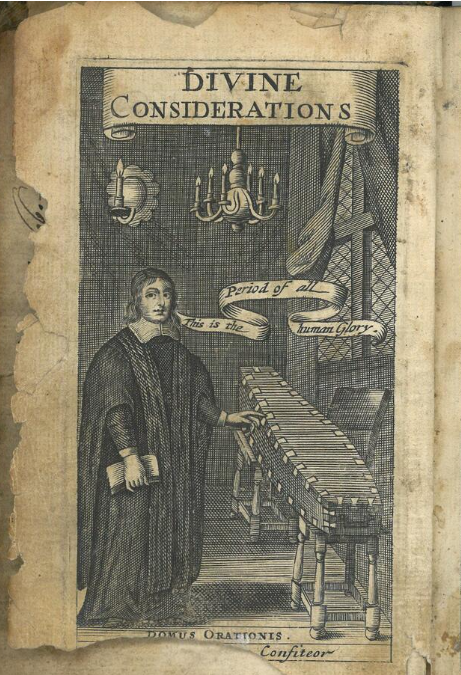
The Period of All Human Glory

The sacristan at Goremead church, which I looked after for a few months 17 years ago now, was Agnes. In her very young days she’d been on the secretarial staff of Archbishop Cosmo Lang. At the end of any discussion about her unsatisfactory health or general state she would usually conclude, ‘Still, we're getting there’, the first person I can remember using a phrase I now hear almost universally. It’s another way of saying ‘Can’t complain’, which is itself a way of glossing over the fact that there is no point complaining; of putting to one side the uncomfortable truth both parties to the conversation are only too aware of, that the situation concerned probably isn’t going to get any better. The actual words do not mean what they are intended to convey, the consciousness that we are all on a single trajectory with a single conclusion. One day I was bold enough to ask Agnes where it was we were getting to: she narrowed her eyes and replied ‘You know perfectly well’.

We will leave aside the more cosmic consideration that we don’t know quite where we’re getting to – the supernal or infernal postmortem realms – and think about what it means for this life alone. Knowing in theory that your time in this earthly realm is limited, as we all do, feels very different from being told it is, even if no actual span is put on it. This has recently happened to someone I know, and if that’s happened to you personally, it’s also happened, to a lesser degree, to the people close to you. No doctor is brutal enough to say ‘What you have wrong with you can only be cured by interventions we will not try because of all the other things that are wrong with you, so all we can do is manage it, and it will eventually kill you within the foreseeable future if one of your other problems doesn’t get to you first’, but that’s what they want you to understand.

Traditional Christian spirituality uses the transitoriness of life to point us away from this world towards eternal considerations, but that’s not the problem here, which is to invest the remainder of our human lives with meaning and joy. The confidence we might have in Christ’s saving grace may blunt the edge of death: we may tell ourselves that all that is good about us is held in divine remembrance and will be brought into the heavenly Jerusalem, part of the ‘treasures of the nations’ the Book of Revelation talks about. If we can successfully pit that spiritual knowledge against our every natural human instinct to be afraid, all well and good. But it seems to me that carrying on living fully is a separate spiritual issue. Call some of us weak and foolish, but we need some motivation not just to turn our faces to the wall and collapse into depression. What is the point of the strife? Even if we engage in battle to make it easier for others to do so, that just pushes the question one step away from us, rather than answering it.

Once when I was dealing with someone with suicidal temptations I stressed that death was the enemy, an interloper in God’s world (this only stands any chance of working with a Christian). But if that’s the case we know that we will eventually lose: and that loss may even come as a mercy depending on our circumstances. Perhaps we can see each day lived well as a victory against a different Angel of Death that comes to us, rather than a struggle daily renewed against the same foe.

And yet why should we? Death doesn’t have to be approaching that quickly to make that a valid question. The humanist concern to gather experiences against the day of death seems a hollow endeavour as it leads nowhere. Why should we try daily when we are weary and dispirited? Rather, the thought that occurs to me that nobody else will ever have our experiences, our precise mixture of impressions, reflections and memories. Those are the treasures of the nations to be brought into the heavenly city. What God will do with them exactly we do not know, but every moment is not just one of blessing to us but to the whole of creation, connected as we are through him who is the Head. That might be enough to keep me thankful each morning, no matter how long or short a time that might remain to me.

Sunday, 28 January 2024

What Prayers Mean

We prayed for Sheila - of course we did for such a loved member of the church, hoping that somehow the fast-developing cancer had been caught in time, that the doctors had got the right treatment. She died, nevertheless, early one morning, a gentle, generous and positive soul of the kind the world could do with more of, not fewer. 

What are we doing when we pray for someone with an apparently mortal illness? We all know that most of the time these illnesses take their normal course, but also that it doesn't always end that way, and that just occasionally there is a recovery that defies all expectation. Is that what we're praying for, for Sheila or anyone else? The old texts I use when I administer the Last Rites are a masterly blend of fortitude and hope:

We know, O Lord, that there is no word impossible with you; and that, if you will, you can even yet raise her up, and grant her a longer continuance amongst us: Yet, forasmuch as in all appearance the time of her dissolution draws near, so fit and prepare her, we pray you, against the hour of death, that after her departure hence in peace, and in your favour, her soul may be received into your everlasting kingdom ...

Yet our attitude can't be simply one of balancing probabilities, hoping for remission but facing up to the likelihood of dissolution. We know, more radically than this, that something will, sooner or later, carry us out of this world. That event could be disease or accident, fast or slow, sudden or long-anticipated. It would be anything: but, notwithstanding the people I sometimes encounter who seem astonished and bewildered that Death has come seeking them - it will eventually arrive.

Is what we want full and perfect health until we finally peg out silently, in our sleep, at the age of 112? Even granted the inevitability of death, why can God not concede us that? Is it too much to ask? Perhaps praying for that is a bit like praying for someone in a different, less medical situation, like Carly. We know that nobody is suddenly going to intervene in such a way that everything is made all right for her, and that it probably wouldn't work if anyone tried. But the way society is arranged offers the possibility that her difficulties might be made a little better, as might those of many other people in the same boat. Are we intended to advance not as isolated individuals, but generally, together, in the direction God has show that he wants?

In many ways, we are generalities, statistics: the kinds of things that befall Sheila, or Carly, or you and me, are the same sorts of afflictions which happen to millions, a common human lot that nobody escapes. If only the Lord had not been the very one who taught us we were more than that in his Father's eyes, such a truth might be easier to assmiliate. 

Sunday, 5 February 2023

What To Pray

At first, Sally our pastoral assistant told me that Harriet wasn't going to be able to get to church anymore. Her Parkinson's had advanced to the point where she would now need two people to get her out of the house, and while we have some very obliging members of the congregation, there are few confident, and none trained, in moving around the dead weight of a human being, even one rendered lighter by long illness. So I dropped round a note saying I would be very happy to bring Harriet communion at home, and suggesting Friday after our Toddler Group. Then in the middle of the week I had another conversation with Sally who reported that Harriet was determined to get to church. I thought this would turn out to be unrealistic and let things stand as they were. After the toddlers were finished, then, I toddled round to Harriet's and was let in by Nadia the carer who told me Harriet was having a tough day. She was in her usual chair, but barely able to move or speak. The sign of the Cross was a vague movement of her hand across her chest. It was no surprise when her son called me later in the day to say she'd been taken to hospital, or that her daughter rang me this morning with the news that she'd succumbed to pneumonia and died in the early hours. Given how weak and ill Harriet was, the nine-hour wait for the ambulance probably didn't make any material difference, but it doesn't look good that her daughter was able to fly back from Spain and get there in less time than it took an ambulance to arrive from Guildford. At least receiving the Sacrament was virtually the last positive act of Harriet's life, as she would have wanted it to be.

As soon as I had the news that Harriet was in hospital I asked Giselle the lay reader to ask the prayer chain to keep her in mind. I stood in front of my little shrine at home and wondered what I should pray. Of course basically you hold the person before the Lord and pray that his will for their best interest be done, but you still have your own feelings. Harriet's has been a long and hard road and there have been times I have found her 'courage' - which has seemed occasionally to involve a refusal to accept that her illness brings limitations on what she can do - enfuriating. She began to lose track of time and would call late in the evening and spend ten minutes telling me - what? Usually I could only pick out a few words. Sometimes it was to apologise for not being present at a service I never expected her to attend. Didn't she realise it was virtually impossible, by that stage, to understand what she was saying over the phone? I tried to see it as an act of service in its own right, but I feared so much misunderstanding something that was actually important. What was that like, to have a functioning brain, except when pharmaceutical fog affected it, and not to be able to communicate? I couldn't pray, Friday and yesterday, that Harriet wouldn't make it, and I expect she would have wanted to. But it was part of what I felt. 

The last words of Harriet, our friend and sister, that I understood, repeated over and over until I could grasp at them before they fled away again, were 'Where am I?'

Friday, 11 March 2022

Seduced by Signs

There is precious little to say about a third day secluded indoors, unless I was to discuss the weird dreams of a disrupted night's sleep, culminating in one in which I finish the midweek mass and then watch Frs Duncan and Kevin (from Lamford days) talk to each other while I am strangled by my facemask. Since getting up on Wednesday and feeling iffy, I've moved on to grotty, and I wonder whether it would have been worse had I not had my three vaccinations, or whether they have made no difference at all. In fact my symptoms are not very different from those of the cold I had a couple of weeks ago, or of any other moderately annoying cold I've ever had. It's been inconvenient enough already, and of course what I would like to happen is for my next covid test on Sunday evening to be clear, followed by another on Monday, or I am going to have to rearange yet more events I am supposed to be taking part in. Given the stage things seem to be at presently - an irritating dry cough appearing - I am not very confident of that. Like listening neurotically to the news to work out whether we're all going to be alive in a week, anxiously analysing every passing sensation to see if it presages your condition getting better is pointless - but I suspect we all do it!

The Messy Church team are determined to press on with the gathering tomorrow. Obviously I can't lead the worship bit but all they really need is something to occupy everyone in church while the hall is set up for tea. Jack is going to do it. I only hope what he has in mind doesn't involve reciting 'Albert and the Lion' like usual. 

Wednesday, 9 March 2022

That I Feared Has Come Upon Me, or, Lent Gets More Loathsome


In the middle of the night I woke up feeling nauseous. It went off in a couple of minutes, and I returned to sleep. Then on getting up I discovered I had a bit of a headache, which isn’t the most unusual experience in the world. I would normally have taken a covid test, and did so, and as I rather dreaded, the second little red line appeared. At least it proved I’ve probably been doing it right all those times it didn’t.

Church Club at school had to be cancelled toute de suite and the parents informed, and I set about trying to think who might fill in for the services and two baptisms this weekend – retired hospital chaplain Duncan offered to do the lot, for which he will win the Rector’s Gold Star and Bar did such a thing exist. I have a slight tremor of fear lest Duncan succumb as well (he was with us at Morning Prayer yesterday), and there isn’t much sign of a Plan C in evidence, but he will test himself too. Then there is Trevor, who I took for a haircut yesterday: he may soon have something actually to complain about in place of his usual imaginary ailments.

It wasn’t just Church Club that had to be cancelled: the Singing Club at school wasn’t running because of a covid case, and when Sandra who is the Church Club supremo got to prison where she was supposed to be taking part in a parenting course, that had been stopped as well. There is, as they say, a lot of it about. Dr Abacus has persuaded me to sign up for the molnupiravir trial to do my bit for society. I will have a bit of time on my hands until Monday at the very least.

Still, it means I shall be all right for Easter! He says, rashly.

Saturday, 3 October 2020

New Normal

Harriet moves around her house very gingerly with her walker. The dog was looking eagerly out of the window as I walked into the drive, as though he had heard me while I was at the top of the road. It didn't take Harriet long to open the door, so she must have been waiting for me too. 

It has been not quite a month since I last went to see her. I wasn't taking her communion this time - it was just an opportunity to check on her as I won't have the chance to do so for a couple of weeks, and communication any other way than face-to-face is complicated. Not unexpectedly conversation included the frustrations and hazards of disability. Harriet has live-in care now, something a lot of us would struggle with: is it more of a strain to have someone living in your house, or to move to a different setting to be looked after, and lose your familiar surroundings? At least her current carer seems to care: she's had two in quick succession who didn't. I sit, with an unexpected slice of cake, and find myself just as unexpectedly angry at the thought of an ill person taking the dramatic step of having a stranger come to live with them, and then finding that stranger is cruel or careless. At least Harriet has others to speak for her, and can speak for herself: others don't.

'It's a pain to be asked fifteen times in a day whether I want to go to the toilet', Harriet admitted. She struggled with her cake and dropped bits repeatedly. There is a little part of me that wants to offer to help, but I don't. I say how, when a thought pops into my mind, I try to reflect that the same thought has probably occurred to everyone else who's interacted that day with whoever it is I'm talking to, and so I don't need to say it. Harriet struggled with her cake, perhaps, but she got there in the end. The problem was not her ability to manage the cake, but my embarrassment at her possibly being embarrassed at being awkward. Of course she was going to have to battle, but ultimately it was no big deal for her or me, and there was no need to try to put everything 'right', to restore a false sort of normality. This is Harriet's normal, one she manages with fortitude.

Friday, 30 December 2016

Holding On To Both Ends

Partway through the morning’s printing and copying, I discovered that we had no white copier paper in the church office. For heaven’s sake, it shouldn’t be hard to keep stocked up with such basics, I chuntered to myself, and headed out to the Post Office to buy a ream of 80gsm white. In the church I met Karly, who I’ve seen in and out over the last seven years. ‘I’ve got terminal cancer, I’m so frightened’, she blurted out. We sat for a bit while she unloaded some of the hurt. ‘I’m only 32 and I’ve got nothing to show for my life … I came out of prison and was really going to turn things around. I hadn’t had a drink for 14 months and now I’m drinking again. I don’t even like it. This is my punishment for everything I’ve done.’ Karly had to see the doctor that afternoon and then tell her family. ‘My mum knows there’s something wrong. How does that happen? I’ve got to try and do something good so people remember me well’.

I feel no more confident at dealing with these emotions than anyone else would, apart from making it clear to Karly that what she’s undergoing isn’t a punishment. I’ve told her to come back again and we’ll speak to try and work out what she might do with the time she has left, but I don’t know whether she will. For some reason this strikes me very hard, harder than when my lovely college friend Sean had the diagnosis which led to his death at 38. How do you even begin to assimilate news like this? How would I?

In the evening it was the annual Christmas service at Smallham Chapel (as in the photo), part of my routine even though it’s outside my parish, having taken the service, shockingly, for six years now. For some reason there were more people there than ever, and about 8 souls had to stand at the back. Lots of people told me it was their first visit, including a family who’d just moved into one of the farmhouses on the estate who all solemnly crossed themselves at the blessing, always a good sign. Two small girls played clarinet and flute for the quiet carols. ‘As a lapsed Catholic with a lapsed vocation,’ one man said to me, ‘that service and what you said had more real religion to it than many a cathedral’. And I hadn’t said anything earth-shattering, just the usual kind of thing about God coming to take part in all the mess of human life, born in the less-than-propitious (or sanitary) surroundings of an animal stall. But you somehow have to hold together children petting a sheep to the sound of a clarinet on the one hand, and on the other a young woman being told she’s going to die: otherwise religion ends up far from real, far from true.  

Tuesday, 31 March 2015

Hospitality

I went to see George in hospital, where he'd just had a replacement knee fitted. George is a stout elderly fellow with a bluff manner who has never been in the Army but has a sort of military bearing about him (even more so when his knee works). I found him lying on a bed in a somewhat bleak ward where he'd just been moved.

'I'm afraid all I can offer you is lemon squash', said George. So generous are his instincts that even in a space in which, strictly speaking, hospitality was not his to provide, he still felt constrained to offer it, and also implicitly to apologise that there was no sherry.

Saturday, 28 March 2015

Savage Sadness

In this picture, and other versions of it, Lucas Cranach reminds us that there can be a complex relationship between misery and rage, as Dame Melancholy watches children play and sharpens a stick while her dire imaginings gallop through her mind. To cease to care about your own life might perhaps tempt you to value others' less as well, and if you have within your grasp the means of doing harm to others as well as to yourself - say, a firearm, or a passenger aircraft - the situation is dangerous. That this may be true can't justify hysteria about people with mental illnesses, or implications that they - or maybe we, as until I'm dead I won't be sure I won't develop something of the kind - can't be allowed to do any job more responsible than cleaning.

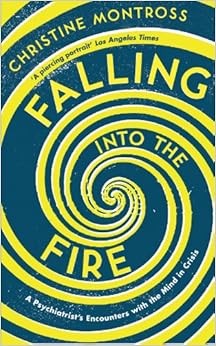
This is a way of linking current news stories with a book I read lately and have been meaning to write about, Christine Montross's Falling Into the Fire (Penguin, 2014). I spotted this at the Science Museum a little while ago, and thought a psychiatrist's account of dealing with mental illness of different kinds would be illuminating in some of the situations in which I find myself. It was: I found myself with new insights into such mental malfunctions as Obsessive Compulsive Disorder (the woman who couldn't rid herself of fears that she was going to harm her children),  Body Dysmorphic Disorder (the man who felt there was something indescribable wrong with his skin), self-harm (the woman who regularly swallowed dangerous objects), and people who are absolutely convinced that a part of the their body - a right foot, say - doesn't really belong to them and want it amputated (Body Integrity Identity Disorder, according to the great Diagnostic & Statistical Manual of the American Psychiatric Society). But this book is less a catalogue of ways in which the mind can go wrong than an exploration of what happens to physicians when they come into contact with such delusions and the people who suffer them. Dr Montross admits:

Before I became a doctor, I had more faith in medicine. I thougbt that medical school and residency would teach me the body's intricacies, its capacities to heal and to falter, and all of our various methods of intervening. ... as a doctor, I have emerged from my training with a shaken faith. If I hold my trust in medicine up to the light, I see that it is full of cracks and seams. In some places it is luminous. In others it is opaque ... My faith in medical knowledge has shifted into a faith that the effort - the practice - of medicine is worthwhile. I cannot always say with certainty whether the course of treatment I prescribe will heal; I cannot always locate with precision the source of my patients' symptoms and suffering. Still I believe that trying - to heal my patients and to dwell amid the many questions that their illnesses generate - is a worthwhile pursuit. 

This book arose from psychiatry's mysteries and my own misgivings, from patients whose struggles I could not make sense of ... How do we respond when a patient's suffering breeds unbearable discomfort and unease within our own selves? What do we do when our patients' symptoms do not relent? When their experiences cannot be accounted for - or helped by - what we know about medicine, or the brain? What then?

Dr Montross explores the helpless, resigned anger the department feels when a self-harming patient they've seen countless times before is admitted yet again for surgery; her first response to Montross is to insult her mercilessly. She examines the fine line between a patient who seems to be simply unco-operative and pretending to be in a stupor from one who genuinely is, and the difference between psychogenic seizure and physical seizure, both of which the patient may experience as completely real.

Most strangely she describes the uncanny ability psychiatric patients often have to perceive the vulnerabilities in those caring for them, and relates the case of a colleague entering the room of his first patient of the day to be met with a barrage of atrocious insults about his mother, who happened to have died the day before. It may be that very disturbed people can have a heightened sort of sensitivity to the sorrows of others, or that they are more willing to say things that others don't and occasionally hit the mark; but I am put curiously in mind of the advice given to Christian exorcists that the demons know your sins and a possessed person will sometimes throw things at a priest they cannot possibly find out by normal means.

I found the book hugely helpful. What is for many of us a terrifying region of human experience is rendered a little more navigable with compassion, if no less mysterious.

Monday, 9 March 2015

No Use Crying

Marion the curate felt thoroughly rough on Sunday morning, having clearly caught The Cold from her son and husband. 'Could you preside?' she asked, so I did, while she croaked and sniffed through the deacon's role. It was the third of my year-long(!) series of catechetical sermons, in which I was talking about the creeds; after the service we were due to celebrate the 95th birthday of a member of the congregation, and finally I was doing a baptism at noon. 

At Communion I reached across the altar to rearrange the vessels to a more convenient configuration and managed to knock over one of the chalices: wine everywhere. I told everyone to sit down while I and the servers removed everything from the altar, fetched clean linens and then carried on (thankfully this happened before anything had been consecrated - otherwise it would all have been more complicated). During Communion Janet, who admitted to coming to church without having had breakfast (which in principle of course you should do, though I think if you are, like Janet, an elderly lady with balance problems and mental health issues, you should probably be excused fasting), dropped her Host and in trying to pick it up broke it into pieces, which I gathered up and ate once she'd finished treading on them. 'Thank you for the service,' Andrew, who works for a big national construction firm, said to me afterwards; 'it was enlightening in so many ways.'

I stumbled and tripped my way through both birthday and baptism; the latter was of an adult so I had to reorganise what I'd usually say on such occasions and with my brain only partially functioning I didn't do it very convincingly. Coming up the hill I saw an ambulance driving off, never a sight one welcomes. Going a little further a car went past me, and on finding myself hailed, I turned back to discover it stopped and Peter and Anna, two young teachers who are members of the congregation, attracting my attention. It turned out that the ambulance contained Marion, who had fallen over on the way up the hill, and her son, whisking them both off to hospital. 

Peter and Anna took me to hospital, and back home when it was clear that Marion probably had nothing more serious than a cracked rib, and an hour or so later I went back again to check the situation. Peter and Anna had gone and I took Marion and son back home when she was discharged (with nothing more radical than Ibuprofen, I was surprised to find). Marion's husband got home from a school sailing weekend he was leading in Portsmouth in time to take their son to a concert he was singing at in Guildford (what complex lives we lead, not enough redundancy in the system). 

Did you get all that? I'll be asking questions.

Friday, 17 January 2014

End of Life

One of my parishioners asked me whether I’d be willing to carry out a funeral service for someone who’d signed a Non-Resuscitation Agreement, ‘because I’ve signed one’, he said, ‘and I’ve heard of priests who treat it as amounting to suicide and won’t’. ‘I’ve got no intention of popping my clogs yet,’ he went on, ‘But if my heart does stop I don’t want to be kept going wired and tubed up to a machine’. Patients who have signed the form, apparently, have to put a symbol on the gatepost so that when the paramedics turn up they know to go into the house and retrieve the paperwork. I assured him that I had no problem with the idea. The Prayer Book merely states that the Funeral Office is not to be used ‘for them that have laid violent hands upon themselves’- although it gives no guidance as to what ministers are supposed to do instead – and, of course, we all follow the Prayer Book implicitly. There’s a clear difference between laying violent hands upon yourself, and insisting on your life not being artificially prolonged.

At least so we instinctively feel; or is there? The intentional suicide takes life, and as it is their own life, dies, so an old-fashioned view might argue, in a state of mortal sin. But nobody I have known kill themselves, or who was tempted to do so, was in a sound mental state. Terrible though the act always is, the suicidal person has tragically reached the point where they can’t see beyond their own pain and despair, and you may question the degree of responsibility such a person has. Yet, if mere life is the criterion the Church is to judge by, then setting down the circumstances in which you would ask medical professionals not to keep that life going when they could is perhaps morally no different from catching the plane to the death clinics in Switzerland at a time of your choosing, and both acts witness to an intentionality greater than that of the mentally disturbed suicide.

We often talk about dying naturally and distinguish it from being ‘kept alive artificially’ by all the paraphernalia of modern medicine. Yet most of the time a natural death at the hands of disease or injury is the last thing we want: if we have useful years of life left to live, we want that artificial intervention. The dreadful paradox of modern medicine is that exactly the same miraculous technology and the same medical ethic that drive the saving of life when we do want it are the same as those which drive the extension of life beyond the point where it burdens us; you can’t have one without the other. Again, an old-fashioned Christian ethic might have condemned the removal from God’s hands of the control over when a human being dies; yet, if God’s will is seen as being expressed by natural forces as opposed to human acts, then any medical intervention at all is a rebellion against God, and we tend not to think that.

Our language is inadequate to express the problems posed by our technological advances; and, although the purpose of the Church’s moral categories and strictures is, rightly, to insist on the absolute worth of human life, when that insistence produces perverse results in terms of inflicting pain and damage on real people you have to question whether we really understand our own ethic. Clearly ‘mere life’ is not what we are talking about, and there has to be some sense of a life having value – but the decision as to where value lies is profoundly dangerous. It can’t be its value to the person alone, or you are left with nothing to say to the suicide in their hopelessness. It can’t be its value to society, or you are left with no weapon against the eugenicist. Could it be the value of a life to God? But what is the value of a human life to God?


If we are God’s children, and life is his gift to us, does a loving parent force an unwanted gift on their child? They might, if it would do them objective good. But what might that good be, if the life is burdensome and painful? ‘Who of you fathers’, says Jesus in Matthew’s Gospel, ‘when your son asks for bread, will give him a stone? Or if he asks for a fish, will give him a snake? If you then, who are evil, know how to give good gifts to your children, how much more will your father in heaven give good gifts to those who ask him.’ God is not cruel and is not arbitrary. What he gives us must be with reason. The question is whether a particular state or situation is his gift, or just part of the world’s arbitrarily-distributed pain, and whether working with that pain will do us or anyone else any good, any longer. 

Monday, 9 January 2012

Christmas and New Year

It's been a long time since I've added anything here; my brain has been too addled. Of course Christmas at Swanvale Halt was as busy as you might expect, in fact busier as there were extra events over the festive season: the local secondary school and a nursery group both requested Christmas services for the first time, and I was asked over to a strange little estate chapel a couple of miles away to lead their Christmas service, which takes place on the Thursday after Christmas and involves a walk down a muddy lane to sing carols to sheep. Unfortunately I seem to have done this well so I will probably have to do it next year too. Then on New Year's Day there was the ecumenical service at Hornington, which I'll post about separately.

All of this liturgy was sadly overshadowed by the death of my Dad on December 28th. You will know he's been ill for some time, and had a place booked in a local care home. In the week before he was due to go there, he became increasingly poorly and on the Friday had three successively more serious falls, finally hitting his head and blacking out. Once in hospital he became unresponsive and drowsy, and there not being any other clear cause despite lumbar punctures and brain scans the doctors diagnosed a urinary infection. We thought he was becoming dehydrated but they have maintained this wasn't the case until Boxing Day when he was put on a drip. He never recovered, rapidly declined, and by the 27th it was clear he was dying. I was there, joining my mother and sister, from about 1.30 for about twelve hours as Dad gradually got weaker and finally died just after 1am. It's a terrible, piteous thing to see someone die, not an experience I've had before and not one I want to repeat soon.

Mum was faced with the prospect of a rather quick funeral a week later or waiting three weeks, so went for the early option - waiting would have been purgatorial. It was at St John's, Parkstone, where they were married. As well as family and local friends, Dr Bones and Miss T both made it down from the Oxford region to the service, which is more tribute than anything else to what a lovely man my Dad was.

I can't be sad that Dad has avoided a long, horrible decline - at least, no further than he'd already got - and having to go into care. His life was no fun for the last six months. But even though I've been losing him for some time it's strange that he's no longer actually around. I still feel rather numb and my feelings are very difficult to put into words. He ought to have had a better hand dealt him, is what keeps coming back to me.

Monday, 7 November 2011

Sad Day

My dad was diagnosed with Alzheimer’s Disease about two years ago and since then the progress of the disease has been shockingly rapid, although looking back we realise he had the first signs of confusion, of something not being right, eight years ago. Last May my parents came to visit and stay with me for a few days, managing to negotiate the train journey from Bournemouth (not having done such a trip for forty years or more); today my mum decided she couldn’t cope any longer, and has booked dad into a room at a local care home with every expectation that he will not be back again.

Of course she feels appallingly guilty, but there isn’t any realistic alternative. She can’t manage, I and my sister can’t do it either, live-in help wouldn’t work, and dad now needs someone watching him all day and night. At Beech House he won’t be able to hurt himself or damage anything, and can either sit or wander as he wants, which is all he does at home. We will be able to take him out on walks and as the GP told my mum, ‘your relationship will actually improve’.

My relationship with my dad has never been terribly close, and the shame is that as I’ve got to an age and state in my life that I feel I could perhaps have got to know him better, that’s no longer possible. Despite not being a believer he was so proud when I was ordained, and I will try to remember that. Last year when mum had an accident and I had to stay and look after dad for a week was I think when I came to terms with the state he was in, so now I have a degree of equilibrium about it.

Doubt only sets in when I think about something that can’t be answered, which is the question of what is actually going on in his mind. Now and again I can have a short conversation with him that seems to make sense, before confusion takes over again, but what does confusion mean? Is it simply an inability to express or process thought, or is he really unaware of who is around him or where he is? He certainly seems to have forgotten after a couple of days back home after his last period of respite care that he was ever away. What is it really like for him? He can’t tell us.

Wednesday, 6 July 2011

Bedside Manners

It's been over a month since I've added anything here, shameful really. It was partly because something went awry with Blogger and I couldn't sign in, which eventually sapped my will to keep trying. Then when vaguely interesting things happened they weren't interesting enough to overcome my inertia or I was too busy until the moment, and the vividness such as it was, had passed.

Today I was at Widelake House to take the monthly communion service for the increasingly daft, and before we began went to see a former member of our congregation who is resident there and who I'd been told wasn't doing well. Pat is 98. Until the later part of last year she lived alone in a development of old people's flats until she managed to fall down a flight of stairs. How she escaped completely beating herself to pieces is anyone's guess, but despite not doing herself any dramatic injuries the process of recuperation took an agonising time, stretched out longer than necessary because the powers that be insisted she shouldn't go back home where she could potentially fall down the stairs again. The only place that could take her was Widelake - not an ideal location because it's largely for dementia sufferers and while Pat is a bit confused sometimes she doesn't really fall into that bracket. Still, here she's been since about March and no alternative has arisen.

I went to her room to find it darkened, and Pat in bed, hardly speaking. She's stopped eating and engaging with the world, or that somewhat unsatisfactory corner of the world that is Widelake House. 'Everything is horrible', she said, eyes still closed. 'I want to stop'. I didn't have a great deal of time, so I sympathised, prayed a little while, held her hand and told her to leave it to God. Pat has always been a cheerful person and this wasn't pleasant at all.

What am I supposed to do here? I suppose we have an instinct to try and chivvy people along when they're feeling low, but I've never felt attitudinally very inclined to do that, and on the occasions when it occurs to me to do so the hackneyed clichés die on my lips as I think of them. It seems somehow dishonest. To cope in extreme old age with the removal of things we enjoy, to face loss with cheer, requires a great deal of spiritual strength which you can't just suddenly acquire; and is depression an unreasonable response? All we have to weigh against these losses is the hope of the resurrection. Perhaps that's what those contentless but gentle words 'it'll be all right' hint at. I know that someone saying them to me has been a comfort even when it is by no means clear that it will indeed be all right. I will go back to Pat at some point, but I don't think my job is to try to reconcile her to the pains of this life, but to point beyond them.