Showing posts with label health. Show all posts

Thursday, 19 February 2026

Telling Me The Story

As the diocese digests, as it seems to be, the imminent death of its bishop - things have moved on since the news got to the BBC - I'm conscious that I have been silent lately, but even though my thoughts today weren't connected with the update +Andrew issued they are not a million miles away from relevant. 

I am struggling towards the end of a number of projects, themselves the conclusion of a series which has occupied me really since the early Covid lockdown. I think that, once they're done, I may well have a rest for a while. I find myself writing about something contemporary over which opinion is very divided, to the point that different groups involved seem to inhabit entirely separate mental worlds. I fall more on one side than the other, though I will strive to be fair and at least do justice to both.

As you know I am a historian in a small way: even my holy well compendia are, in a way, gathered stories. When you set out to write history, you almost always have a thesis, a story already vaguely formed in your mind, if only because the smaller subject you're writing about is set within the grander story of humanity and you probably have that pretty much sketched out according to your beliefs. It's rare that you know nothing about your topic in advance. As you do your research, you'll be looking for anything that bears on that narrative, but not only what confirms it; you'll continually be checking it against what you find. It's a process of constant revision and re-evaluation, and to do it properly and honestly you have to be prepared for the possibility you might uncover something that sends you in a different direction from where you thought. It's not an exact business, but neither is it simply a rehearsal of one's own biases. That's how it works.

That's as it may be. As we draw closer to the end of our lives we might wonder how an impossible collection of events and impressions, of memories and experiences, can conceivably be shaped into a story, something we could put into a memoir or tell to a child. It cannot be, really. We don't know where in the human story we are: closer to its beginning or its end, or what that story means, even whether there is one. I tell the good people of Swanvale Halt Church that the story of Christ is the one overarching narrative of Creation in which our individual stories are gathered and made sense of. His is the book of which we are sentences. There is a comfort in that.

Monday, 17 June 2024

Thick Red Line

My last brush with covid - as far as I can tell - was two years ago, and I consider I've done rather well to avoid it until now. I went to bed thinking that something was amiss, what with a headache and a tickly throat, and on rising to a headache this morning decided to check: the result was unmistakable, though now the symptoms seem to have morphed into those of a standard cold I'm very used to. Plus an upset stomach - though that's so common an experience it may not be to do with the pesky coronavirus at all. Possibly the arena of infection was the Goth night at Chislehurst Caves I spent a couple of hours at on Saturday night, but I fear, with only a day from that until the emergence of first symptoms, I was probably more infector than infectee; maybe my visit to a café in Banstead on Thursday was to blame, or Toddler Group on Friday morning. It's been so long since my last infection that I had to check what the NHS advises one does and I see it's now acceptable to get back to normal life 5 days after a positive result and see vulnerable people - such as my mum, who I hope to visit along with Lady Arlen and her daughter at the end of the month - after 10. I absolutely must meet tomorrow with a couple who need a wedding licence (we will do so outdoors and masked), and have a funeral of a beloved church member on Friday, which should be OK as the person I will interact most closely with is already dead.

It leads me to recollect that hallucinatory period that began when Mr Johnson appeared on our TV screens to say 'You must all stay at home', of which the children now at Church Club at the Infants School (which I will miss on Wednesday) will remember nothing. We treat covid remarkably casually now. My mum had it and made it through; so did Ms Kittywitch, who has several organs that aren't the ones she was born with and next to no immune system at all. It's fatally easy to forget how dreadful it seemed early in 2020, to forget that its fatality rate was 1% or so in the first wave, meaning that in this country not far short of 3/4 of a million people would have had to die before that resonant state, 'herd immunity', was achieved; to forget how we expected that sub-Saharan Africa was going to be devastated by the disease, when in fact it turned out to be relatively lenient with that part of the world. It sounds outrageous given the scale of death and suffering, but we got off reasonably lightly compared to how it might have been.

Back at (nearly) the beginning, I asked asked whether it was all worth it, the restrictions we placed on ourselves and the consequent economic and social damage, and I concluded that we would never reach a clear answer. The current covid enquiry isn't looking at all into the question of whether the Swedish solution or the Chinese or whatever would have been better than what we did in the UK, or rather the variants of what we did, as our constituent regional governments bickered and manoeuvred for advantage. I wondered whether the current advice on 'avoiding meeting people' for 5 days rather than complete isolation for 10 as it was in 2022 more reflects medical reality in terms of better epidemiology and dissemination of vaccines, or a different assessment of the balance between medical safety and socioeconomic harm. Now and again a news report appears in the lower reaches of the BBC homepage discussing some new finding about 'long-covid' or the like, but their obscurity reflects how we have moved on and don't want to think about it anymore. It's foolish, but I suppose, at the time, it's what I wanted as much as anyone.

Monday, 23 October 2023

You Can Do Without That Kind of Excitement

The church was full for the main service on Sunday for a baptism, which is an infrequent event as most of ours happen separately. But this was the baby daughter of Allie our Treasurer, a birth from within the congregation and thus a great delight. Lots of children came with their families and with all dad Danny's friends from the Swanvale Halt Rugby Club.

So that was exciting. Forest Church should have been a complete contrast, quiet and contemplative. Usually Allie, her mother and sister, would have been among the attenders, but obviously they had other things to do and so we were seven human souls and one dog making our way into the woods where we'd begun our Forest Church explorations in the summer of last year. I was relieved to discover that it wasn't quite as boggy as when I'd done my usual recce on Saturday afternoon. We had read from Geoffrey Grigson's Englishman's Flora about the folklore and properties of the willow tree (did you know that aspirin was developed from a chemical isolated from willow bark?) as well as the Bible, and sung a slightly eccentric hymn, and were just getting into a time of prayer when Derek, an elderly gent who lives not far away from the woods, keeled over and fell on the ground. That rather put an end to contemplation. It seemed like a transitory faint, and guided by a paramedic over the phone we got Derek out, and into the only car close at hand belonging to Jean the sacristan. Another congregation member accompanied them, and stayed at the hospital until Derek's son arrived. There was nothing obviously wrong with him, but unsurprisingly the doctors kept him in overnight much to his chagrin. 

As we'd made our way along the path through the woods, I'd glanced aloft at the sunlight glinting through the canopy of trees. When we stopped and took in our surroundings I encouraged us to look up as well. I've an uncomfortable feeling that Derek looked up a bit too long.

Wednesday, 18 October 2023

Prayer and Fasting, Sort Of

'We call upon the people of our congregations and all those of goodwill around the world to observe a Day of Prayer and Fasting' ran the letter from the Patriarchs and Heads of Churches in Jerusalem, issued last Friday. More prayer can never be a bad thing, though only having got back to work (and found out about the letter) on Monday there wasn't time for me to organise anything collective. I put the appeal on the church LiberFaciorum page and prepared to keep the day in some way myself. 

You might ask what this actually means in practice. What it probably ought to mean is literally an entire day devoted to prayer about a particular matter, and a fast means abstinence from anything with any calorific value at least until the evening when, liturgically, the day is over. But I faced a number of problems. The first was that I'd come back from leave with a cold which first made itself known on Saturday/Sunday night: two covid tests have suggested it isn't that, in so far as you can rely on these things, but I do feel grotty, and prayer and fasting when you are ill are a particular challenge. The second issue was the number of other things I had to do - the usual midweek mass in the morning, a range of jobs mainly based on the computer, and a session at the Air Cadets in the evening. Prayer would have to fit around those.

So my fast was an etiolated observance which permitted some cups of black tea and dry bread until dinner-time, and prayer consisted of a couple of short interludes through the day when I laid the terrible current events in the Holy Land before the Lord. I got back from the Squadron where I discussed the deceptions and subterfuges of war to the news of the bombing of a hospital in Gaza, and not just a hospital but a hospital run by the Anglican Church. It seemed a sort of demonic mockery of any miserable prayers I'd been able to offer. 

Wednesday, 26 April 2023

A Brief Visit

A familiar kind of encounter for me yesterday with a longstanding member of the church who, to all appearances, is about to leave this world behind. I zoomed over to the hospital in between a ministers' lunch and a virtual meeting to make certain I had a few minutes, at least, with Derek, former churchwarden and many other things. He and his wife had only just moved into a local care home when he had a cardiac arrest and ended up in hospital being told off for not eating food he has no inclination to eat. 'I go to sleep and each time I wake up - well, I don't need to tell you,' he said. 'I wish that clock wasn't right opposite my bed'. It isn't lack of faith, as Derek's thankfully remains intact, but he is very, very tired and knowing that his wife is being looked after relieves him of any anxiety to linger longer than he needs. This sounds like a bit of a grim encounter, but it wasn't: 'I've got a lot to be thankful for', Derek told me, 'All those years as a lay pastoral assistant. It was a great privilege. They were good times'.

I say I zoomed over to the hospital, but my zooming concluded with twenty minutes of crawling round the car park trying to find a space. As the line of vehicles ahead of mine didn't decrease with time, but rather extended, I realised I was going to be unlucky, and parked at the cathedral instead, yomping over grass and through underpasses to get to the hospital. I told the chaplains about Derek and asked them to keep an eye on him. In their email back, the lead chaplain said Derek had relayed my story of parking at the cathedral (poor fellow, he'd probably bent their ear about it) and said I should have gone to the superstore which is halfway between the cathedral and the hospital. I was surprised they would advocate such naughtiness. 

Wednesday, 18 January 2023

Imperfect End

It had been a pretty good day and I had managed to cook a chickpea curry without burning anything, when I headed down through the frosty night to visit the Air Cadets. All was going well when I moved onto the steps leading to the bridge over the railway line and promptly slipped, coming down hard on my bottom, more specifically my tailbone.

More out of shock than anything else, I stayed on the steps for a minute or two, trying to work out whether it was possible or sensible to move and how bad I felt. I was making some inarticulate noise, a sort of escalated version of the kind of grunts and moans a person of advancing years tends to emit when bracing themselves for a particular physical effort. A young woman with a dog came from the other end of the bridge and attended to me, which I found very welcome indeed. I can't remember what preceded it, but her statement 'Everybody knows who you are' struck me as the most moving thing I had ever heard. She introduced herself as Erica and asked me whether I could stand, and I felt I could, and did, and then felt giddy and sick, before I came to on the ground again. 'It's all right, you fainted', said Erica, repeatedly, as I found myself rather terrifyingly unable to speak though I was trying very hard to do so. I concluded I had better give up the attempt, until over the course of a couple of minutes my ability to vocalise returned. I have only ever fainted twice before, once alone, and had forgotten that's what happens. A second attempt to stand up was more successful, and Erica and her dog walked me home. It was a tremendous act of kindness and solidarity for which I was immeasurably grateful, and I much recommend you do the same if the occasion arises.

I didn't try to get to Squadron again. I was very, very sore going to bed, but with the application of painkillers I have been surprisingly mobile today and able to do everything planned, so I consider myself, yet again, very lucky indeed. 

Friday, 23 September 2022

You Cannot Go Back

During the pandemic I was able to book an appointment with my GP via their online system and I assumed that would be the same today. Not so: the sequence went as follows, more or less:

  - The GP's website relocates me to Patient Access

  - Patient Access tells me I do not have a GP registered on my account

  - Having selected my GP I must now prove my identity and I am relocated to NHS Login

  - My first photograph of my driving licence is unacceptable

  - My second photograph, exactly the same as the first, is acceptable

  - My face must be scanned to make sure it's the same as the person on the driving licence

  - It doesn't seem to be similar enough no matter the angle or arrangement of spectacles

  - I am offered the chance to record a video of my face instead, during which recording I have to repeat a code of four numbers

  - Despite making sure NHS Login can access my laptop camera, the video doesn't work

  - It is made very clear that I can't go back and try another driving licence photo

  - I give up and in the afternoon visit my GP so I can be issued with an access code

I suppose such obstacles are one way of putting people off making appointments!


Saturday, 3 September 2022

Ambulance Chasing

It was a chance for a last Summer day out for my sister's family. They were intending to go for a walk along the cliff paths around Worth Matravers. Driving towards the village, they saw a gentleman coming towards them on a bicycle. He was a bit wobbly. Suddenly he appeared to lose control of the bike, fell off onto the road, and stayed there. 

They came to a halt abruptly. My brother-in-law went to alert any traffic coming up the blind hill to the south while my sister checked the victim and their daughters acted in a supervisory capacity. The poor fellow was unconscious and bleeding dramatically from a cut to the head - he hadn't been wearing a helmet. The advice from 999 was not what my sister was anticipating. 'We can get an ambulance to you in about five hours. Do you have a towel to staunch the bleeding? Can you move him to the side of the road?' The road, as those who know the area might anticipate, doesn't have any sides, at least not any that would keep someone out of the way of vehicles. 

After about twenty minutes, the injured man was coming round and my sister and brother-in-law called 999 again. They discovered - and it's at this point that the story becomes hard to credit - that the original call hadn't been logged. This time, the incident was recorded 'but the ambulance will still take about five hours. Can you take him to the cottage hospital in Swanage?' 'But he's hit his head, is that safe?' asked my sister. 'It's probably the best option', was the reply.

Well, Swanage is only five miles away so that was naturally what they did. The bike was an electric contraption which the gentleman had on approval with the intention of buying it. They took it to the local pub and asked if they could look after it. 'The landlord said yes', reported my sister, 'as though it was the kind of thing that happens every day'. We suspect that as soon as their car drove off, he was on the phone to Andy the Fence in Wareham, and that bike was on its way to a new owner.

My sister and family did get their walk, albeit delayed by a couple of hours. However, it is rather sobering to reflect that the emergency services are now expecting ordinary members of the public to get potentially seriously-injured people to hospital. I'd advise you all not to do anything that could injure you, or put you in the way of someone who might be ... !

Friday, 26 August 2022

Time Remaining

Normally, Jill would have been on hand to deliver the Village Show together with her husband Andy. They've managed it with flawless efficiency and good humour for years, but this year Jill was in hospital instead. She's had a terminal cancer diagnosis - though 'terminal' could mean a few months or some years. I went to see her and found her and Andy and daughter Carrie playing Yahtzee to help with her cognition and fine motor functions. The treatment is working in so far as it can, restoring the capacities that have become impossible over the last few days. Jill is keeping a diary of her treatment, in the thought it might help someone. She was delighted to get back the use of her hand so she could send an email to an inmate at the prison where she volunteers who was being released, and who she was worried about. She says, 'I've entered a new world. I have to think what I can do to help in it. It's about what I can do with my time from now on, not what I can't do.'

It is to all the family's credit, as well as Jill's, that they're taking the risk of letting everyone know what's happening, when that means running the gauntlet of people's well-meaning care. But that way her boldness, generosity and hope will, indeed, help.

Saturday, 6 August 2022

Home From Home

Edgar is in respite some miles away from Swanvale Halt. Back in May he had an operation to correct an ‘essential tremor’ he’s had for many years and this was entirely successful, so he now has a usable right hand for the first time in a long while. However, he reacted unusually badly to his medication and had to stay in hospital longer than expected, and at home, having been doing very well for some days, took a tumble and broke his ankle. Back to hospital for Edgar, then, and finally out – but not to his and wife Jennifer’s impractical house with its ground-floor garage and lots of stairs, but to a care home in a leafy part of the county.

The staff are kind but overworked and management could be more effective than it is. The place ran out of insulin last week and the manager had to drive Jennifer all the way back to Swanvale Halt to pick up Edgar’s entire supply. Edgar is currently the only resident without dementia and, he says, once the staff got used to not treating him the same way, now pop in to see him suspiciously often as they can expect a reasonable conversation. It would be better to move him to a different home just up the hill from me, but Edgar is a tall gentleman and that particular establishment doesn’t have any extendable beds! All the care facilities in the area are packed, as are the hospitals: normally the kind of physiotherapy and rehabilitation Edgar needs would be handled at Milford, but they have no beds at all.

I spent about 45 minutes with Edgar, having not seen him for several weeks. And as I drew back I realised that the one thing I’d decided I needed to talk to him about – his role as the church’s licensee for events where alcohol is served – I’d completely forgotten!

Thursday, 4 August 2022

Intimations of Mortality in a Leading London Gallery

The idea was that I would meet S.D. at Tate Britain, but at first we managed to miss one another – I had, inexplicably, the wrong time and the wrong entrance, and at one stage we were both waiting for one another in different places. Neither of us had a mobile number for the other! But we did coincide eventually, and began our lunch in the Tate cafĂ© rather hungrier than we intended to be. S.D. had a triple-bypass operation earlier in the year and two cataract removals, so feels a bit fragile and is having to get used to pacing himself rather more than usual. ‘I’ve reached the point where getting through each day, and then waking up in the morning, counts as a success’. I admitted I already felt like that, and that it would be better to leave something to look forward to in the future.

S.D. is covering for one of the Canons at Westminster Abbey as Canon in Residence (‘I only have to  read the first lesson at Mattins and Evensong, and be on hand in case the place burns down’), so as he left I looked round the shop. On the way we passed the Tate’s monumental current installation, ‘Procession’ by Hew Locke, a witty and thoroughly scary investigation of politics and social identity through something that looks like a religious event (‘Just like St Mary’s Bourne Street’ – that’s S.D., not Hew Locke) but with no liturgical content.


Usually I can be relied on to leave a gallery or museum shop with a handful of postcards but I thought 85p was a bit cheeky. I looked at the books. At the moment, as far as books are concerned, I am battling my way through three: Andrew Hickey’s The Mind Robber (one of Obverse Books’ ‘Black Archive’ volumes about individual Dr Who stories), Brian Bailey’s Great British Ruins from 1984 (a nice easy come-down bedtime read), and Airhead by Emily Maitlis, recounting the real experience of being a leading BBC news interviewer. I only got hold of that because there was a pile of copies in one of the churches I visited recently, with the instruction to take one away for free, but it has nice, short chapters and is physically light, making it an ideal train read – and very revealing of Maitlis and her interviewees. In the Tate shop there were hundreds of fascinating titles I would like to read, but I know I never would (I congratulated myself for owning a couple already). Analyses of colonialism and feminist art, of cultural trends and social phenomena: some of these are important, and in fact they might change the way you look at the world. Most of them will have been laboured over with commitment and dedication. But who will read them? Will they happen to find their way into the mind of someone who might have their worldview shifted by them, might as a result go on to do something which would affect their own life and others’?

It is no surprise that at my time of life I might think about what I have done with it. I know I’ve wasted a lot of time, but am I wasting it now? I’m not necessarily haunted by the thought that I might not have gone to the right places, had the most worthwhile experiences, or read the most enjoyable books from the Tate shop: that’s a consumerist approach to life I don’t endorse. But have I produced the most worthwhile things? Who will have listened to all my sermons, or read all the things I have written? I know what Father Somerset Ward would say, which is that our main concern should be to pray, so that our minds can be shaped after the mind of Christ: that there is no other way of pouring our own contribution into the life of the world that goes with the flow of the heavenly will. One can hope!

Wednesday, 12 January 2022

Missing In Action

If I am in bed and hear the sound of a helicopter somewhere nearby, it seems a fair bet that it’s hunting for a missing person. Yesterday I positively knew it was, because the person concerned was Bill, an older member of the congregation. Bill had left the house while his wife Jenny was out, and even when she returned she assumed he was napping upstairs, and only discovered he wasn’t there when she went to check whether he’d taken his medicine. I got to the house about 6.30 by which time Bill had been absent four hours: by this stage there were three police cars in the road, Bill and Jenny’s daughters had arrived, Sarah our pastoral assistant and verger Rick were present, and so were a variety of friends and neighbours. We agreed, in the end, that Bill was probably still close by, and perhaps sleeping somewhere: he has a number of health issues and isn’t that mobile. In fact it seemed to be those issues which had driven him out: a note and his clothing seemed to suggest he wanted to walk away from the challenges and not come back, but without his meds he was unlikely to get far without falling asleep.

As the evening wore on and I carried out my allotted task of calling Bill’s phone, I feared for him more and more. The circling helicopter meant he still hadn’t been found at gone midnight. I wondered how long the police’s procedures give them before they would start dredging the river. I slept as (almost) always but had particularly weird and uncomfortable dreams, though nothing clearly to do with the situation at hand.

But I got a text at 6.30 in the morning: Bill was home! He was found nowhere local at all, but miles away, having managed to get to a bus stop and then as far as a town in the next county. This was a particular surprise as Jenny thought his fear of covid would have kept him away from public transport, but perhaps he wasn’t thinking about that. I had already begun imagining what Sunday would be like, having to bend the story of the Wedding at Cana around the loss of someone we love, and had a tear. It would not only have been loss, of course, but the knowledge that the soul lost would have left this life in despair, and that those who loved them knew it too: almost too terrible to think about. Thank God we don’t have to.

Wednesday, 20 October 2021

Anti Vaxx

Three non-mainstream views from people I know: not because I agree with them, of course, but because they interest me. 

.......

Neither Julia nor her partner Stan have been vaccinated. They’ve both had bad reactions to vaccinations in the past, and prefer to rely on other measures. Julia says Stan is generally very healthy and never gets colds or bugs, while although she has a range of health difficulties this makes her less worried about covid than you might imagine: it’s just another thing to take into account when she goes out, in the way she always has. She had hand-sanitiser in her bag long before it became the fashion. Reason holds her back from being a full-fat covid-sceptic: ‘people are saying the same thing across the world, so I suppose it must be true.’ This is very sound reasoning. Nevertheless she feels governments are exaggerating the threat in order to take control of more of our lives.

.......

Florence is an evangelical Christian, and life experiences have given her a firm opposition to abortion and the scientific use of foetal material. This is the root of her objection to the covid vaccines. It leads her to seek out media stories which emphasise their ineffectiveness, and the self-interest of the bodies that produce them and the governments that promote them. It’s not that she’s a covid-denier: she’s had the disease, and been ill with it, and faith pulled her through, she insists. It’s that, for her, the damage of the sickness is outweighed by the immorality of the measures taken to combat it. Because she can’t understand how any Christian could take a different view, she sees the response to the pandemic as an aspect of an ongoing, long-term secular attack on Christian values. Friends who comment on her posts on social media use more extreme language than Florence does: one said that while there might be a case for vaccinating the old, vaccinating young or otherwise healthy people, or children, was ‘demonic’.

.......

I’ve mentioned Jasper before. He has a rational reason for not wanting to be vaccinated, having had relevant health problems in the past, but even were that not the case his deep ideological stance conditions his attitude to the pandemic as a whole. His basic belief (which I took a long time to work out) is that human beings have within themselves everything they need to solve their problems naturally, and that therefore anyone who promotes scientific or technocratic solutions does so out of self-interest or malign intentions. He sees the medical response to covid as part of a widespread assault on human nature that began decades ago, leading to humans being enslaved by technology and those who control it. Like Florence, he was ill with covid, so he doesn’t think it’s a hoax, but as far as he’s concerned he saw the disease off with meditation and willpower. He not only rages against the powerful individuals he sees as responsible for what’s happening, but is also contemptuous of the majority of people who are meekly falling in line with their agenda, mocks mask-wearing, insists the vaccines are causing the deaths of thousands of people, and describes medical professionals as liars and stooges, and worse. He publicises, very uncritically, anything that seems to endorse this viewpoint. Like Florence’s friends, it’s Jasper’s who say the more extreme things: commenting on his social media posts, they use words like ‘genocide’ to describe the vaccination programme, and predict that the officials of the World Health Organisation will be ‘tried for crimes against humanity’, hanged, or end up in front of ‘a firing squad’.

.......

All three begin from their own experience, but Florence and Jasper place over theirs an ideological framework which leads them to interpret what has happened to them, and their own instinctive feelings, as just one aspect of something much larger. This larger context is a society-wide conflict in which they are on the side of right, and, precisely because it positions them as part of a minority who understand what is truly going on, powerfully validates who they feel they are. It’s also polarising: it forces them to see everyone else as an ally or an enemy. Violent language both reinforces that sense of polarisation and pushes it farther. I wonder, in the case of the people who comment on Florence’s and Jasper’s posts, how far? I have a university friend who works for the WHO, and would like him to remain safe, thank you.

Wednesday, 17 March 2021

Jabbed

Well, since you ask, so far all I feel is a little bit thick-headed but that could be due to a variety of causes. Mind you, it hasn't quite been twelve hours since I attended for my first vaccination, and there is plenty of time yet for some symptoms to kick in. 

The theatre in Guildford, adapted for the purpose, was impressively well-organised, the volunteers and staff thoroughly drilled in what they had to say but with the air of people who were buoyed through what otherwise might have been a boringly repetitious experience by the knowledge that they were making a difference. In fact, it struck me that there might have been slightly more there than strictly necessary, but at least you knew that you were never going to get lost and end up wandering around the wrong side of the building as you were never more than about twenty yards away from someone in a hi-vis jacket, smiling behind a face mask. Given my enviable ability, proven over long years, to misinterpret signs and instructions, this was probably all to the good.

I only know one vaccine-sceptic among my acquaintance, a warm-hearted gentleman I met through Ms DarkMorte and who believes - in so far as I understand what he believes - that the provision of vaccines is part of a long-laid and determined scheme by governments and tech companies to control our lives. He doesn't doubt that covid-19 is real, as he has had it himself, but is adamant that we are better off fighting it naturally rather than handing our futures over to those who mean us no good. He has sent me a link to a video on Youtube which I am reluctant to click on as it will be something that at first sounds reasonable until you check and realise where it's coming from. A few months ago it was the former Pfizer employee Michael Yeadon and his long-discredited arguments that the pandemic was over, that herd immunity had been achieved naturally and that there was no need for vaccines; now it's a personable young New Zealand doctor who rubbishes everything you think you know in great detail, and you find yourself rubbing your chin in doubt until you follow up the independent UK news website she recommends and discover it's a far-right fantasy network with links to Infowars in the States. 

It all sounds like it's driven by not wanting to accept the patent truth, and hunting round until you find the evidence that justifies the decision you made long before. It's a little different from such lockdown-sceptics as Lord Sumption who simply maintain that the damage done to our lives by measures taken against the pandemic is worse than a few hundred thousand people dying, and who am I to disagree because there is no answer to the point, as I wrote nearly a year ago. 

I rather wanted to be a lockdown-sceptic: not in the sense of believing that they don't work (how can reducing contact between human beings not reduce the impact of a disease that spreads by human contact?), but wanting to think the one here hadn't. For a short period in the late Spring of 2020 it looked from the figures as though that might have been the case, but it clearly wasn't, and I faced the fact that my scepticism, in this instance, was driven more by what I would have preferred to be true rather than what obviously was, and so I had to discard it. There's no suppressed truth, no great thing that we could have done, no secrets, no hidden agendas. Certainly there are people making the monetary best out of the conditions we all labour under, but such profiteering is pretty open, and always happens. No alternative story. There is only this, and getting through it as best we can.

Sunday, 21 February 2021

As If You Need Reminding

Three items of pastoral news came my way yesterday. Christine, who I shorthand 'the dog lady', lost her latest and, she has always maintained, final boxer dog. Her life has been organised around him and without him she is bereft. She isn't in a condition to talk about it. I am not a lover of animals but interacting with her over a dozen years has shown me how intense people's relationship with them can be. To others made uncomfortable by grief, Christine's intensity can seem exaggerated and unnecessary. But to love something is ennobling.

Before setting out to take Trevor some groceries, I thought I ought to make a call and selected Sarah from the congregation, who I haven't spoken to for a while. It turns out she had been diagnosed with depression and had a bad reaction to the prescribed medication. She still sounded jumpy and uncomfortable. 'I don't suppose you anticipated the conversation going that way', she suggested, accurately.

I had a message from a mother of three small girls two of whom are former Infants School Church Clubbers. She was treated for cancer a year ago and thought all was well; it isn't, it's inoperable. What can they have told the children. 

Regularly I commit myself to greater seriousness and dedication, but it's easy to let this drift. I suppose what I ought to do is faff about less, stop re-reading my own words, set myself realistic daily tasks and not tell myself that I won't do something because I haven't got the energy. Energy can always be dredged up, and it's not doing things that I regret. Time seems to pass with ever greater urgency and my great fear is that I won't have made the best use of it. 'Live lightly and intensely', a colleague said to me, which seems a helpful formula.

Wednesday, 6 January 2021

Hitting the Bar

The Government’s decision to allow public worship to continue even under the current ‘lockdown’ caught me so much by surprise that, reading the details on Monday night only from the BBC website, I changed the church website to inform the public that services were suspended only to have to change it back after finding the actual regulations. I am deeply torn. If I were responsible for public health policy, I would have closed places of worship in Tier 4; but equally I know that worship at Swanvale Halt is as safe as anything else you might choose to do, including doing your shopping at the cramped village supermarket or sending your children to school. More importantly, I've argued over and over again in all sorts of contexts that private judgement is hazardous. We take decisions, these sorts of decisions anyway, as a whole society so that they carry weight and authority. People are different, so their own individual decisions will inevitably lead them in awkwardly different directions.

Not only have I met the entire range of opinions from ‘churches should have been closed since March, it’s obvious’, through to ‘churches don’t have to close, so we shouldn’t, it’s obvious’, but I also find that people almost universally find it very hard to distinguish between the risk for individuals in a particular setting, and wider considerations of public health. So I am sure that coming to worship at Swanvale Halt church carries a relatively low risk of infection, say, 1 in 300. Every time you attend, the risk is the same: it’s always 1 in 300. But add up a whole set of ‘attendance events’ over the course of a pandemic and it will be much higher. It’s like tossing a coin: every time, the chance of getting Heads is 50% (or as near to 50% as makes no odds), and always will be, but the chance of getting Tails at some stage in a long run of throws is much greater than that. Multiply the ‘attendance events’ across thousands of churches, perhaps, and someone is going to be infected, somewhere, sometime. It could be you. People in general seem to find that very hard to grasp: talk to them about it and they almost invariably gravitate back to the question of how safe it is to do this particular thing in this particular setting.

Not only did the Government throw the choice whether to stay open or close back to us, so did the hierarchy of the Church of England. The Church’s response to the lockdown announcement came from the Bishop of London, former Chief Nurse Sarah Mullaly: ‘the government has chosen to allow public worship to continue’, she said, a weird phrase which sort of implied that the bishops wanted to disassociate themselves from the decision without publicly dissenting from it, ‘but we understand any churches that decide to suspend it’. I was frankly furious at being put in this position. I’m not a virologist, and, going back to the previous paragraph, while I might be qualified to decide on the safety of the venue I’m responsible for, I am definitely not qualified to take decisions on matters of public health. That’s the government’s job, and at least the bishops could give me a steer.

It took a day before the bishops began writing to their clergy. ‘The government has calculated that only a tiny number of infections have occurred in worship settings’, +Andrew told us in an ad clerum. Other bishops were prepared to quote figures: 47 since the pandemic began, apparently. This at least drew a little of my anger as it demonstrated that there was evidence behind the decision, and someone was asking the question I wanted asked. But it didn’t resolve the matter. First, the figure of 47 is misleading as very few people know how they were infected; secondly, we don’t know how the new version of the virus changes things; and third, there’s still the public-health landscape to take into account.

I proposed – and the PCC accepted – that we should suspend public worship when local infection rates topped 500 per 100,000, and then resume when they fell below 300 for a fortnight. Then a church member pointed out that you can drill down to a lower level of data than the local authority here and that shows, in our area, that infections are considerably lower in Swanvale Halt’s immediate vicinity than elsewhere in the district. So I ended up defining a region of seven Middle-layer Super Output Areas (basically, postcode areas amended to net roughly 7000 souls each) based on Hornington, the local ‘catchment area’ that includes everyone who uses the supermarkets and other facilities in town. That’s our Valley of Decision.

Up the figures tick every day: we’re at 401 today, as opposed to 368 yesterday. We celebrated the Holy Epiphany today, but I suspect Sunday will be our last face-to-face worship for some time. 

Sunday, 20 December 2020

By a Road Divided

On the edge of the parish is a road - an unremarkable enough thoroughfare in itself. One side of the road is Tier 2, where I live. Here there are bunnies frolicking in the fields, children make daisy chains, policemen cycle the streets whistling, and the clergy sit at tea and cake. The other side, however, is Tier 4, where the fields are on fire, triffids attack the children, post-apocalyptic biker gangs roam the streets, and processions of flagellants ring the churches. Actually Tier 4 starts a field to one side of the road, but you get the point.

The Tiers make no difference to public worship, which continues in all. I would have accepted churches being closed under the highest restrictions, and some people have told me that their remaining open is crazy, even though I still maintain a distanced and ventilated said communion service is about the safest thing you can do indoors. That doesn't mean everything you might do in a church is equally safe. This week we hosted a concert which, Rick the verger and his sidekick Rob tell me, had what we might best describe as 'an atmosphere of incaution' and aspects didn't quite happen as agreed. Meanwhile, the only church-centred infection event I've heard about in months involved someone in Swanvale Halt parish who is Director of Music at a well-known London church, and who caught COVID along with ten members of the choir there at a rehearsal about a month ago. Singing, a relatively confined space, people being drawn from a wide distance (in my parishioner's case, some thirty miles away) - all these make for a risky setting, a risk increased by the heightened infectability of the new-variant virus. He's all right, thankfully.

My network of acquaintance spans a wide spectrum of opinion about the epidemic, including left-wing souls who believe the Government is exaggerating the figures so their friends can make money out of dubious PPE contracts, hyper-cautious worriers and those who chafe under restrictions. My own sceptical ponderings have been vanquished one after another. Back in May, I think, an undigested study was produced by a group of epidemiologists and statisticians at Oxford suggesting that up to 60% of the population had already had COVID; the pandemic has produced a lot of research which isn't peer-reviewed and which the media leap on for the sake of a story. This one I rather wanted to believe as it would have meant we were rather further through the danger than we thought at the time, but of course it wasn't true: it was a group of graduate students footling with calculators. I kept wondering whether the Swedish model of response made the sense the Swedes claimed it did, which again would have been very convenient. I began to waver when I heard Sweden's chief epidemiologist Anders Tegnell being interviewed by Evan Davies (or someone) and when asked why Swedes weren't being advised to wear face masks answering 'We don't wear masks in Sweden. In Sweden we stay home when we're sick' - an argument even I could see the flaw with, and I'm not paid a lot of money by the Swedish government. Now it's clear that the Swedish approach has been disastrous.

No, there is no conspiracy, no secret plot, and no way out other than what we're doing. Whatever mistakes might have been made in western European countries early on in the pandemic's progress (and we could talk about those a long while), they allowed the virus to be seeded too widely to be extirpated in the same way countries such as Australia and New Zealand have managed, or kept suppressed as Taiwan and South Korea have. As I've said before, whether you think it's 'worth it' is basically a value judgement, no less now than it was in April; but this is it, until the pharmaceutical mills get grinding and rescue us all. 

Monday, 28 September 2020

Oops I Did It Again

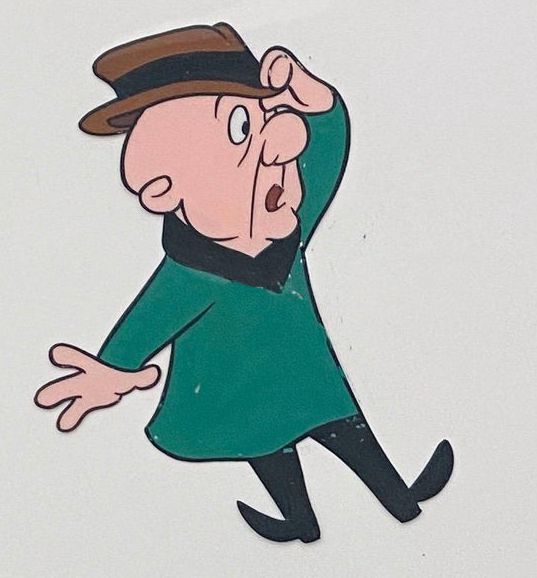
... except that Mr Magoo was always oblivious to the reality of his mishaps and rescued from them by good luck. Well, I suppose the latter is usually true for me. 

Acting as one of the Bishop's Surrogates is one of the tasks I quite like as it involves dealing with nice young couples and helping them get married. But there is also nothing that seems to bring me as much stress because I keep getting things wrong. There is a lot more business for surrogates at the moment because no church marriages can happen by the usual method of banns, so in most cases couples need Common Licences, and the surrogates hear the oaths in support of those applications. Not long after the restrictions came in, I had an awful day when I thought I had mucked up the process for several couples, and though it turned out I hadn't, this wasn't before having to admit to them and various Church officials that I had, and then that I hadn't after all. Then I made a mistake on one form and ended up driving to see a couple to swear the oath over again. Now it turns out that as well as taking evidence of identity I should have been asking for proof of nationality, as detailed in a document from 2016 I can't recall ever having seen. It stretches belief that every couple I've seen until now has always given me passports to demonstrate their identity, thus proving nationality into the bargain, but the issue has certainly never actually come up before. Nobody has been illegally married - there's no doubt of anyone's nationality - but if they don't have passports proving it becomes quite problematic, involving birth certificates and passports of parents at the time the person was born, which is a lot to ask for. And I do have to ask. I was in despair for a while and am very inclined to give the job up as something else I am not very good at.

But then Ms Kittywitch posted on LiberFaciorum about her recent experiences at her local hospital with gastroenteritus, no joke in its own right but even less amusing when you are a heart-and-lung transplant survivor of thirty years standing with a compromised immune system and various other things awry. The hospital could have killed her several times over the course of a few days, culminating in an attempt to inject an anti-coagulant again two hours after having done so, which would almost definitely have carried her into the other world had she not had her wits about her. Now she is at Harefield ('the mothership'), and feels much safer. At least, as I have often comforted myself, when I make a mistake it is vanishingly unlikely that anyone will die.

Friday, 4 September 2020

Reacquaintance

We are able, with cautions, restrictions and risk assessments, to take communion to people at home now, and so I made an appointment to go to see Harriet who, once upon a time, we could be sure would be at church every week. Harriet is a priest's widow whose Parkinson's has galloped away over the last year, reducing her mobility hugely and making every conversation hard work: it's that which she finds worst, she says, trying to make herself understood. Funny or intelligent interventions in conversations are now a thing of the past as both speaking and listening have to be deliberate and determined. 

Harriet wanted to make a confession so we had to ask her home help to go into another room, without actually saying she wanted to make a confession. I then found that despite all my COVID-specific precautions including washing the pyx in hot soapy water and carrying it in a sealable plastic bag, I'd basically forgotten how to take communion to someone at home. I had to look up the collect on my phone (slightly less awkward than making one up) and it was only by chance that I had my Bible in my bag and was able to pick two readings at random. 

In Monsignor Quixote Graham Greene's protagonist priest goes through a phantom mass in his final delirium, gabbling the Latin rooted in his memory and which the Church around him had abandoned. I will never be Monsignor Quixote.

Thursday, 19 March 2020

The Same, But Different

Although I haven't been anywhere since the middle of Monday, I still intend to keep Thursday as a sort-of day off, because that's what Sabbath means. I will mark it by wearing non-clerical clothes (in so far as I ever do) and not saying the Office. The last three days have been quite dramatic enough. Monday was the beginning of the really biting social restrictions across the country, and of course they continue; Tuesday was closing-churches day; and today has been wedding-fallout day. On all three I have tried to keep up with a waxing tide of announcements and emails and our response to them. I feel most for our wedding couples, five of them this year. At the moment they seem to want to go ahead, but further restrictions over the coming days may make that impossible. The Church of England nationally reminds us that only five people are legally required in a wedding service: the couple, the clergyperson, and the witnesses. This is true, but I fear the archbishops may be forgetting why people choose to get married in church. 

My cough has remained that. It comes and goes and isn't accompanied by any other symptoms. I don't know whether I have had the Plague at all and perhaps never will; contrast my experience with that of two friends in Birmingham one of whom got the dry cough and a four-day fever, pneumonia-like symptoms, and racking pain, while his partner got a bit of a tickle in her throat. It would be a great relief if this minor cost is all I pay for immunity; but without being tested, I can't confirm what I've had. 

Marion is saying Morning Prayer for us at the moment and when I am able to get out again the evening office will join it, as well as keeping the church open for prayer when we can and possibly a restricted mass on a Sunday just, as I am telling people, to keep the church's pilot light flickering. But I am feeling the loss of routines. There isn't anything quite like being a parish priest, and the relationship you develop with your church building, the people who go there, the wider parish, and the liturgy of prayer and eucharist which seems to lock the other elements together into one, bringing them to God and God to them. No matter what structure I impose on my days at home, I can feel my landmarks sliding, and it will be a relief at least to get back to the church, to make that journey up and down the hill again. Today, of course (well, just yesterday really) we learned that the school will be closed. They'd already decided to have their Mothering Sunday singing in the school hall as they couldn't join us in church; but I can't be there for the last event before the school shuts down - for how long? 

On Tuesday the Archbishops issued a statement calling on the Church to become 'radically different'. Well, in one way, yes: you can't shut down public worship and claim that everything is the same. But in more important ways, this is the same mission the Church has always had, to serve and to pray. And while any crisis brings growth, don't pretend that this is anything other than a terrible deprivation. 

As for serving: the crisis reveals how precious few people this church actually has to do any serving. Knock out the over-70s and there's next to no one left in the church community who doesn't need help themselves.